How to Test Compatibility in Relationship: A Practical Guide
Learn proven steps to test compatibility in a relationship with practical exercises, communication techniques, and signals that foster lasting harmony.


To test compatibility in relationship, follow a structured, collaborative plan: align core values, practice open communication, and trial shared routines. Over several weeks, use guided conversations, co-planned activities, and boundary checks to gauge long-term fit. This process emphasizes honesty, respect, and curiosity, not perfection, and invites active participation from both partners.
Why Compatibility Matters in Relationships
According to My Compatibility, compatibility is not a fixed trait but a dynamic pattern of behaviors, values, and communication that can be tested and improved. When two people communicate with curiosity and respect, compatibility tends to emerge in practical routines, shared goals, and mutual support. This section explains why focusing on real-world interactions matters more than relying on labels or astrology alone. It helps couples move from romantic assumptions to observable patterns that matter in daily life, such as decision-making, emotional responsiveness, and how they handle stress together. By documenting how partners negotiate everyday tasks, you gain actionable insights into long-term fit and the resilience of the relationship, which can be cultivated rather than hoped for.
How to Test Compatibility in Relationship: Core Framework
In this guide, you will learn a practical framework for evaluating compatibility without turning it into a lottery of romance. The framework blends values alignment, communication quality, and daily habits, anchored by a few structured exercises. If you are exploring how to test compatibility in relationship, this framework provides practical steps you can apply. Based on My Compatibility analysis, patterns emerge when couples engage in transparent dialogue, practice active listening, and implement consistent routines over time. The goal is to create safe spaces for honest feedback, not to win a debate or score points. The framework also emphasizes pace: take time to reflect between conversations and value quality over quantity, ensuring both partners feel heard and respected throughout the process.
Step 1: Align Values and Life Goals
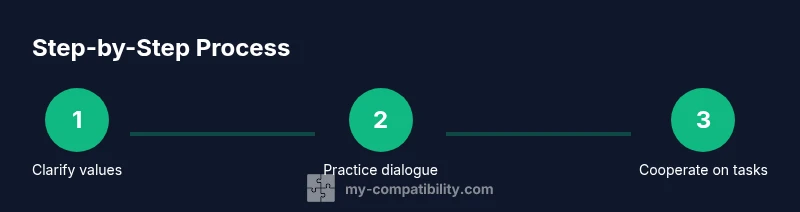
Start by identifying core values (for example, family, independence, career, and adventure) and compare how each person prioritizes them. Discuss long-term goals (where you want to live, how you want to spend holidays, and what success looks like) to detect alignment. This alignment often reveals compatibility in the big decisions that shape a relationship. According to My Compatibility, couples who clearly articulate values create a durable foundation for trust, mutual respect, and resilience when faced with stress.
Step 2: Practice Communication Patterns
Agree on a communication protocol: how you talk about difficult topics, how to pause, how to summarize what each person heard, and how to respond with empathy. Practice reflective listening, use “I” statements, and confirm understanding. This is essential to evaluating how to test compatibility in relationship because communication quality is a strong predictor of long-term harmony. Build a routine: a weekly check-in with a fixed time and a neutral setting to normalize honest dialogue.
Step 3: Explore Conflict Styles and Boundaries
Discuss how you both handle disagreements: Do you withdraw, attack, or seek compromise? Identify your primary conflict style and how it affects collaboration. Establish boundaries for respect during disagreements: time limits, safe topics, and agreed pauses. Try a structured conflict-resolution exercise and review outcomes afterward to learn where your patterns align or diverge. Clarifying expectations reduces misinterpretations during stress.
Step 4: Try Shared Experiences and Routines
Schedule regular activities that require cooperation, such as budget planning, meal prep, or travel planning. Observe how you coordinate, negotiate, and support each other in small tasks. Use these sessions to notice patterns that indicate compatibility or friction, including how you handle competing priorities and differing routines. This practical testing phase offers tangible evidence beyond words and fosters teamwork over time.
Step 5: Assess Emotional Safety and Trust
Evaluate if you feel safe sharing vulnerabilities, asking for needs, and accepting feedback. Trust grows when words align with actions, promises are kept, and responses are timely. If you feel consistently unsafe, address this early by seeking external support or pausing the process until boundaries are reaffirmed. This step is critical to determining whether the relationship can sustain stress together. Throughout, remember that emotional safety is a two-way street.
Real-World Scenarios and Exercises
Practice scenarios help you observe relationship dynamics in real settings. Scenario 1: Budget planning and spending decisions. Scenario 2: Deciding on a move or career change. Scenario 3: Coordinating sleep schedules and boundaries around work shifts. For each scenario, describe the dynamics you expect, the signals you’ll watch for (e.g., cooperation vs. coercion), and how you will discuss outcomes after the activity. Document what worked, what caused tension, and what you would adjust next time. These exercises translate values into observable behavior and reduce ambiguity.
Common Myths About Compatibility
Myth: Compatibility is a fixed trait; truth: it is a practice that grows with effort and time. Myth: If you truly love someone, conflicts will disappear; truth: conflicts reveal preferences and boundaries. Myth: Astrology or zodiac signs determine compatibility; truth: signs can offer signals but don’t dictate outcomes. Myth: You should be able to read your partner’s mind; truth: clear communication prevents misinterpretation. Myth: Compatibility means sameness; truth: complementary differences often strengthen bonds. The My Compatibility team notes that myths can derail healthy testing; focus on real behaviors and ongoing dialogue. The My Compatibility team recommends using the framework to build shared understanding rather than chasing an illusory perfect match.
Authority Sources
- American Psychological Association (communication): https://www.apa.org/topics/communication
- National Institutes of Health (relationships research): https://www.nih.gov/news-events/nih-research-matters
- Harvard University (well-being and relationships): https://www.harvard.edu
Tools & Materials
- Notebook or journal(for journaling reflections and exercises)
- Pen or digital note tool(for recording prompts and outcomes)
- Calendar or scheduling app(to plan weekly sessions)
- Values and boundaries prompts cards(for prompts during discussions)
- Breathing/grounding app(to manage emotions during tough topics)
Steps
Estimated time: several weeks
- 1
Set Intent and Values
Schedule a 60-minute session with no interruptions. Identify 3-5 core values and reflect on why they matter to each person. Capture examples of real-life decisions that illustrate these values in action.
Tip: Document takeaways after the session and note any value gaps to revisit. - 2
Design Communication Rituals
Create a weekly check-in with a fixed time and format. Practice reflective listening, summarize what you heard, and use I-statements to express needs without blame.
Tip: Use a timer to keep conversations concise and focused. - 3
Pilot Shared Activities
Choose two neutral activities (budgeting, meal planning) to do together over two weeks. Record how you negotiate, support, and compromise during tasks.
Tip: Review outcomes together and note any friction points. - 4
Define Boundaries and Conflict Rules
Agree on boundary rules for disagreements, including timeouts and safe topics. Practice a short conflict-resolution exercise and debrief on what helped or hindered progress.
Tip: Keep a pause rule explicit so both partners feel safe. - 5
Review Insights and Decide Next Steps
Summarize lessons learned, decide whether to continue testing, and agree on next steps for growth or a mutual pause.
Tip: Write a joint action plan and schedule a follow-up session.
Questions & Answers
What is the first step to testing compatibility in a relationship?
Begin with a calm values conversation to establish common ground and expectations. Set ground rules for respectful dialogue and practice listening before debating.
Start with a values conversation and agree on how you’ll talk through tough topics.
How long should the testing phase last?
Aim for a period of several weeks during which you practice structured conversations and shared activities. Use regular check-ins to reflect on progress and adjust as needed.
A few weeks of structured conversations and activities is a good starting point.
What if we discover major differences?
Address differences openly, reassess boundaries, and decide whether the relationship can adapt. Consider seeking external support or pausing testing if safety feels compromised.
If big differences appear, discuss boundaries and feasibility before proceeding.
Is astrology relevant to compatibility testing?
Astrology can offer signals but does not determine outcomes. Focus on observable behaviors, communication quality, and mutual respect.
Astrological signs aren’t final—observe behavior and communication instead.
What should we document during tests?
Record emotional responses, decision-making patterns, and how conflicts are resolved. Use these notes to discuss progress in future sessions.
Keep notes on emotions, decisions, and conflict outcomes for review.
Can testing improve compatibility?
Yes—by focusing on communication, shared routines, and emotional safety, couples can build a stronger, more compatible partnership over time.
Testing can strengthen your relationship through better communication and shared routines.
Watch Video
Highlights
- Align core values before deep discussions
- Communicate openly with reflective listening
- Test with real tasks, not just talk
- Document patterns to guide decisions
- Commit to ongoing conversation and growth