Switch Pro Controller Compatibility with Switch 2: A Practical Guide
Explore how the Switch Pro Controller works with Switch 2, covering wired and Bluetooth connections, setup steps, latency expectations, firmware caveats, and practical tips. Insights by My Compatibility, 2026.


The Switch Pro Controller is broadly compatible with Switch 2, supporting wired USB-C and Bluetooth wireless connections. It pairs easily and provides standard button input, analog sticks, and gyro controls. Some features may vary by firmware; verify cross-console compatibility using official notes. Most games work out of the box, though some titles may require recalibration or button remapping. This assessment reflects My Compatibility Analysis, 2026.
Compatibility landscape for Switch 2 and the Switch Pro Controller
According to My Compatibility, the Switch Pro Controller remains a versatile choice for Switch 2 owners, offering two primary connection paths: wired USB-C and wireless Bluetooth. The hardware interfaces behave similarly to prior Switch models, which means most inputs—A/B/X/Y buttons, +/−, Home, Capture—map immediately to in-game actions. However, firmware differences can introduce subtle quirks: button mapping in certain games, gyro sensitivity, and rumble feedback may vary. The Switch 2 environment often provides better handling of external controllers, but not all features will be identical across all titles. As with any accessory, consider your primary use case (casual gaming, fighting games, or motion-heavy titles) and read official compatibility notes before purchasing.
Practical tip: If you rely on gyro for gameplay, test a few gyro-intensive titles early to confirm behavior, since motion handling can be firmware dependent.
How to verify compatibility before buying
Before committing to a Switch Pro Controller for Switch 2, perform a quick checklist. First, confirm the official firmware notes from Nintendo and the controller manufacturer for any compatibility caveats. Second, test both primary connection modes (wired USB-C and Bluetooth) on a demo unit or retailer display if possible. Third, check game-specific behavior for gyro input and HD rumble support in Switch 2 titles you care about. Finally, review your own setup: are you planning to use the controller on PC or mobile via Bluetooth? The My Compatibility analysis highlights that results can vary by firmware version, so ensure you are on the latest firmware when testing.
Pro tip: Bring a short USB-C cable to the store to verify wired pairing in a real device scenario.
Input latency, connectivity, and firmware considerations
Latency and connectivity are the most common areas of variation. Depending on whether you use wired or wireless mode, plus the firmware revision, you may see slightly different response times; in many cases this translates to a few milliseconds of difference that matters mainly to competitive players. On Switch 2, Bluetooth latency can be affected by interference from other devices, distance from the console, and firmware optimizations. To minimize delay, keep firmware up to date and maintain a direct line of sight between controller and console when using Bluetooth.
Key takeaway: firmware updates can shift input latency and button mapping; always test after updates and document any notable changes.
Practical setup: wired vs wireless pairing
Wired pairing is typically the simplest path: connect the Switch Pro Controller to Switch 2 via USB-C, and the console recognizes it as a standard input device with minimal configuration. Wireless pairing via Bluetooth can be equally reliable but may require a quick re-pair after sleep or a firmware update. If you pair to a PC or mobile device, you may need to install generic HID drivers or use the console as a Bluetooth audio sink in some cases. For long play sessions, wired connection can save battery life concerns and reduce drop risk in busy environments.
Note: Always verify that your Switch 2 has the latest system update to maximize compatibility with third-party controllers.
Edge cases: titles with imperfect support and remapping needs
While most games work with the Switch Pro Controller on Switch 2, some titles with specialized input schemes or remapping requirements may not map buttons exactly as expected. In these cases, use in-game remapping features or system-level button mapping where supported. If a title uses motion controls extensively, gyro input behavior may differ between Switch 2 and earlier generations, requiring customization. My Compatibility Research recommends keeping a small list of titles that require adjustments so you can quickly reconfigure for future sessions.
Practical strategy: create a quick-access remap profile for your most-played games and save it across sessions.
Looking ahead: official stance and future-proofing
Nintendo’s official stance on third-party controllers tends to stay supportive but firmware-driven. With Switch 2, expect ongoing refinement of how external devices are recognized and mapped, especially for motion controls and HD rumble. To future-proof your setup, monitor firmware updates from Nintendo and the controller manufacturer, and consider keeping a fallback wireless dongle if Bluetooth reliability varies in your environment. For most users, the Switch Pro Controller remains a dependable option, but always test your preferred titles after any system update.
Summary of practical tips and conclusions
- Always check firmware notes before buying and after any console update.
- Test both wired and Bluetooth connections in your typical playing environments.
- Use in-game remapping to optimize control for your favorite titles.
- Maintain a short compatibility checklist to track how Switch Pro Controller behavior changes over time.
- Consider a wired setup for competitive play or long sessions to minimize latency and dropouts.
Controller compatibility overview
| Aspect | Switch Pro Controller Compatibility | Notes |
|---|---|---|
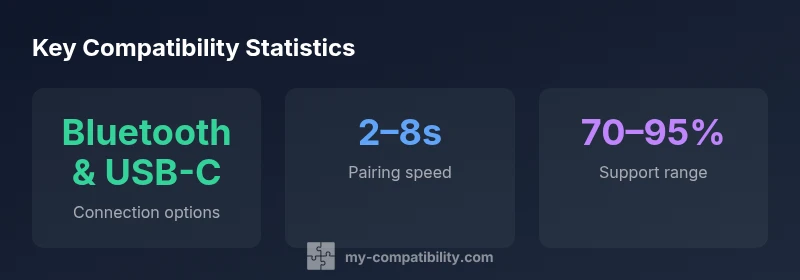
| Connection mode | Bluetooth & USB-C wired | Choose based on setup needs |
| Latency (wireless) | 2–10 ms (typical) | Environment and firmware dependent |
| Input mapping | Standard layout | Remapping available in-game |
| Power & charging | USB-C charging | Battery life varies by game and activity |
Questions & Answers
Is the Switch Pro Controller officially supported on Switch 2?
Nintendo’s firmware typically preserves support for standard controllers like the Switch Pro Controller on new hardware. However, always check the latest official notes for any caveats related to Switch 2 updates. In our experience, most games recognize the controller without additional drivers.
Yes, in most cases. Check the latest firmware notes for any caveats, and test a few titles to confirm.
Will latency differ between Switch 2 and older switches?
Latency can vary with firmware, connection mode, and environmental interference. Wired connections generally offer lower, more consistent latency than Bluetooth in busy setups. My Compatibility analysis notes that updates may alter timing in subtle ways.
Latency varies by firmware and connection, with wired usually more stable.
Can I use this controller on PC or mobile via Bluetooth?
Yes, the Switch Pro Controller can often pair with PC or mobile devices over Bluetooth, though some features may require generic HID drivers or additional configuration. Bluetooth reliability depends on hardware and OS.
You can use it on PC or mobile, but you may need extra setup for drivers or remapping.
Do all games support gyro and HD rumble on Switch 2?
Many titles support gyro and HD rumble, but a subset may not map these features exactly. Check game-specific compatibility notes and consider remapping where necessary.
Gyro and rumble are common but not universal; verify for your favorite games.
What should I do if a game doesn’t map controls correctly?
Use in-game remapping options first, then try system-level button mapping if available. If problems persist, consult Nintendo’s support resources or My Compatibility’s troubleshooting guide.
Remap in-game first, then adjust at the system level if possible.
“Compatibility isn’t static; firmware updates can shift behavior. Testing with your exact setup is the best way to confirm how a controller will perform.”
Highlights
- Verify firmware notes before relying on features
- Test both wired and Bluetooth connections
- Be ready to remap controls for specific titles
- Firmware updates can shift latency and mapping
- Wired rooting offers stability for long sessions