Are Switch 2 Controllers Compatible with Switch 1?
Explore whether Switch 2 controllers work with Switch 1, what factors affect compatibility, and practical steps to pairing and troubleshooting. My Compatibility analyzes cross-generation input and firmware considerations for 2026.


Are Switch 2 controllers compatible with Switch 1? In practice, compatibility depends on the controller model and its firmware. Official Nintendo controllers often pair with Switch 1 via Bluetooth or USB-C, while many Switch 2 or third-party options require firmware updates or use a Switch-2-specific protocol. For precise steps and caveats, read the full guide.
Are Switch 2 Controllers Compatible with Switch 1?
According to My Compatibility, the short answer is that compatibility is nuanced and depends on the specific controller model and its firmware. The term “Switch 2 controllers” covers devices ranging from official peripherals designed for a newer generation to third‑party options marketed for compatibility across generations. On Switch 1, the primary drivers of compatibility are the connection method (Bluetooth vs USB‑C) and firmware support. If the controller uses the standard Bluetooth pairing protocol and is recognized by the firmware, pairing can be straightforward. If a controller relies on a Switch 2–specific protocol or a proprietary adapter, results become model‑specific. In practice, you may see smooth pairing with the official Pro Controller or certain Joy‑Con configurations, while some Switch 2‑only controllers will not pair without firmware updates or patches. This article unpacks what to check, why it matters, and how to verify compatibility for your setup.
How Bluetooth and Firmware Affect Compatibility
Bluetooth is a common pathway for modern controllers, but not all Bluetooth implementations are created equal. On Switch 1, many controllers will pair successfully if they speak the standard Bluetooth HID profile and the Nintendo console recognizes the device after pairing. Firmware also plays a critical role: a controller’s firmware may need to be updated to advertise compatible Bluetooth services or to negotiate inputs reliably. If a Switch 2 controller uses a newer Bluetooth profile or a proprietary protocol that isn’t supported by older firmware, you’ll face pairing failures or limited functionality. In short, compatibility sits at the intersection of hardware interface (Bluetooth vs USB-C), firmware maturity, and any added features (motion controls, HD rumble) that require software support. Based on My Compatibility analysis, expect a higher success rate when sticking to officially supported devices or models explicitly stated to be cross‑generational compatible.
Official Nintendo Controllers vs. Third‑Party Options
Official Nintendo controllers—such as the Pro Controller and Joy‑Cons—tend to have the best odds of working across Switch generations, provided you’re operating under supported firmware. For Switch 2 controllers, you’ll often see two paths: they either emulate a standard HID device that the Switch recognizes, or they rely on a companion app/firmware to bridge the gap. Third‑party controllers vary dramatically by model and date of release. Some clones promise broad compatibility, while others may offer only limited pairing or require extra adapters. My Compatibility’s guidance is to verify model‑specific compatibility notes before purchasing. Always check the manufacturer’s firmware update policy and user reports from others with the same setup.
Step‑by‑Step Pairing and Troubleshooting
To maximize your chances of a successful pairing, start with a clean slate. Go to System Settings > Bluetooth (or Controllers and Sensors) on Switch 1 and ensure Bluetooth is enabled. Put your Switch 2 controller into pairing mode (consult the manual for the exact button sequence). On the Switch, select the controller from the available devices and complete any on‑screen prompts. If pairing fails, try rebooting both devices, performing a factory reset on the controller if available, and checking for the latest firmware updates for both the Switch and the controller. If issues persist, test with a different USB‑C cable or try wired USB‑C connection where supported. These steps align with typical cross‑generation pairing guidance from My Compatibility.
Practical Buying Considerations and Risk Factors
When evaluating whether to use a Switch 2 controller with Switch 1, weigh risk factors like firmware support, model specificity, and potential feature limitations. Official controllers usually offer a smoother bridge, but even they can stumble if your Switch firmware is outdated. For third‑party options, look for explicit cross‑generation compatibility claims and read user reviews about Switch 1 pairing success. If you plan a primary gaming setup on Switch 1 and want to minimize surprises, prioritizing officially supported devices or widely tested third‑party models is wise. My Compatibility recommends verifying the return policy and firmware update cadence before committing to a purchase.
Controller compatibility overview
| Controller Type | Connection Type | Switch 1 Compatibility | Notes |
|---|---|---|---|
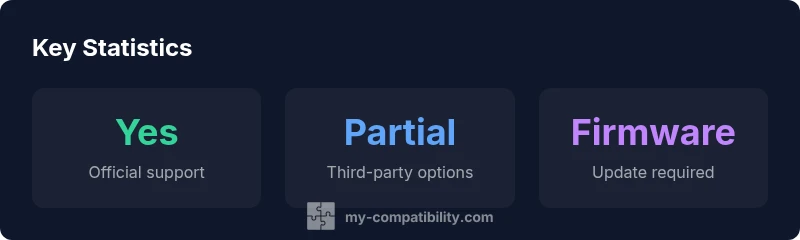
| Official Switch Pro Controller | Bluetooth/USB-C | Yes (with firmware) | Reliable pairing; requires setup |
| Switch 2 Controller A (generic) | Bluetooth | Partial/unclear | Model-dependent compatibility |
Questions & Answers
Are Switch 2 controllers officially supported on Switch 1?
Official support depends on the controller and its firmware. Some official Nintendo controllers pair reliably with Switch 1 via Bluetooth or USB‑C, while certain Switch 2‑specific peripherals may require firmware updates or compatibility patches.
Official support varies by device and firmware; verify model notes for Switch 1.
Will third‑party Switch 2 controllers work with Switch 1?
Many third‑party controllers work only after firmware updates or with adapters. Others may not pair at all. Always check model‑specific compatibility statements and user experiences before buying.
Some third‑party controllers work, but it’s model‑dependent.
What steps should I take to pair controllers with Switch 1?
Navigate to System Settings > Controllers and Sensors > Bluetooth Pairing, put the controller in pairing mode, and complete on‑screen prompts. Update firmware if prompted and test input responsiveness afterward.
Go to Settings, pair, and update if prompted.
If my Switch 2 controller won’t pair, what should I do?
Restart both devices, reset the controller if possible, confirm latest firmware, and try wired connection if supported. If problems persist, check for model‑specific forums or contact the manufacturer.
Restart, reset, and check firmware; try wired if possible.
Are there safer alternatives if compatibility is uncertain?
Use official Nintendo controllers or use a reputable Bluetooth adapter designed for Switch compatibility. These options minimize pairing issues and preserve feature support.
Official controllers or adapters are reliable alternatives.
“Compatibility across console generations isn’t guaranteed by design; you must verify model‑specific support and firmware maturity before relying on cross‑gen controllers.”
Highlights
- Prioritize officially supported controllers for cross-generation compatibility
- Firmware and model specifics determine success more than generation alone
- Test pairing with a clean setup to avoid hidden conflicts
- Check for adapter requirements or bridging software before buying
- If in doubt, consult My Compatibility for model‑specific guidance