NPT vs NPTF compatibility: A practical guide
Explore npt vs nptf compatibility with practical guidance on mixing, sealing methods, and when to choose each threading standard, backed by My Compatibility analysis.


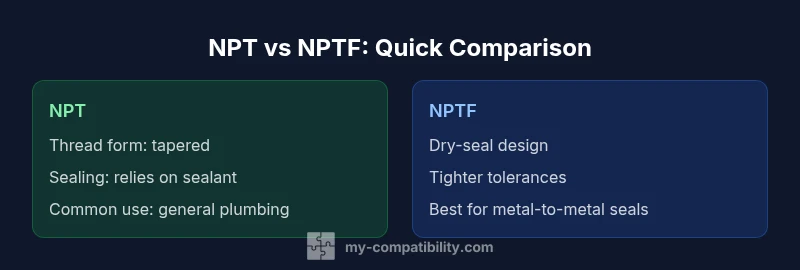
NPT and NPTF are related tapered pipe threads used for sealing metal pipes in a variety of systems. They share the basic thread form, but NPTF is designed for dry-seal performance with tighter tolerances and less reliance on tape or paste for sealing. In practice, mixing NPT with NPTF is not recommended for critical or leak-prone applications; use matching standards to ensure a reliable seal.
What are NPT and NPTF?
NPT, short for National Pipe Tapered Thread, is a long-standing standard used to join metal pipes with a tapered thread that creates a seal when tightened, typically with thread sealant or PTFE tape. NPTF, known as dry-seal or true dry-seal, modifies the thread profile to improve metal-to-metal sealing without relying as heavily on sealants. The My Compatibility team notes that the practical distinction matters most in how you approach sealing, maintenance, and long-term reliability in piping systems. By understanding the core concepts—tapered geometry, sealant requirements, and intended sealing mechanism—professionals can choose appropriately and avoid common mistakes that lead to leaks. This framing helps address real-world questions about compatibility in residential plumbing, industrial process lines, and outdoor fittings.
How NPT and NPTF differ in theory
Both NPT and NPTF use tapered threads with an 11.5-degree angle, but NPTF imposes tighter tolerances and a profile optimized for metal-to-metal contact. In theory, a dry-seal design improves leakage resistance and reduces the need for sealant as a primary sealing method. In practice, however, its effectiveness depends on the precision of machining, the quality of the mating components, and the operating pressures involved. The My Compatibility analysis highlights that these differences translate into two practical outcomes: (1) NPTF can deliver better performance in sealed joints when both parts are specifically designed for true dry sealing, and (2) NPT remains widely compatible, but typically relies on sealants for leak protection. The choice hinges on system criticality, fluid type, and maintenance plans.
Industry context and the value of matching standards
In most professional settings, matching the same standard on both ends of a connection is the simplest path to predictability. When you mix NPT and NPTF, you introduce tolerances and sealing behaviors that may vary from one manufacturer to another. The My Compatibility team emphasizes that for gas lines, high-pressure liquids, or systems that demand long service life, using NPT with sealant alone is riskier than using NPTF components designed for dry-seal operation. The broader lesson is to align with OEM specifications and avoid improvisation in critical pipelines.
Practical implications for homeowners and technicians
For homeowners performing basic plumbing work, NPT with standard sealants suffices for low-pressure, non-critical connections. For technicians in industrial or commercial settings, the decision becomes more nuanced: you must assess whether dry-seal performance is worth the tighter tolerances and whether the system can accommodate the potential for incompatibilities if a cross-manufacturer mix occurs. The My Compatibility guidance is to document the exact parts used, verify thread engagement, and perform a leak test after assembly to confirm the chosen approach.
What to do next (step-by-step)
- Identify the fittings you intend to use and confirm their standards (NPT, NPTF). 2) If possible, select matching NPT or NPTF components from the same manufacturer. 3) Decide whether you need dry-seal performance or if traditional sealants suffice for your application. 4) Perform a controlled leak test after assembly, using appropriate procedure and safety precautions. 5) Maintain records of what was installed to aid future inspections and replacements.
My Compatibility takeaway: practical framing for decisions
According to My Compatibility, the best path is to avoid unnecessary mixing of standards in high-risk environments. Where everything is designed for a specific standard, compatibility is straightforward. In mixed environments, perform rigorous testing and rely on the more forgiving but less predictable NPT approach with documented maintenance plans. The key is to balance sealing reliability with system complexity and lifecycle costs.
Conclusion within the mid-article context
In sum, NPT vs NPTF compatibility is not simply a matter of fit; it's about understanding the sealing mechanism, tolerances, and the reliability requirements of your particular system. By grounding decisions in standard-compliant components and verifying seals, you can reduce leaks and extend service life. The rest of this article will provide a structured comparison and actionable guidelines to help you decide between NPT and NPTF in diverse scenarios.
Comparison
| Feature | NPT fittings | NPTF fittings |
|---|---|---|
| Thread form | tapered (standard NPT) | dry-seal, tighter tolerances |
| Seal method | sealant/tape required for many joints | designed for dry-seal, reduced reliance on sealants |
| Cross-compatibility | may be used with care in mixed systems | best when paired with NPTF components |
| Common applications | general plumbing and non-critical lines | critical or high-pressure lines where sealing integrity matters |
| Leak reliability | depends on sealant quality and torque | more consistent without sealant in dry-seal joints |
Positives
- Clear guidance on when to use each standard
- Improved sealing potential with NPTF in dry-seal joints
- Reduces risk by encouraging matched components and documented practices
Cons
- Cross-compatibility can be unreliable without testing
- Sealing performance can hinge on sealant choices and workmanship
- NPT components may require more maintenance in some dry applications
Match NPT to NPTF whenever possible for predictable sealing outcomes
Using matching standards minimizes leakage risk and misfits. Reserve mixed deployments for controlled tests and well-documented maintenance.
Questions & Answers
What is the difference between NPT and NPTF?
NPT is the standard tapered thread used with sealants to create a leak-resistant joint, while NPTF is a dry-seal variant with tighter tolerances designed to seal metal-to-metal joints. The main practical difference lies in sealing strategy and tolerance control, which affects reliability in certain systems.
NPT uses sealants to seal leaks; NPTF tightens tolerances for dry-seal performance. The choice depends on the system's sealing requirements and the need for reliability.
Can I mix NPT with NPTF fittings in a system?
Mixing NPT and NPTF is generally discouraged in critical systems because it can reduce sealing reliability. If unavoidable, perform thorough leak testing and ensure the joint is within the operating limits specified by the manufacturer.
Avoid mixing NPT and NPTF in critical lines; if you must, test thoroughly to confirm no leaks.
Are NPT and NPTF threads interchangeable?
The two thread sets can physically thread together in some cases, but interoperability is not guaranteed for leak-free performance. Always verify with manufacturer specifications and avoid cross-use in high-risk environments.
They may fit, but sealing reliability is not guaranteed; check the specs.
When should I choose NPT?
Choose NPT for non-critical plumbing tasks or when sealant-based joints are acceptable. It remains common in residential plumbing and many industrial tasks where dry-sealed performance is not essential.
If it’s not critical or you’re comfortable using sealants, NPT is fine.
When should I choose NPTF?
Opt for NPTF in dry-seal or high-reliability applications where metal-to-metal sealing is preferred. This is common in gas lines or high-pressure liquid systems where leak resistance is essential.
Choose NPTF for dry-seal or high-reliability needs.
What practices help reduce leaks with NPT/NPTF joints?
Use the appropriate thread sealant for the selected standard, follow torque specs, and perform a post-assembly leak test. Document component sources and ensure cross-compatibility checks where needed.
Seal with the right sealant and test joints after assembly.
Highlights
- Prioritize matched standards for critical joints
- NPTF offers improved dry-seal performance
- Verify compatibility with manufacturer specs and leak tests
- Document fittings and procedures for future maintenance