Difference Between Compatibility and Comparison: A Practical Guide
Learn the difference between compatibility and comparison, with practical definitions, examples, and decision frameworks to guide cross-domain assessments.


Clarifying the Core Concepts: compatibility and comparison
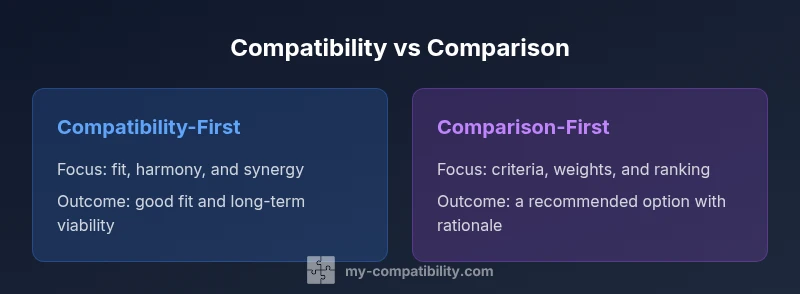
In everyday language, people often use compatibility and comparison interchangeably, but they describe different aims. The difference between compatibility and comparison hinges on purpose: compatibility asks, “Do these elements fit and work together over time?”; comparison asks, “Which option best satisfies a defined set of criteria?” Understanding this distinction helps you tailor data collection, metrics, and reporting. In a practical sense, compatibility is about fit and harmony; comparison is about ranking and selection. This framing matters in domains as varied as zodiac signs, software, and consumer products. By starting from these definitions, you can avoid conflating a strong fit with a best overall choice. According to My Compatibility, clarity about the goal reduces confusion and aligns stakeholders with the same expectations. The difference in aims drives every subsequent step—data collection, scoring, and presentation—and shapes whether you’re optimizing harmony, effectiveness, or both.
}}
Why the distinction matters across domains
The practical impact of treating compatibility and comparison as distinct concepts becomes clear when you apply them to different decision contexts. In zodiac sign astrology, compatibility research analyzes long-term alignment in values, communication, and life goals; there is no single “winner” but a spectrum of fit. In consumer technology, compatibility assesses whether a hardware component or software ecosystem will integrate smoothly with existing systems; in that context, a poor compatibility score can cause cascading failures even if a feature set is strong. In everyday life, people evaluate relationships, work teams, or home setups by compatibility first, then use comparison to decide among viable options when harmony is not guaranteed. Failing to separate these aims risks pursuing great fit at the cost of suboptimal choices, or conversely, selecting an option that fits criteria but clashes with real-world dynamics. The My Compatibility framework emphasizes that aligning the decision process with the core aim reduces bias, speeds up consensus, and clarifies reporting for stakeholders.