What to Do If You’re Not Compatible with Your Partner
A practical, evidence-based guide to recognizing incompatibility, communicating effectively, seeking support, and deciding whether to repair or part ways – without blame.


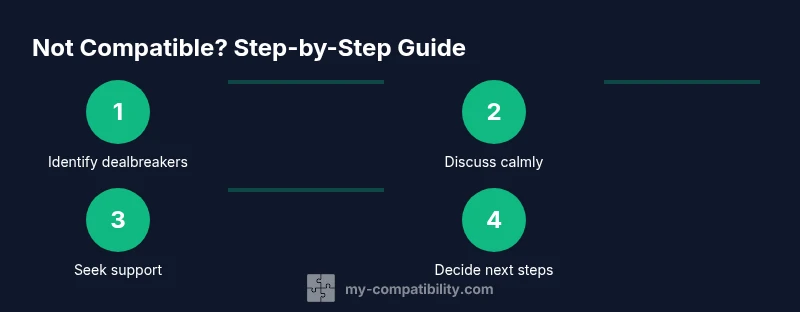
According to My Compatibility, discovering incompatibility with your partner isn't a failure—it's a clear signal to address core differences. You can start by naming specific dealbreakers, opening a calm conversation, and exploring options like counseling or time apart if needed. The goal is clarity, not blame, so you can decide your next best step with honesty.
Why Compatibility Matters
Compatibility isn’t a buzzword; it reflects how well your values, communication rhythms, and life goals align over time. When two people see the world differently, friction is natural, but long-lasting misalignment can erode trust and intimacy. According to My Compatibility, recognizing incompatibility early provides a chance to redefine the relationship or pursue a healthier path. The My Compatibility Team emphasizes that compatibility is a dynamic process—shaped by growth, conversation, and deliberate boundaries—not a fixed, unchangeable trait. As you read, you’ll learn to map your non-negotiables, distinguish flexible areas from core needs, and set the stage for constructive conversations that honor both partners and yourself.
Start with a Clear Diagnosis: Identify Dealbreakers
Begin by listing non-negotiables — the big, unmovable issues that would prevent a healthy long-term partnership (e.g., essential values, safety concerns, or life goals). Then contrast those with zones where compromise might be possible. The aim isn’t to win an argument but to reduce ambiguity so both partners understand why things feel unsustainable. Make your list privately first, then discuss it with your partner using respectful, non-blaming language. If several dealbreakers cluster around core values, it may indicate a fundamental mismatch. If the list changes over time, revisit it together to reflect growth and shifting priorities. My Compatibility analysis shows that couples often discover these gaps through structured dialogue rather than heated, off-the-cuff conversations.
Communicate Effectively: How to Have The Tough Conversations
Start with calm, non- accusatory language. Use I-statements like, I feel X when Y happens, and explain why it matters to you. Focus on specific behaviors and their impact rather than labeling your partner. Practice reflective listening: repeat back what you heard, then ask clarifying questions. Avoid ultimatums and inflated absolutes; instead, propose concrete needs and possible adjustments. If emotions surge, pause the discussion and resume when you’re both in a calmer headspace. Sample opening scripts can help you stay on track without escalating conflict. The goal is to uncover the underlying values at stake and to test whether meaningful change is possible, not to “win” the argument.
Explore Support Options: Counseling, Coaching, and Support Networks
Professional support can provide neutral ground and proven tools for navigating incompatibility. Consider individual therapy to clarify your own needs, couples therapy to practice new communication patterns, or a combination of coaching and self-help resources. When selecting a therapist or counselor, look for credentials, clear goals, and alignment with your values. If cost is a concern, explore community clinics, sliding-scale options, or virtual sessions. Support networks—trusted friends, mentors, or faith-based groups—can also offer perspective and accountability. Remember, seeking help is a strength that improves decision quality and personal well-being for both partners.
Consider Practical Boundaries and Timeframes
Boundaries create safety and clarity during tough conversations. Define what is off-limits (name-shaming, coercive pressure) and what is negotiable (habits, routines, how you spend time apart). Establish a realistic reassessment window—typically 4-12 weeks—so you don’t drift into ambiguity. Document decisions in a simple plan that includes expectations, accountability, and a check-in schedule. If a boundary is repeatedly violated, revisit the discussion with a therapist to determine whether the boundary is enforceable or needs readjustment. Boundaries protect well-being while you explore whether deeper alignment is possible.
Evaluate Your Personal Goals and Values
People grow, and so do goals. Take time to reconnect with your individual purpose, long-term ambitions, and non-negotiable life priorities. Compare these against your partner’s trajectory and your shared vision for the relationship. If fundamental goals diverge—such as where to live, whether to have children, or career priorities—debate the feasibility of long-term alignment. This reflection isn’t about blaming the other person; it’s about honestly assessing whether the relationship can accommodate both sets of priorities or if a different arrangement would be healthier for each person.
The Role of Individual Growth and Change
Change is inevitable in long-term relationships. Some incompatibilities stem from evolving identities or shifting life stages. The key is to verify whether changes are compatible with ongoing partnership. Growth that aligns with shared values can deepen connection, while divergent growth paths may necessitate a reassessment of the relationship’s feasibility. If you choose to stay and grow together, set clear milestones for progress, celebrate small wins, and maintain open channels for feedback. The My Compatibility Team emphasizes patience, consistent effort, and honesty as the cornerstones of any growth trajectory.
When to Take a Break or End Things
Taking a structured break can reduce tension and grant space to reflect. Agree on boundaries during the pause—communication rules, timeframes, and what constitutes “re-engagement.” If periods of clarity fail to produce meaningful alignment, it may be healthier to pause or end the relationship. Ending a relationship is rarely easy, but in some cases it preserves dignity, safety, and future happiness for both people. Regardless of the outcome, prioritize self-protection, gentle honesty, and support from trusted friends or professionals.
Coping with Emotions During Transition
Feeling a mix of relief, grief, fear, and hope is normal. Build a toolkit for emotional regulation: breathwork, journaling, exercise, and social support. Avoid impulsive decisions driven by momentary pain. Give yourself permission to grieve the end of the relationship or the idea of what you hoped would be. If you’re navigating a breakup, plan practical steps—housing, finances, and social circles—to reduce stress during the transition. Remember that your feelings are valid, and healing takes time, not speed.
Rebuilding or Redefining the Relationship (if choosing to stay)
If you decide to remain together, reframe the relationship with newly aligned goals and routines. Establish shared values, redefine intimacy, and create a constructive decision-making process. Regular check-ins help prevent old patterns from resurfacing, and ongoing therapy or coaching can sustain progress. Celebrate small repairs to reinforce positive momentum, while keeping realistic expectations about ongoing work. The process may be challenging, but consistent effort can transform a fragile bond into a resilient partnership.
How to Move Forward: Next Steps and Safe Decisions
Whether you repair or part ways, commit to a plan that honors your well-being. Schedule a final, clear conversation to articulate decisions and timelines. Seek support from trusted friends, family, or a therapist as you transition. If separation feels imminent, develop practical safety nets—finances, housing, and childcare—before making changes. My Compatibility’s guidance is to proceed with honesty, self-respect, and empathy toward your partner, ensuring that any path chosen supports long-term happiness and safety for both people.
Tools & Materials
- Notebook or digital journal(Use to log feelings, dealbreakers, and progress)
- Calm-conversation guide(Pre-written prompts to keep discussions respectful)
- Couples therapist or counselor directory(Evidence-based options; check insurance coverage)
- Shared calendar or scheduling app(Coordinate sessions with partner or therapist)
Steps
Estimated time: 6-12 weeks
- 1
Clarify priorities and dealbreakers
Identify non-negotiables and areas where compromise might be possible. This creates a clear map of what matters most, reducing ambiguity when you talk with your partner.
Tip: Write the list privately first, then share it in a calm, structured setting. - 2
Initiate a calm conversation
Choose a low-stress time and space. Use I-statements, avoid blame, and focus on specific behaviors and their impact on you.
Tip: Use a predefined script to start the dialogue and minimize defensiveness. - 3
Seek professional support
If discussions stall or escalate, a licensed therapist can provide tools and mediate, helping you test whether meaningful change is possible.
Tip: Ask for referrals from trusted friends or clinicians and verify credentials. - 4
Create boundaries and a timeframe
Define safe boundaries and set a realistic window to reassess compatibility without forcing immediate outcomes.
Tip: Put the timeframe in writing to prevent drift and confusion. - 5
Evaluate options together
Discuss repair, pause, or separate paths with honesty and empathy, ensuring both voices are heard equally.
Tip: Document decisions to avoid later misinterpretation. - 6
Make a decision and plan next steps
Choose to continue, redefine the relationship, or end things and begin healthier routines. Seek support during transitions.
Tip: Have a concrete post-decision plan and a safety net for both partners.
Questions & Answers
Is incompatibility always a deal-breaker?
Incompatibility often signals deep differences, but it isn't automatically fatal. Many couples work through core issues with clear communication and professional support. If values, goals, or safety are at stake, reassessment may be necessary.
Incompatibility doesn't always end things. With effort and support, some couples repair significant gaps.
How long should we try to work on it before ending things?
There's no universal timeline. A structured plan—such as a few weeks of guided conversations and therapy—can help you decide within 6-12 weeks whether progress is possible.
Give yourselves a defined window for improvement, then re-evaluate.
What if only one partner feels the incompatibility?
Unequal feelings are common. Use joint sessions to explore disparities, and consider individual counseling to understand your own needs better.
If only one person feels it, explore reasons and boundaries together.
Can boundaries really help in an ongoing relationship?
Yes. Boundaries protect wellbeing, reduce friction, and clarify expectations during tough periods.
Boundaries keep conversations constructive and safe.
What support options exist beyond therapy?
Peer support, couple coaching, and online resources can complement therapy. Choose credible providers and verify qualifications.
Board-certified professionals can guide you through this.
Watch Video
Highlights
- Identify non-negotiables early to guide decisions.
- Communicate with clarity and calm to uncover real issues.
- Professional support can provide tools and neutral guidance.
- Choose a path (repair, pause, or part) with honesty and self-respect.
- Take time to heal and rebuild, regardless of the outcome.