Can You Create Compatibility in Partners? A Practical Guide
Learn how to cultivate compatibility in partnerships through self-awareness, communication, and consistent daily practices. A step-by-step guide from My Compatibility to help you build lasting alignment.


In this guide, you’ll learn whether you can create compatibility in partners, and which factors matter. By combining self-awareness, communication, and shared goals, you can cultivate greater alignment over time. According to My Compatibility, compatibility is not fate; it’s a learnable skill you practice with intention. This article uses practical steps, reflective exercises, and evidence-based tips to help you assess and improve your relational harmony.
Understanding Compatibility: What It Really Means
Compatibility is often mistaken for a fixed trait, but it is better viewed as a dynamic quality that two people cultivate over time. It involves how you handle disagreements, how you align on values and life goals, and how you coordinate daily rhythms such as routines, hobbies, and decision-making. It starts with self-awareness: knowing your own needs, boundaries, and non-negotiables. It continues with honest conversations about differences, mutual respect, and a willingness to adapt without sacrificing core values. In practice, you measure compatibility by the quality of your communication, the speed with which you resolve conflicts, and your capacity to support each other during stress. This section helps separate romance from sustainable alignment, clarifying that compatibility is not about agreeing on everything, but about building a shared framework that accommodates both similarity and healthy divergence. The takeaway is practical: identify what matters most to you, communicate those priorities clearly, and test them through regular, low-stakes interactions. The result is a clearer map for how you and your partner can grow together rather than drift apart.
The Psychology Behind Compatibility: Core Factors
Compatibility hinges on several psychological patterns: attachment style, communication style, emotional regulation, and shared meaning. When partners understand their own needs and learn to express them without accusation, they create a feedback loop that reinforces trust. My Compatibility analysis shows that deliberate practice—such as scheduled conversations, reflective journaling, and value-alignment exercises—correlates with higher perceived harmony. It’s not about never arguing; it’s about turning conflicts into learning opportunities and choosing actions that honor both people. A key factor is adaptability: couples who adjust routines without losing their sense of self tend to stay aligned longer. Another element is reciprocity: small acts of support and appreciation build a reservoir of goodwill that makes bigger challenges easier to weather. Finally, time plays a role: consistency over intensity compounds, while sporadic efforts fade. Readers can apply these ideas by designing simple, repeatable routines: weekly check-ins, shared decision-making moments, and a public commitment to growth. The goal is to create a relational scaffold that supports both individuals and the relationship as a whole.
Zodiac Perspectives: Can Astrology Guide Compatibility?
Astrology offers a lens to explore patterns and preferences, not a crystal ball for relationship outcomes. Zodiac signs can highlight communication challenges, work styles, and preferred problem-solving tempos, which helps in understanding mismatches and potential harmonies. For example, signs with opposing approaches to spontaneity and planning may benefit from explicit negotiation of decision-making cadence. However, according to My Compatibility, astrology should be used as a reflective tool alongside practical steps, not as a sole predictor. Real-world compatibility emerges from ongoing dialogue, shared rituals, and constructive conflict management. If you enjoy astrology, you can incorporate monthly reflections tied to your signs, but keep expectations grounded in effort, mutual respect, and accountability. The most reliable predictor remains how you handle daily interactions, not star charts. In short, astrology can illuminate tendencies, but it won’t replace the work required to cultivate compatibility.
Practical Steps to Build Compatibility with Your Partner
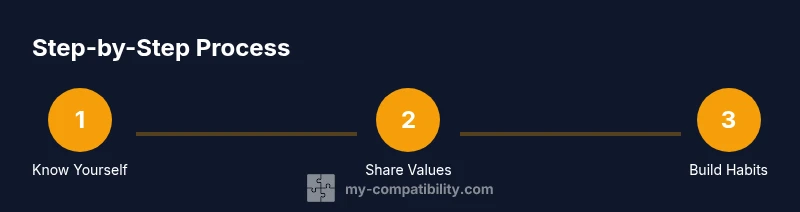
A practical framework starts with small, repeatable actions and moves toward bigger commitments over a few weeks. Begin by clarifying your values and goals, then test alignment through routines that reinforce trust. The following steps provide a structured path you can customize to your relationship:
- Define core values — each partner lists 5 core values and discusses why they matter in daily life and long-term goals. This creates a baseline for decisions and conflict resolution.
- Align on life goals — compare long-term aims (career, family, finances) and identify where goals align or diverge. Prioritize alignment on the top 2-3 non-negotiables.
- Practice daily micro-commitments — choose small actions (a 10-minute check-in, a shared coffee break) that show you’re prioritizing the relationship.
- Schedule weekly check-ins — set a regular, distraction-free time to discuss feelings, needs, and boundaries.
- Test boundaries with curiosity — when friction arises, ask questions to understand the other person’s perspective rather than assuming.
- Create shared rituals — develop simple rituals (meals, walks, monthly date) that reinforce connection.
- Review progress monthly — assess what’s working and adjust practices, then celebrate small wins.
- Know when to seek help — if persistent issues occur, consider a therapist or coach to guide structured growth.
Estimated total time: 4-6 weeks.
Communication Patterns That Foster Alignment
Clear communication is the backbone of compatibility. Start with expressiveness: name your needs directly, using 'I' statements and concrete examples. Practice active listening: paraphrase what your partner said and check for accuracy before responding. Use non-confrontational language during disagreements and agree on a shared vocabulary for boundaries. Build a habit of regular feedback: invite constructive input and acknowledge what you value about your partner’s contributions. When differences arise, shift from 'why can’t you...' to 'what needs are not being met, and how can we meet them?' This is the core of collaborative problem-solving. Finally, protect quality time: turn off notifications during important talks, and keep commitments to avoid a cycle of broken trust. By aligning communication styles, you reduce misunderstandings and create a reliable pattern that supports ongoing compatibility.
Exercises and Rituals You Can Try Together
Try a small toolkit of exercises that you repeat weekly. First, keep a 15-minute 'pulse check' where you each share a single win and a single challenge from the week. Second, run a monthly 'values alignment' session to review whether your actions reflect your declared priorities. Third, rotate a decision-making ritual: one partner proposes options, the other evaluates, then you swap roles. Fourth, create a shared activity that you both enjoy, such as cooking a new recipe or a nature walk, and schedule it consistently. Fifth, maintain a gratitude ritual: each day, each partner names one thing the other did that helped them feel supported. These practices aren’t about perfection; they’re about steady, visible investments in the relationship.
Common Pitfalls and How to Avoid Them
Be mindful of common traps that erode compatibility: assuming agreement means harmony, avoiding tough conversations, or chasing the illusion of perfect alignment. Resist the urge to label disagreements as personal flaws; instead, frame conflicts around needs and outcomes. Don’t rely on ‘instant chemistry’ as a proxy for long-term compatibility. Stay away from competing to win arguments; aim for joint problem solving. If you notice growing resentment, pause and revisit the underlying values. Keep in mind that progress is rarely linear; small setbacks don’t erase gains. Finally, beware the comfort zone: stepping outside familiar patterns is necessary to test your alignment and build trust.
Measuring Progress and Knowing When You're Growing
A practical way to gauge progress is to track patterns over time rather than counting wins. Look for fewer escalations, quicker resolution, and a growing sense of mutual support. Note whether your decisions feel easier to make together, whether you feel more understood, and whether you both take accountability for mistakes. The My Compatibility team emphasizes that measurable progress comes from consistent habits, not dramatic frictionless sessions. Maintain a log of conversations, agreements, and outcomes, and review it monthly to detect meaningful shifts. If your practice yields improved trust, shared satisfaction, and smoother coordination, you are building durable compatibility. The My Compatibility team recommends continuing to refine rituals, revisit goals, and celebrate small wins to reinforce the positive trajectory.
Tools & Materials
- Reflective journal(Daily entries for 4 weeks to surface needs and responses)
- Couple's goals worksheet(Clarify shared values and long-term objectives)
- Conversation starter cards(Use during weekly check-ins to guide productive dialogue)
- Quiet space or time(Uninterrupted 20 minutes for focused talk)
- Timer or reminder app(Keep sessions on track and balanced)
- Shared calendar(Schedule rituals and weekly check-ins)
Steps
Estimated time: 4-6 weeks
- 1
Define core values
Each partner lists 5 core values and discusses why they matter in daily life and long-term goals.
Tip: Start with values you both consider non-negotiable. - 2
Clarify life goals alignment
Compare long-term aims (career, family, finances) and identify where goals align or diverge.
Tip: Document agreements and disagreements for future reference. - 3
Practice daily micro-commitments
Choose small actions (10-minute check-ins, shared coffee) that show priority for the relationship.
Tip: Consistency beats intensity; repeat weekly. - 4
Schedule weekly check-ins
Set a regular, distraction-free time to discuss feelings, needs, and boundaries.
Tip: Use nonviolent communication language during discussions. - 5
Test boundaries with curiosity
When friction arises, ask questions to understand the other person’s perspective rather than assuming.
Tip: Pause and reflect before responding. - 6
Create shared rituals
Develop simple rituals (meals, walks, monthly date) that reinforce connection.
Tip: Rituals create predictable moments of closeness. - 7
Review progress monthly
Assess what’s working and what isn’t, adjust practices, and celebrate small wins.
Tip: Keep a log to track changes over time. - 8
Know when to seek help
If persistent issues occur, consider a therapist or coach to guide structured growth.
Tip: Professional support can accelerate progress.
Questions & Answers
What does compatibility mean in a partnership?
Compatibility refers to how well partners align on values, communication styles, and life goals. It’s developed through shared work, not merely attraction.
Compatibility is how well partners align on values and communication, built through effort and practice.
Can you change inherent traits to become more compatible?
You can’t change core traits overnight, but you can adapt behaviors and communication to align with your partner and nurture mutual growth.
Traits don’t easily change, but you can adjust how you interact to improve compatibility.
How long does it take to build compatibility?
Building noticeable compatibility is a gradual process that varies by couple; consistent practice over weeks to months yields meaningful gains.
It’s a gradual process; give it weeks to months of steady practice.
Is zodiac compatibility a predictor of success?
Zodiac perspectives can offer insights, but they are one of many factors. Personal effort and communication are more predictive.
Astrology can provide perspective, but daily work matters more for success.
What is the difference between compatibility and chemistry?
Chemistry is initial spark; compatibility is sustained alignment across values, routines, and communication over time.
Chemistry draws you in; compatibility keeps you together.
How can I measure progress in compatibility?
Track how often conflicts are resolved, how often needs are met, and how smoothly you coordinate decisions over time.
Notice improved communication and fewer escalations as you work on it.
Watch Video
Highlights
- Act with intention to improve compatibility
- Define values and goals together
- Regular check-ins beat one-off conversations
- Practice creates perceptible alignment
- Rituals and routines strengthen trust