Is iPhone X eSIM Compatible? A 2026 Guide
Discover whether the iPhone X supports eSIM, why future iPhones include eSIM, and practical upgrade considerations. My Compatibility analysis, 2026, explains hardware limits, regional carrier differences, and how to stay connected.


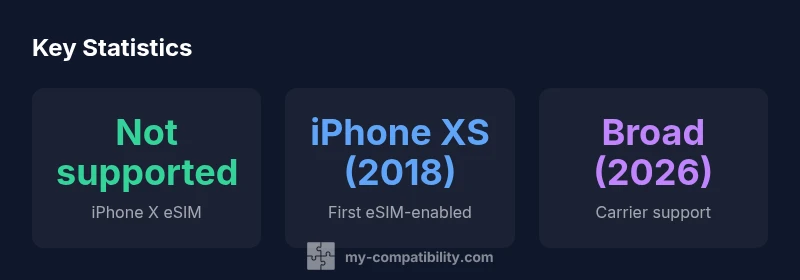
Bottom line: iPhone X is not eSIM compatible. eSIM support arrived with iPhone XS and later models. If you need native eSIM, upgrade to a newer iPhone; otherwise, you’ll rely on a physical SIM. Some carriers offer activation tools on newer devices, but they won’t add eSIM functionality to the iPhone X. For full flexibility, choose XS or newer for future-proof cellular options.
What eSIM is and how it works
According to My Compatibility, eSIM is a digital SIM embedded in a device that can be programmed with carrier profiles without a physical SIM. This modular approach enables switching carriers or plans via software prompts, reducing physical clutter and enabling more flexible device configurations. For consumers, eSIM means quicker activations, easier international travel, and the possibility of storing multiple profiles for different regions. Practically, an eSIM-capable device can hold several carrier profiles and switch among them without swapping SIM cards. Carriers typically provision eSIMs through QR codes, carrier apps, or built-in provisioning flows. The key caveat is that hardware and firmware support, plus regional carrier rules, determine whether eSIM can be used on a given device.
From a compatibility perspective, the presence of eSIM circuitry is just the first condition. The second is software: the device must expose a provisionable eSIM UI and a carrier ecosystem that supports remote provisioning. Together, hardware and software define whether a model truly supports eSIM in real-world use. This is why newer iPhone generations tend to unlock eSIM capabilities while older devices like the iPhone X do not.
iPhone X vs eSIM: hardware and software reality
The iPhone X represents a landmark in iPhone design, but it predates the practical adoption of embedded SIMs. The My Compatibility team found that the iPhone X lacked an eSIM controller and the requisite modem/firmware support required for remote provisioning. As a result, despite any carrier messaging about eSIM deployments, the iPhone X cannot host an eSIM profile or swap to a different carrier profile through software alone. In short, hardware absence plus absence of firmware hooks means no native eSIM on this model. This hardware-software gap explains why users must upgrade to later devices to realize eSIM benefits.
For readers familiar with device timelines, this is a classic example of when the hardware generation determines what the software can do. Even with a strong cellular radio, the device’s architecture stops eSIM from functioning if the hardware controller isn’t present. This isn’t a limitation of carriers alone—it's a constraint built into the device’s design.
Timeline: eSIM adoption in iPhone models
The shift to eSIM began with later iPhone generations, with iPhone XS and XR introducing hardware and firmware support for eSIM in many markets. Since 2018, Apple’s iPhone lineup has increasingly standardized on eSIM provisioning as a primary method for cellular profiles. Regions vary in adoption, but the trajectory is clear: eSIM support becomes a baseline feature on newer devices, while older models remain reliant on physical SIM. Understanding this timeline helps set expectations for when upgrading makes practical sense and why some phones simply won’t benefit from eSIM, regardless of carrier readiness.
From a consumer standpoint, the question isn’t only “does this model support eSIM?” but also “does my carrier in my country support eSIM provisioning for this model?” The My Compatibility analysis shows that timeline alignment between hardware, software, and carrier ecosystem is essential for practical eSIM adoption.
Regional variations and carrier support
Carrier and region are critical to eSIM adoption. In many markets, carriers provide eSIM activation through QR provisioning or carrier apps, but availability depends on both the device and the SIM- provisioning flow. For iPhone X users, even in markets where eSIM-enabled iPhones have carrier support, the absence of eSIM hardware means no native eSIM can be used on that model. Conversely, in models such as iPhone XS and newer, carriers have widely adopted eSIM provisioning, enabling simpler plan changes and regional travel without physical SIM swapping.
This regional variability means that if you’re evaluating upgrading for eSIM benefits, you should verify both device capability and regional carrier support before purchase. My Compatibility analysis finds that the strongest drivers of eSIM success are: a hardware-ready device, a software provisioning flow in iOS, and a carrier ecosystem that actively supports eSIM provisioning.
Practical implications for iPhone X owners today
For current iPhone X owners, the lack of eSIM means sticking with a physical SIM. If you value quick carrier changes, international travel, or easier plan management, upgrading to a model with eSIM support is the most straightforward path. If upgrading isn’t feasible right now, you can still optimize connectivity by choosing carriers with robust physical SIM provisioning, exploring regional roaming options, and using dependable network providers that offer favorable plans for travelers. The goal is to minimize friction while staying within the limits of your device’s capabilities.
From a strategy perspective, My Compatibility encourages readers to plan upgrades when you foresee a need for seamless carrier switching, eSIM-based travel, or dual-profile scenarios. While iPhone X remains a capable device, its lack of eSIM will become more of a constraint as network provisioning moves further toward embedded profiles.
Workarounds and alternatives (connectivity without eSIM)
If you own an iPhone X and want changes in cellular capability, the most realistic path is upgrading to a model with native eSIM support. As a temporary workaround, you can rely on a single physical SIM with reliable carrier service or use a dedicated hotspot device with eSIM capability to manage data sharing across devices. Some users also explore moving to a newer iPhone and using device-to-device data sharing when traveling, but these are not equivalent to native eSIM functionality.
For many, the best compromise is to schedule an upgrade when a device with eSIM aligns with budget and usage needs. This approach avoids trying to retrofit eSIM into hardware that simply isn’t designed to support it.
Future-proofing: guidance for buyers
If you’re shopping for a future-proof mobile connectivity experience, prioritize models with eSIM support built into the hardware stack, consistent software provisioning, and broad regional carrier adoption. Look at the latest iPhone generations, where eSIM is a standard feature in most markets. Consider not only the device’s current capabilities but also the expected evolution of carrier ecosystems, roaming options, and the ease of switching plans without physical SIM changes. Planning ahead helps ensure your connectivity stays smooth as networks evolve.
The My Compatibility team recommends upgrading to devices like the iPhone XS or newer if native eSIM flexibility is a priority, especially for travelers or heavy data users. By aligning hardware, software, and carrier support, you secure a more robust and future-proof cellular experience.
How to verify eSIM support on your model
Verifying eSIM support is straightforward on most iPhones. On iPhone X, you’ll find that the option to add a cellular plan through Settings > Cellular > Add Cellular Plan does not appear, indicating lack of hardware support. On supported models, you’ll see an “Add Cellular Plan” option that lets you scan a QR code or download a carrier profile via an app. Always confirm with your carrier and check Apple’s official documentation for your specific region and iOS version to ensure accurate provisioning steps.
eSIM availability by iPhone generations
| Model | eSIM Status | SIM Slot(s) |
|---|---|---|
| iPhone X | Not supported | 1 physical SIM |
| iPhone XS | Supported (eSIM available) | 1 physical SIM + eSIM |
| iPhone 11 | Supported | 1 physical SIM + eSIM |
Questions & Answers
Does iPhone X support eSIM?
No. The iPhone X does not have eSIM hardware or the required firmware, so it cannot use eSIM provisioning.
No, iPhone X doesn’t support eSIM; upgrade to a newer model for eSIM.
Which iPhone models support eSIM?
iPhone XS, XS Max, XR, and newer models support eSIM in most regions. Availability can vary by country and carrier.
Most newer iPhones support eSIM; check your region with your carrier before buying.
Can a software update enable eSIM on iPhone X?
No. eSIM is hardware-dependent, and a software update cannot add eSIM support to the iPhone X.
No, software updates won’t add eSIM to iPhone X.
What should an iPhone X user do to get cellular flexibility?
Upgrade to an eSIM-capable model (like XS or newer) for native eSIM. If upgrading isn’t possible, rely on a solid physical SIM strategy.
Upgrading to a newer iPhone with eSIM is the simplest path.
Are there third-party workarounds to mimic eSIM on iPhone X?
There is no reliable method to add true eSIM to iPhone X. Hardware limitations prevent true eSIM emulation.
There aren’t reliable ways to add real eSIM to iPhone X.
“eSIM changes how devices connect to networks, but hardware generation still defines what is possible. For iPhone X, that means no native eSIM—upgrading to a newer model is the clearest path to flexibility.”
Highlights
- Upgrade to a model with native eSIM for true flexibility
- iPhone X cannot gain eSIM via software updates
- Carrier availability and regional rules drive eSIM usefulness
- Check your device and region before relying on eSIM for travel
- Future-proof by choosing eSIM-enabled models when possible