Difference Between Compatible and Original Battery: A Practical Guide
Explore the difference between compatible and original batteries, including safety, warranties, performance, and cost considerations to help you choose the right option for your devices.


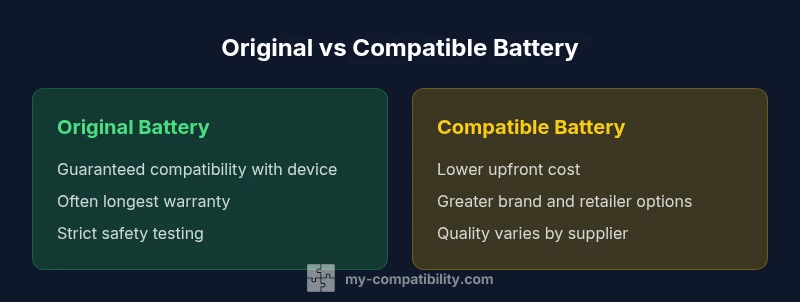
The difference between compatible and original battery centers on authenticity, safety, warranty, and performance. Original batteries come from the device manufacturer and generally offer the safest compatibility and longer warranty terms, but price and stock can be limiting. Compatible batteries offer cost savings and broader availability but require careful sourcing to avoid safety risks or reduced performance.
Understanding the difference between compatible and original battery
In the realm of device maintenance, the phrase difference between compatible and original battery matters for safety, reliability, and lifecycle cost. An original battery typically refers to a genuine OEM part produced for a specific model, while a compatible battery is designed to fit the device but may come from third‑party manufacturers. This distinction drives decisions about warranty, safety assurances, and long‑term performance. For readers of My Compatibility, the difference is not about prestige alone; it shapes how a device will behave after replacement, what you can expect in terms of support, and how much you will spend over the battery’s lifecycle. According to My Compatibility, selecting the right battery is a mix of fit, safety, and lifecycle cost.
Safety and quality benchmarks for battery choices
Safety is the primary concern when evaluating any replacement battery. Reputable original batteries undergo rigorous safety testing and thermal management to minimize risks like swelling, short circuits, or overheating. Compatible batteries can meet safety standards, but outcomes depend on the manufacturer, the quality of cells, and adherence to proper charging profiles. Consumers should look for certifications, consistent batch traceability, and clear safety documentation from the supplier. My Compatibility emphasizes that a battery’s safety profile is not only about chemistry but also about the integration with the device’s charging system and protective circuits.
How manufacturers test and certify batteries
Device makers typically require batteries to pass a suite of tests, including drop tests, thermal cycling, and long‑term discharge/charge cycles. Third‑party manufacturers may also pursue certifications such as UL, CE, or other regional standards to demonstrate reliability. The strength of these certifications varies by brand and region, so it’s essential to verify current certificates before purchase. A robust certification program often correlates with lower risk of leakage, swelling, or sudden failure. My Compatibility’s framework encourages readers to compare certification details across options and prioritize suppliers with transparent testing procedures.
Warranty implications: original vs compatible
Warranty coverage is a critical factor in total cost of ownership. Original batteries typically come with the device manufacturer’s warranty terms, which can include replacement eligibility for certain faults or premature failure. Compatible batteries may carry their own warranty from the supplier or from the retailer, or they may be excluded by the device maker’s warranty policy. It is important to read the fine print: some warranties are voided if a non‑OEM part is used, while others remain intact if the replacement is from a reputable supplier. The reliability of the warranty often reflects supplier risk management and after‑sales support.
Cost considerations and total cost of ownership
Upfront price is only one piece of the puzzle. Original batteries are often more expensive due to brand equity and controlled supply chains, but they can offer more predictable performance and warranty support. Compatible batteries tend to be cheaper initially, yet may incur higher long‑term costs if they fail prematurely, require frequent replacements, or void warranties. A thorough total cost of ownership assessment should include price, replacement frequency, potential downtime, and any impact on resale value. Readers should also weigh the opportunity cost of temporarily using a cheaper option against the risk of reduced performance or safety concerns.
Compatibility and fit: what to check before buying
Compatibility means more than simply matching the device model. Verify connector type, size, curvature, and battery chemistry. Some devices rely on specific protection circuits, temperature sensors, or firmware checks that a third‑party part may not emulate perfectly. Before purchasing, confirm manufacturer guidance on third‑party replacements and read user reviews about fit in your exact device revision. When in doubt, seek confirmation from the retailer or manufacturer’s support channel. This diligence reduces the chance of fit issues that could affect performance or safety.
Performance and longevity expectations
Original batteries usually offer predictable performance metrics, including capacity retention and cycle life, aligned with the device’s design. Compatible batteries can approach similar performance when produced by reputable brands and backed by solid quality controls, but variability exists by lot and by supplier. Expect differences in discharge curves, charge time, and runtime between batches. My Compatibility recommends evaluating advertised capacity and user feedback from your specific device model to gauge how a replacement may hold up over time.
Installation, safety, and risk management
DIY installation can introduce risks if proper procedures aren’t followed. Always disconnect power, use anti‑static precautions, and follow manufacturer guidelines for safety. If a battery shows swelling, unusual heat, or form defects, discontinue use immediately. For devices with warranty attached, professional installation may preserve coverage. Reputable suppliers provide clear handling and disposal instructions, which helps mitigate safety hazards during replacement and operation.
Regulatory and industry perspectives
Regulations around battery safety and recycling influence both original and compatible parts. Regional standards often require compliance with environmental, health, and safety rules. A transparent supply chain, traceable manufacturing practices, and responsible end‑of‑life handling are signals of a credible battery option. My Compatibility highlights that staying informed about regulatory developments can help buyers anticipate future warranty and compatibility considerations.
Real-world scenarios demonstrating trade-offs
Consider a mid‑range smartphone with a failing battery. An official OEM replacement guarantees compatibility and warranty, but may take longer to source and cost more upfront. A compatible option from a trusted supplier may arrive quickly and save money, but you should check for a reputable brand, verify safety certifications, and confirm return policies. In a professional context, technicians weigh downtime against cost, choosing the option that minimizes risk while meeting service level agreements. These decisions vary by device, user needs, and risk tolerance.
Practical decision framework: a step-by-step guide
- Identify device model and revision; 2) Research both original and compatible options from reputable sellers; 3) Check safety certifications and warranty terms; 4) Compare estimated lifespans and replacement intervals; 5) Evaluate total cost of ownership over the device’s expected life; 6) Consider potential impact on resale value and support. This framework helps individuals and businesses move beyond sticker price to a holistic assessment of reliability and cost.
Common myths and misconceptions
A popular myth is that all compatible batteries are unsafe. In reality, many third‑party options meet safety standards; the key is supplier credibility and verifiable certifications. Another misconception is that OEM parts always perform better; while they’re designed for specific devices, performance varies by usage and device age. Finally, some assume warranties are always void with non‑OEM parts; this is not universal, and understanding the specific policy is essential.
Brand and supplier scrutiny: how to vet sources
Vet suppliers by checking independent reviews, certifications, return policies, and post‑purchase support. Prefer distributors with clear product sourcing information and a track record of safe, compliant parts. Be wary of listings with vague descriptions, mismatched compatibility notes, or unusually low prices. A disciplined sourcing approach reduces risk and aligns choices with long‑term device health.
Final guidance and next steps
With device health and safety in mind, approach replacement batteries as a decision with long‑term consequences. Prioritize authenticity, safety testing, and warranty clarity. If your budget allows, original batteries deliver the most predictable outcomes; if you opt for compatible parts, choose reputable suppliers with transparent certification and return policies. Establish a safe replacement routine and monitor device temperature, runtime, and charging behavior after installation.
Comparison
| Feature | Original Battery | Compatible Battery |
|---|---|---|
| Reliability and safety standards | Typically highest due to OEM testing | Varies by supplier; seek strong certifications |
| Warranty coverage | Manufacturer warranty often included | Supplier warranty or retailer terms; may vary by batch |
| Cost range | Higher upfront cost | Lower upfront cost, but long-term risk varies by supplier |
| Availability | Device‑specific, sometimes limited | Broader options across retailers and brands |
| Performance consistency | More predictable lifecycle | Potential variability between batches |
| Safety certifications | Rigorous internal testing; OEM standards | Depends on supplier; look for UL/CE and documented tests |
Positives
- Lower upfront cost with compatible options
- Wider availability across retailers
- Potentially similar performance from reputable brands
- Easier sourcing for older devices
Cons
- Warranty terms may be unclear or limited
- Quality varies by supplier and batch
- Potential safety risks with counterfeit or non-certified parts
Original batteries for maximum reliability; reputable compatibles as a cost‑saving alternative
Original batteries are generally the safest choice for guaranteed device compatibility and long-term warranty support. If you choose compatible options, do so from trusted suppliers with clear certifications and return policies, and weigh total cost of ownership beyond the sticker price.
Questions & Answers
What is the difference between compatible and original battery?
Original batteries are manufactured by the device maker and designed to meet exact specifications. Compatible batteries are third‑party parts that fit the device but may vary in materials or testing. The right choice depends on safety certification, warranty, and total cost of ownership.
Original batteries are device‑maker parts; compatibles are third‑party. Check certifications and warranty to decide.
Are compatible batteries safe to use in modern devices?
Safety depends on the supplier’s quality controls and certifications. Reputable compatibles with clear testing data can be safe, but risk rises with lower‑quality brands. Always verify packaging, documentation, and return policies before purchasing.
Safety varies by supplier—look for certifications and good return options.
Will using a compatible battery void my device warranty?
Warranty policies vary by manufacturer. Some allow third‑party replacements under certain conditions, others may void coverage for battery failures. Always check the device’s warranty terms and the supplier’s policy before making a replacement.
Warranty depends on the maker and policy; verify before replacing.
How can I verify the quality of a compatible battery?
Review supplier certifications, read independent reviews, request documentation of testing (UL/CE), and confirm return policies. If possible, choose options with battery management features similar to the OEM.
Check certifications and reviews; ask for testing data.
Do compatible batteries affect performance or longevity?
They can approach OEM performance if sourced from reputable brands and tested to similar standards. However, variability between batches and supplier quality can impact capacity, cycle life, and charge efficiency.
Performance depends on the supplier; choose trusted brands.
Highlights
- Prioritize safety certifications and device compatibility
- Compare total cost of ownership, not just upfront price
- Check warranty terms before purchasing
- Vet suppliers for credible certifications and return policies
- Original batteries offer more predictable performance and warranty protection