How to indicate whether the given transfusion is compatible or not compatible
Learn how to indicate whether a given transfusion is compatible or not compatible. This guide covers ABO/Rh typing, antibody screening, crossmatching, and interpreting results clearly.


What does compatibility mean in transfusion medicine?
In transfusion medicine, compatibility refers to the absence of immunologic reactions between donor blood and a recipient. The core idea is to indicate whether the given transfusion is compatible or not compatible by matching blood group antigens and ensuring no clinically significant antibodies present. The basic framework begins with ABO typing: type A, B, AB, or O, and the Rh factor, positive or negative. ABO compatibility is the primary determinant of immediate transfusion safety: giving the wrong ABO type can cause severe acute hemolytic reactions. Rh compatibility is normally required for red blood cell transfusions to minimize alloimmunization in patients who may require multiple transfusions. Beyond ABO/Rh, clinicians assess the recipient’s antibody profile to anticipate alloantibody production that could cause delayed hemolysis or transfusion failure. In addition, plasma-containing products may have different compatibility considerations, because plasma transfusions can expose the recipient to antibodies that react with donor cells. The goal is to protect the patient from adverse outcomes while ensuring timely access to life-saving support.
How ABO/Rh typing shapes compatibility
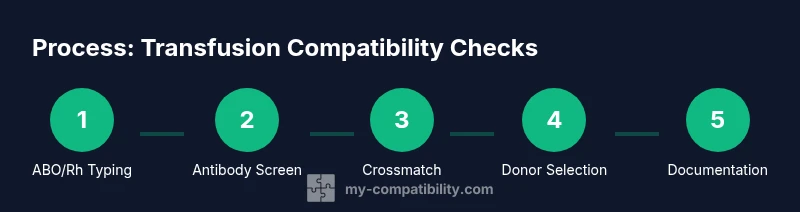
ABO typing determines which red blood cell antigens are present on donor cells and which are absent in the recipient. The Rh system adds another layer, with RhD positivity or negativity affecting the risk of alloimmunization in patients who may require repeated transfusions. When compatibility is assessed, clinicians confirm that the donor unit’s ABO and Rh antigens align with the recipient’s profile in a way that minimizes immune reaction risk. In practice, this means selecting a donor unit with compatible antigens and avoiding exposure to red cell antigens that could trigger an antibody-mediated response. While ABO/Rh compatibility is foundational, the presence of alloantibodies detected during screening can alter donor selection and require matching for additional antigens such as Kell, Duffy, or Kidd systems. This section emphasizes how the ABO/Rh framework interacts with more detailed antigen profiles to shape safe transfusion choices.
The role of alloantibodies and antibody screening
Alloantibodies are antibodies formed against non-self blood group antigens. Antibody screening identifies clinically significant antibodies that could react with donor red cells even if ABO and Rh are compatible. When an alloantibody is detected, the transfusion strategy shifts to using donor units that lack the corresponding antigen. This reduces the risk of hemolytic reactions and transfusion failure. Antibody screening is typically performed before transfusion and may be repeated in patients with a history of alloimmunization or prior transfusions. Clinicians use comprehensive data from the patient’s history, prior transfusion reactions, and current testing to interpret screening results. The overarching goal is to prevent immune-mediated injury while ensuring that compatible blood components are available for urgent needs.
The crossmatch concept: major and minor crossmatches
Crossmatching is a laboratory test that directly assesses compatibility between donor cells and recipient serum or plasma. A major crossmatch tests for antibodies in the recipient against donor red cells, while a minor crossmatch looks for donor antibodies against recipient cells. A compatible crossmatch provides strong evidence that the transfused unit will not provoke an immediate reaction. If the crossmatch is incompatible, clinicians investigate the cause—such as the presence of unexpected antibodies or donor-antigen mismatches—and consider alternative donor units or extended antigen matching. The crossmatch process, even when only interpreted at a high level, is central to validating compatibility before transfusion.
Interpreting compatibility results in clinical context
Interpreting compatibility results requires integrating serologic data with patient history and clinical urgency. A compatible result in the lab does not guarantee an absence of delayed reactions, so clinicians monitor patients closely after transfusion. When results show incompatibility, decisions involve balancing the risks of delaying transfusion against the risk of reaction. Factors such as the patient’s transfusion history, pregnancy exposure, prior antibodies, and antigen density influence the course of action. In practice, interpretation is a collaborative effort among transfusion medicine specialists, clinicians, and, when needed, immunology laboratories. The practical takeaway is to use compatibility data as a guide while maintaining vigilance for adverse effects during and after transfusion.
Special cases: antibodies, transfusing platelets, plasma, or rare antigens
Compatibility considerations extend beyond red blood cells. Platelet transfusions may involve HLA and platelet-specific antibodies, while plasma transfusions introduce donor plasma antibodies that can interact with recipient antigens. Rare antigen scenarios require specialized testing and donor matching, often involving antigen-negative units or extended panels. In these cases, transfusion teams plan carefully to minimize risk, document findings, and communicate clearly with patients and care teams. Understanding these nuances helps clinicians tailor transfusion strategies for individual patients, especially those with complex antibody profiles or prior transfusion reactions.
Documentation and communication: ensuring safety
Clear documentation is essential for ongoing patient safety. Transfusion records should capture the patient’s antigen profile, antibody screening results, crossmatch outcomes, donor unit identifiers, and any deviations or special considerations. Communication with the care team about why a particular unit was chosen or why an alternate unit was required helps prevent future confusion. Patient-facing explanations should be accurate yet understandable, focusing on what was done to verify compatibility and what to monitor post-transfusion. Proper documentation also supports continuity of care across clinicians and facilities, reducing the chance of inadvertent antigen exposure in future transfusions.
Practical scenarios: common compatibility outcomes
In everyday practice, clinicians encounter several common scenarios. A straightforward ABO/Rh compatible transfusion with a negative antibody screen is the most typical case and carries minimal risk when properly monitored. If an alloantibody is detected, compatible units may require extended antigen matching. In urgent cases, clinicians may rely on type-specific or O-negative units to ensure rapid access while awaiting full compatibility confirmation. Even when a crossmatch is compatible, patients with a history of antibodies or autoimmune conditions require careful observation for delayed hemolysis or other transfusion-related complications. These scenarios illustrate how theoretical compatibility translates into real-world decision-making and patient care.
My Compatibility insights: practical tips for patients and clinicians
As a practical guide from My Compatibility, the key to successful compatibility assessment lies in data integrity, proactive testing, and clear communication. Clinicians should verify current records, maintain a consistent approach to antibody screening, and document decisions thoroughly. Patients and caregivers benefit from understanding that compatibility testing is multi-step and may involve conservative antigen matching in high-risk cases. By following best practices, care teams can minimize transfusion risks while delivering timely support. My Compatibility’s perspective emphasizes steady, evidence-based interpretation and collaboration across specialties to ensure patient safety and confidence in the care plan.