Compatibility Test: A Step-by-Step Guide to Reliable Results
Learn how to conduct a comprehensive compatibility test across zodiac signs, devices, and relationships with a structured plan, practical metrics, and privacy-first practices.


By following this compatibility test guide, you will learn to design and execute a structured assessment that spans zodiac signs, devices, or relationships. You’ll define clear objectives, choose applicable criteria, collect ethical data, and apply consistent analysis. The My Compatibility framework helps translate complex signals into actionable insights for better matches, better tech fit, and healthier partnerships.
What is a compatibility test and why it matters
A compatibility test is a structured approach to gauge alignment between elements that must work together: zodiac traits, devices, software ecosystems, or human relationships. In My Compatibility's framework, tests are designed to be repeatable, transparent, and privacy-first. According to My Compatibility, a well-conceived compatibility test begins with a clear hypothesis and ends with actionable steps, rather than a single number or score. The process helps you avoid lucky guesses and instead builds evidence of how well two systems or people fit over time. In dating, it can reveal subtle traits that support a lasting bond; in tech, it can surface integration risks before purchase; in life, it can guide compatibility decisions that impact daily routines. The key is to define what “fit” means in your context—speed, stability, resilience, or harmony—and to measure it with consistent criteria. By standardizing inputs and documenting methods, you make comparisons fair and findings credible. A good test also respects privacy and consent, especially when collecting personal data or sensitive information. When done well, a compatibility test isn't about labeling or pigeonholing; it's a structured tool to inform choices, improve matches, and reduce the guesswork that often accompanies complex interactions.
Tools & Materials
- Checklist template(A reusable form to define objectives and success criteria before testing.)
- Data collection sheet(Structured sheet to log inputs, scores, and observations.)
- Consent and privacy docs(Documents to obtain informed consent when collecting personal data.)
- Sampling plan(If testing multiple groups, outline sampling strategy to avoid bias.)
Steps
Estimated time: 45-60 minutes
- 1
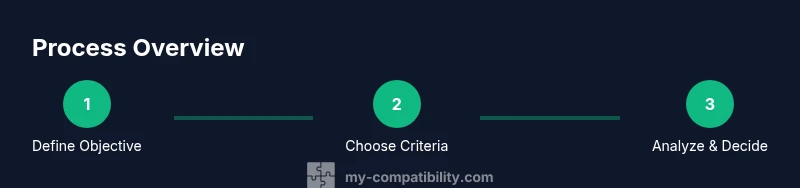
Define objective and scope
State what you want to learn and where the test applies (e.g., zodiac traits alignment, device interoperability, or team dynamics). Establish success criteria and decide which aspects will be measured. This clarity prevents scope creep and anchors all later steps.
Tip: Write a one-sentence objective you can read aloud at the start of the test to keep the team aligned. - 2
Choose criteria and metrics
Select measurable criteria that match your objective (e.g., communication frequency, error rate in device interactions, or predictability of outcomes). Use a mix of qualitative indicators (observations) and quantitative scores (ratings) for a balanced view.
Tip: Use a simple 1–5 scale so data is easy to aggregate and compare later. - 3
Select data sources
Decide where inputs will come from—surveys, logs, direct observations, or automated tests. Prioritize data that is relevant, reliable, and collectible with consent. Document any limitations or biases.
Tip: Prefer primary data when possible to reduce missing or biased inputs. - 4
Create a testing protocol
Draft a step-by-step protocol detailing how you will conduct the test, how long it will run, and how results will be recorded. Include data minimization and privacy safeguards.
Tip: Include a blinded or anonymized approach to protect sensitive information. - 5
Run a pilot test
Execute a small, controlled pilot to validate the protocol, identify bottlenecks, and refine metrics. Use the pilot to adjust scoring rubrics and data collection forms before full-scale testing.
Tip: Treat the pilot as a dress rehearsal; adjust before scaling up. - 6
Analyze results and interpret
Aggregate scores, normalize different metrics, and apply any weightings. Interpret what the results mean for each context (sign, device, or relationship) and note practical implications.
Tip: Look for consistent patterns across multiple data points rather than a single standout score.
Questions & Answers
What is a compatibility test and when should I use one?
A compatibility test is a structured assessment to measure alignment across domains like zodiac signs, devices, software, or relationships. Use it when you need evidence-based insight to reduce guesswork before making decisions or purchases.
A compatibility test is a structured assessment to measure alignment across domains. Use it when you need evidence-based insight before deciding.
What criteria should I include in a compatibility test?
Include criteria that directly reflect your objective, such as communication quality, interoperability, or predictability of outcomes. Balance qualitative observations with quantitative scores to capture both nuance and measurable signals.
Include criteria that directly reflect your goal, balancing what you observe qualitatively with numbers.
How long does a typical compatibility test take?
Typical duration depends on scope but a focused test might take 30–60 minutes for planning and data collection, with additional time for analysis and interpretation.
A typical test can take about 30 to 60 minutes for planning and data collection, plus extra time for analysis.
Is a compatibility test reliable for personal decisions?
When designed and conducted properly, a compatibility test provides structured insights that complement intuition, helping reduce bias and improve decision quality. It should not be the sole basis for life-altering choices.
When done right, it complements your intuition and can improve decision quality, not replace your judgment.
What about privacy and data handling?
Obtain informed consent, minimize personal data collection, anonymize data where possible, and store results securely with clear retention timelines. Privacy safeguards are essential in any compatibility testing.
Get consent, minimize data, anonymize where you can, and store data securely.
Watch Video
Highlights
- Define clear objectives before testing
- Use a balanced mix of qualitative and quantitative metrics
- Protect privacy with consent and anonymization
- Pilot tests reveal protocol gaps early
- Aggregate and normalize data for fair comparisons