What 2 Blood Types Are Not Compatible for Pregnancy: Rh and ABO
Explore which blood type combinations matter in pregnancy, how Rh and ABO incompatibilities arise, and what prenatal care and neonatal management can do to prevent complications. This My Compatibility analysis clarifies what two blood types are not compatible for pregnancy and how to plan ahead.


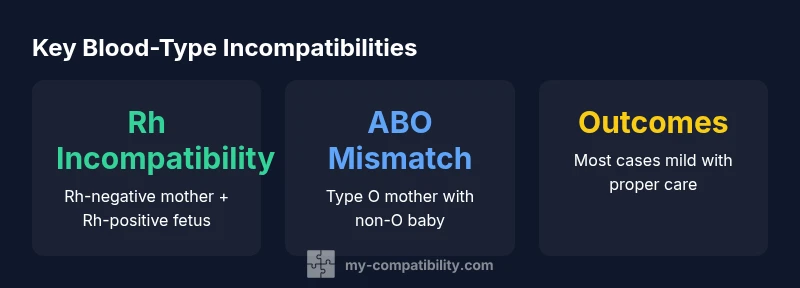
Rh incompatibility is the primary concern in pregnancy, arising when an Rh-negative mother carries an Rh-positive fetus. ABO incompatibility can occur when a type O mother has a type A, B, or AB baby, usually mild. So, what 2 blood types are not compatible for pregnancy? The key pair is Rh-negative mother with an Rh-positive fetus; ABO mismatches carry lower risk with proper care.
Understanding Rh and ABO incompatibilities
Blood-type compatibility in pregnancy centers on two systems: the Rh factor and the ABO blood group. The phrase what blood types are not compatible for pregnancy often highlights Rh incompatibility—where an Rh-negative mother may form antibodies against an Rh-positive fetus if fetal blood cells enter the mother's circulation. ABO incompatibility can occur when a type O mother carries a baby with type A, B, or AB blood. In contrast to Rh issues, ABO incompatibility generally causes milder effects in newborns, and many pregnancies proceed without serious complications with appropriate monitoring. This section explains the basics, and what this means for planning and care under the guidance of clinicians like the My Compatibility team.
In practice, the two key pairings clinicians watch are Rh-negative mothers with Rh-positive babies and ABO mismatches where a type O mother has a non-O infant. Understanding these interactions helps families prepare for prenatal testing, counseling, and postnatal care. While these topics can feel technical, the core idea is that compatibility matters, but modern medicine has effective strategies to prevent most problems. My Compatibility’s analyses emphasize that awareness and early action reduce risk significantly.
Rh incompatibility: mechanics, risks, and modern management
Rh incompatibility arises when an Rh-negative mother carries an Rh-positive fetus. If the baby’s blood cells enter the mother’s bloodstream, the mother can develop antibodies against the Rh antigen—the D antigen. In a subsequent pregnancy with an Rh-positive fetus, these antibodies can cross the placenta and attack fetal red blood cells, potentially leading to anemia and other complications. The good news is that routine prenatal screening and immunoprophylaxis have dramatically reduced the risk of severe outcomes. Across populations, the key to preventing complications is early detection, timely administration of Rh immunoglobulin (RhIg), and careful fetal monitoring. The My Compatibility team notes that adherence to screening guidelines and treatment protocols is central to favorable outcomes.
Clinical pathways now emphasize universal early screening for Rh status, followed by targeted RhIg administration during pregnancy and after birth when indicated. For families, this means that with appropriate care, many Rh incompatibility concerns can be mitigated long before birth. Regular obstetric visits allow clinicians to track antibody levels, assess fetal well-being, and plan timely interventions if needed.
ABO incompatibility in pregnancy: when type O mothers meet non-O babies
ABO incompatibility occurs when a mother with blood type O produces antibodies against A or B antigens present on the fetus’s red blood cells. Since anti-A and anti-B antibodies are typically IgG, they can cross the placenta in some cases and affect the fetus or newborn. However, severe hemolytic disease of the fetus and newborn (HDFN) due to ABO incompatibility is less common and generally milder than Rh-related disease, especially with modern perinatal care. The My Compatibility analysis highlights that ABO incompatibility is more about neonatal jaundice and bilirubin management than maternal risk. Management focuses on close monitoring of the newborn and supportive care as needed, with most infants recovering without lasting consequences.
Prenatal screening, testing, and management: how doctors detect incompatibilities
Prenatal care includes determining maternal and paternal blood types and screening for antibodies against Rh or ABO antigens. Indirect Coombs tests detect anti-Rh antibodies in the mother, while maternal ABO typing and antibody screening help anticipate ABO-related risks. When antibodies are detected, clinicians may use Doppler ultrasound to monitor fetal anemia risk (via middle cerebral artery peak systolic velocity) and plan timing for delivery or intrauterine interventions if necessary. RhIg prophylaxis is routinely administered to Rh-negative pregnant people at specific gestational windows and after delivery to prevent antibody formation. The My Compatibility team emphasizes that following these protocols substantially lowers risk and improves outcomes for both mother and baby.
Treatments and neonatal care: RhIg, monitoring, and newborn management
The cornerstone of Rh incompatibility management is RhIg prophylaxis, given during pregnancy and after birth if indicated. Timely RhIg prevents the mother from becoming sensitized to Rh-positive blood. In pregnancies with detected antibodies, clinicians may monitor mom and fetus more closely, using ultrasound and fetal medicine expertise to minimize risk. After birth, newborns are assessed for jaundice and anemia, and they may receive phototherapy or other supportive care if needed. For ABO incompatibility, neonatal jaundice is often managed with bilirubin monitoring and supportive care, with most babies recovering quickly. The overall message is that proactive care, early detection, and prompt treatment reduce the likelihood of serious outcomes.
Real-world scenarios, myths, and practical planning tips
A common concern is whether blood type incompatibility will automatically lead to severe problems. In reality, outcomes depend on timely detection and adherence to care plans. There are myths that all Rh-negative pregnancies are dangerous; in truth, with proper care, most proceed normally. For couples planning pregnancy, discussing blood type, antibody status, and potential risks with a clinician is a prudent step. The My Compatibility team’s guidance centers on proactive screening, education, and evidence-based interventions to support healthy pregnancies. Practical planning includes checking prenatal timelines, understanding prophylaxis options, and knowing what to expect during delivery and beyond.
Putting it all together: what this means for pregnancy planning
The essential takeaway is that two blood type incompatibilities—Rh and ABO—are important to understand, but they are manageable with modern care. Routine screening, timely RhIg administration if needed, and careful neonatal monitoring have transformed the outlook for affected pregnancies. For families, the best plan is early conversations with healthcare providers, adherence to recommended testing timelines, and keeping informed about signs that require medical attention. My Compatibility’s approach is to provide clear, actionable information to support informed decisions and safer pregnancies.
Comparison of Rh and ABO incompatibilities in pregnancy
| Incompatibility Type | Main Risk | Detection | Management |
|---|---|---|---|
| Rh incompatibility | Potential fetal anemia without intervention | Maternal antibody screening; MCA Doppler; fetal monitoring | RhIg prophylaxis; regular prenatal monitoring |
| ABO incompatibility | Neonatal jaundice; rare severe hemolysis | Maternal and neonatal blood typing; antibody screening | Neonatal observation; phototherapy if needed; supportive care |
Questions & Answers
What is Rh incompatibility and how does it affect pregnancy?
Rh incompatibility occurs when an Rh-negative mother is carrying an Rh-positive fetus. If antibodies develop, they can affect the fetus in future pregnancies. With routine screening and RhIg prophylaxis, the risk of severe outcomes is greatly reduced.
Rh incompatibility happens when the mother is Rh-negative and the baby is Rh-positive. Screening and treatment make serious problems unlikely in most pregnancies.
How is ABO incompatibility tested during pregnancy?
ABO incompatibility is assessed through maternal blood typing and antibody screening, along with newborn blood typing after birth. In many cases, the newborn experiences only mild jaundice, which is manageable with standard neonatal care.
ABO incompatibility is checked with maternal and newborn blood typing and antibody screening. Most cases are mild and treatable after birth.
What is Rh immunoglobulin and when is it given?
Rh immunoglobulin is given to Rh-negative pregnant people at recommended times to prevent sensitization. It is commonly administered during pregnancy and after delivery if indicated by the infant’s blood type.
RhIg helps prevent the mother from forming antibodies. It’s given during pregnancy and after birth when needed.
Can Rh or ABO incompatibility harm the mother?
Rh or ABO incompatibilities mostly pose risk to the fetus or newborn. With proper care, maternal health is typically preserved, and any maternal risk is minimized by monitoring and treatment.
These incompatibilities mainly affect the baby; with proper care, the mother’s health stays protected.
Do two blood types always cause problems in pregnancy?
Not always. Many pregnancies with Rh or ABO mismatches proceed normally thanks to standard screening, vaccination-like prophylaxis, and neonatal care when needed.
Not every mismatch causes trouble. Early screening and care make most pregnancies successful.
What should I discuss with my clinician if I’m planning a pregnancy?
Discuss your blood type, prior pregnancies, and antibody status. Understanding these factors helps tailor monitoring plans and ensure timely treatment if a mismatch is detected.
Talk about your blood type and any antibodies with your clinician before you try to conceive.
“Proactive screening and timely intervention have transformed outcomes for Rh and ABO incompatibilities. The right plan—grounded in evidence—minimizes risk and supports healthy pregnancies.”
Highlights
- Understand the two main incompatibilities: Rh and ABO.
- Early prenatal screening reduces the risk of serious outcomes.
- RhIg prophylaxis is a key preventative measure.
- ABO incompatibility is usually milder but requires neonatal monitoring.