Compatibility Charts for Zodiac Signs: Reading Sun, Moon, and Rising
Explore how compatibility charts for zodiac signs map sun, moon, rising, and planetary energies to relationship dynamics. Learn chart types, reading methods, and practical tips for mindful dating.


Compatibility charts for zodiac signs are interpretive tools that translate astronomical data into relationship themes. They combine sun signs, moon signs, rising signs, and planetary placements to map patterns of affinity and friction. While not deterministic, these charts help people discuss dynamics in dating, friendships, and partnerships, guiding conversation and reflection rather than predicting fate.
What compatibility charts aim to reveal
Compatibility charts for zodiac signs translate celestial data into practical themes about how people communicate, relate, and meet emotional needs. They offer a structured lens for discussing attraction, harmony, and growth within dating, friendships, or long-term partnerships. Importantly, these charts illuminate patterns and preferences rather than guarantee outcomes. According to My Compatibility, their value lies in sparking constructive conversations, not in predicting a fixed path. When used well, a chart can highlight complementary communication styles, potential misreads, and shared values, which you can then test against real-life behavior and mutual feedback.
Types of zodiac compatibility charts
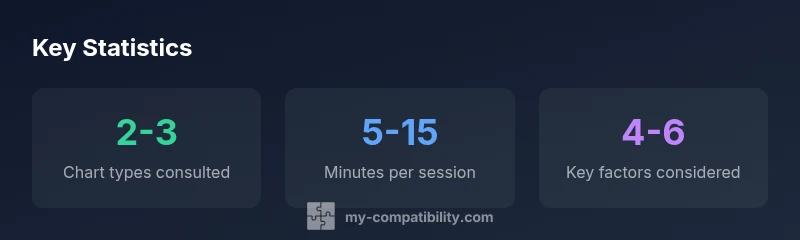
There are several chart types used to assess compatibility. The most common is the synastry chart, which overlays two birth charts to identify harmonies and tension points between planetary placements. The composite or relationship chart blends two charts into a single map that describes shared dynamics rather than individual traits. Some practitioners also use sun-sign compatibility charts that focus on sun sign pairings and elemental correspondences for quick heuristics. Venus-Mars dynamics are often considered for romance, while Moon alignments emphasize emotional resonance. Each type serves a different purpose: synastry emphasizes interaction, composite emphasizes unity, and sun-sign charts provide quick guidance. Interpretations vary by astrologer, so comparing multiple types yields a fuller picture.
Reading the chart: sun, moon, rising, and planetary aspects
A robust compatibility chart goes beyond sun sign trivia. The sun signals core identity, the moon reveals emotional needs, and the rising sign shows outward behavior and first impressions. Venus and Mars illuminate attraction and conflict styles, while Mercury can reveal communication preferences. Look for harmonious aspects (trines, sextiles) versus challenging ones (squares, oppositions) to gauge ease or friction. Timing matters: transits and progressions shift interpretations over years. For dating, many readers begin with sun-Venus compatibility for romance and then refine with Moon and Mercury links for emotional and conversational dynamics. Use this layered approach to avoid overgeneralization and to ground insights in lived experience.
The role of elements and modalities in pairings
Zodiac signs are organized by elements (fire, earth, air, water) and modalities (cardinal, fixed, mutable). In compatibility readings, balanced element pairs can signal natural rapport (fire with air, earth with water) while energy mismatches highlight learning opportunities. Modalities reveal energy patterns: cardinal signs initiate, fixed signs sustain, and mutable signs adapt. When evaluating a match, consider the balance of elements and modalities across both charts. A harmonious mix often points to smoother communication and shared rhythms; significant imbalances may require intentional adjustments. Real life remains shaped by choices, context, and personal growth, of course, which charts can illuminate but not determine.
Common pitfalls and limitations
Readers should approach compatibility charts with healthy skepticism. Astrology is interpretive, and readings vary across practitioners; two astrologers may draw different conclusions from the same data. Charts should not be treated as fate or a sole predictor of outcomes; free will and context remain decisive. Sun-sign emphasis can oversimplify identity, so include rising, moon, and planetary placements for nuance. Cultural and historical biases can influence interpretations, so seek diverse viewpoints. Finally, avoid using charts to judge worth or viability. Use them to inform communication goals, boundaries, and growth opportunities.
How to apply charts in relationships: practical steps
To apply charts constructively, start with a clear intent: what issue do you want the chart to illuminate (communication, trust, conflict resolution)? Collect birth data with consent, then compare sun sign themes, Venus/Mars dynamics for romance, and Moon placements for emotional compatibility. Translate insights into concrete actions: adjust communication styles, set boundaries, and align on shared values. Schedule periodic check-ins as both partners evolve. Remember: charts indicate tendencies, not certainties; use them as a guide to thoughtful conversations and joint growth.
Ethical use and expectations: astrology vs science
Zodiac compatibility charts provide a symbolic language for exploring relational patterns, while science relies on empirical evidence. Use astrology to foster empathy, curiosity, and clearer dialogue, but maintain healthy skepticism about definitive predictions. When used responsibly, charts can support relationship growth by highlighting communication preferences, conflict approaches, and shared values. Always pair astrology with open conversation, consent, and respect for autonomy.
Common zodiac chart types and their uses
| Chart Type | What it Measures | Typical Use Case |
|---|---|---|
| Synastry Chart | Overlay of two birth charts; highlights planetary contacts | Dating and long-term partnerships |
| Composite Chart | Shared dynamic map; emphasizes relationship patterns | Couple dynamics and joint decisions |
Questions & Answers
What are zodiac compatibility charts?
Zodiac compatibility charts are interpretive tools that map how sun, moon, rising, and planetary energies may interact between two people. They come in several forms, including synastry and composite charts, each emphasizing different aspects of relationship dynamics.
Zodiac charts map how two people might interact, focusing on patterns rather than guarantees.
How reliable are these charts?
Readings are inherently interpretive and vary by practitioner. They provide a framework for discussion, not a proven forecast. Use them as a guide alongside real-life experiences and open conversation.
Treat charts as discussion starters, not destiny.
Do I need to know my rising sign to use charts?
Rising adds nuance by indicating outward behavior, but it is not strictly required. Sun and moon placements already reveal core themes; rising just sharpens the lens.
Rising helps, but sun and moon are a strong starting point.
What about planetary aspects like Venus and Mars?
Venus and Mars illuminate attraction and relationship dynamics; Mercury can signal communication styles. They enrich the reading but aren’t the sole determinants of compatibility.
Venus and Mars spice the reading; they don’t decide everything.
Can charts predict relationship success?
No. Charts indicate tendencies and potential friction points. Success depends on communication, effort, and shared values, not a fixed chart outcome.
They show possibilities, not guarantees.
How should I apply charts in dating today?
Use charts as a reflective tool to guide conversations and boundaries. Combine chart insights with honest dialogue and experimentation in the relationship.
Use charts to guide chats, not to dictate dating decisions.
“Astrology offers a flexible framework for exploring compatibility; it highlights patterns to discuss, not guarantees of outcomes.”
Highlights
- Identify chart types that match your goals
- Read beyond sun signs for nuance
- Balance sun, moon, and Venus/Mars insights
- Beware of over-interpretation and bias
- Use charts as guidance, not guarantees