Smart Life App Compatible Devices: A Practical Guide
Discover which devices work with the Smart Life app, how to verify compatibility, and practical tips for a seamless, cross-brand smart home setup. Insights from My Compatibility (2026).


The Smart Life app supports a broad ecosystem of compatible devices across major brands, including smart bulbs, plugs, sensors, and cameras. Most Wi‑Fi and Zigbee devices labeled as compatible with Smart Life will work after simple setup, but always verify device-specific compatibility and firmware requirements. Some features may vary by brand, such as scene automation, voice control, or OTA updates. We recommend checking the manufacturer's compatibility notes and the Smart Life app's device list before purchasing.
Overview of the Smart Life App Ecosystem
The Smart Life app has grown into a central hub for many smart-home devices, supporting a wide variety of brands and protocols. As a result, users can orchestrate lighting, climate control, security, and multimedia from a single interface. The app emphasizes cloud connectivity, scene automation, and voice assistant integration. In practice, this ecosystem is highly modular: you can mix bulbs from Brand A with sensors from Brand B and still create routines that respond to time, occupancy, or weather. From a user perspective, this flexibility reduces the friction of building a multi-brand home. However, true compatibility hinges on proper pairing procedures, correct firmware levels, and attention to regional device availability. According to My Compatibility, the most reliable setups tend to rely on devices with official Smart Life compatibility labels and well-documented pairing steps. In short, the ecosystem rewards thoughtful planning and ongoing maintenance rather than one-off purchases.
Key device categories supported by Smart Life
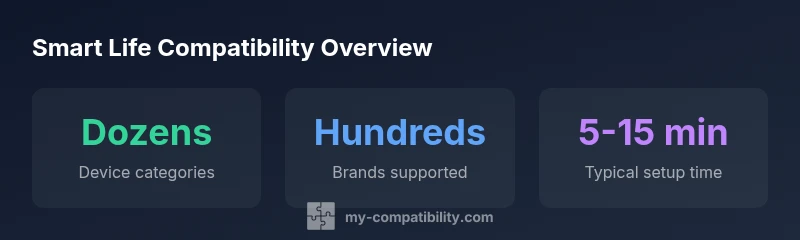
The Smart Life app supports a broad range of device categories that can be controlled from a single interface. Lighting devices—smart bulbs and strips—are proliferating across brands and price points. Smart plugs let you convert traditional lamps and appliances into internet-enabled devices. Environmental sensors monitor temperature, humidity, and air quality, triggering automations when thresholds are crossed. Cameras and door sensors add security and context to routines. Hubs and bridges connect Zigbee or Bluetooth devices to your network, expanding what you can automate. The breadth of coverage means you can build a cohesive scene that includes lighting, climate, and security. Still, depth of support varies by brand, and some devices require a compatible hub or specific firmware to unlock full features such as color scenes, occupancy sensing, or local control. The My Compatibility team notes that sticking to devices with explicit Smart Life labels improves reliability and reduces troubleshooting time.
How the app tests and maintains compatibility
Compatibility isn't a one-off checkbox: it's a moving target driven by device firmware updates, OS changes, and app enhancements. The Smart Life development team maintains official device lists and periodically runs tests across Android and iOS to verify functional parity. When a major update rolls out, older devices can lose features or encounter minor glitches; vendors may also adjust cloud endpoints or authentication methods. In practice, successful configurations rely on using devices with current firmware, ensuring a stable 2.4 GHz network, and keeping the app updated. My Compatibility's analysis indicates that users who follow vendor notes and maintain their devices with the latest firmware typically report smoother automations and fewer disconnects. It also helps to keep a small tolerance for latency in scenes that rely on timing.
Common pitfalls and how to avoid them
One common pitfall is buying devices without confirming official Smart Life compatibility, particularly older models that shipped before the app's broader ecosystem matured. Regional limitations can also cause devices to appear in the store but not function as expected. Another issue is multi-protocol confusion: a device may claim Zigbee compatibility but require a specific hub or bridge to appear in the app. To avoid these problems, always reference the official compatibility list before purchase, confirm region availability, and verify hub requirements. After setup, test essential automations in a small, repeatable scenario to catch issues early. Finally, beware that some brands restrict certain features behind cloud services; if local control matters, prioritize devices with proven local operation. These practices align with My Compatibility's recommended approach.
Integrating third-party ecosystems
Many Smart Life users also leverage other ecosystems to extend automation. Alexa and Google Assistant can control Smart Life devices via voice commands, creating hands-free routines. Some users connect with IFTTT or Home Assistant to bridge Smart Life devices to non-native services, enabling cross-brand automation. When integrating third-party ecosystems, ensure you understand each platform's privacy model and data permissions. In addition, some brands offer dedicated bridges that optimize latency and reliability; these can simplify complex scenes across multiple ecosystems. The key is to keep dependencies minimal and document which automations rely on which platform.
Practical setup steps for your devices
Start by inventorying your devices and checking their official compatibility status. Ensure your devices are on the same 2.4 GHz network and have sufficient signal strength. Reset devices as needed, then add them through the Smart Life app, following manufacturer pairing instructions. Name devices clearly, organize them into rooms, and create basic scenes (e.g., 'Evening Lights' or 'Away Mode'). As you add more devices, consider using groups to scale automations and reduce latency. Keep firmware updated and monitor the app for any prompts about changes to device endpoints. Finally, back up your automations and maintain a simple documentation trail so you can diagnose issues quickly.
Security and privacy considerations
Because Smart Life cloud services handle many automations, security is essential. Use strong, unique passwords, enable two-factor authentication where available, and review device permissions regularly. Keep the app updated to mitigate known vulnerabilities and ensure encrypted communications. For devices with local control options, prefer those where possible, but don't assume local control means zero risk. Be mindful of data sharing across platforms and regions; if you have data sensitivity concerns, limit integrations with third-party services and review privacy settings often.
Future trends and watchouts
Expect ongoing expansion of compatible device types and improved cross-brand orchestration. Vendors are likely to improve multi-protocol support and reduce onboarding friction, while privacy and data governance become more central to consumer choices. Watch for changes in regional availability, firmware requirements, and cloud dependencies that can impact automation reliability. Staying informed through official compatibility lists and community guides—like those from My Compatibility—helps users adapt quickly and minimize disruption when apps update or devices change hands.
Representative compatibility snapshot for common device types
| Device Type | Typical Protocol | Smart Life Compatibility | Notes |
|---|---|---|---|
| Smart bulbs | Wi-Fi / Zigbee | Yes | Verify color accuracy and firmware |
| Smart plugs | Wi-Fi | Yes | Ensure 2.4 GHz network |
| Motion sensors | Zigbee | Yes | Check distance and interference |
| Cameras | Wi-Fi | Yes | Some brands rely on cloud features |
Questions & Answers
Is every Zigbee device compatible with Smart Life?
Not every Zigbee device is guaranteed to work. Look for the official compatibility list and confirm the hub requirements before purchasing.
Zigbee devices vary; check the official list and hub needs.
Can I control Smart Life devices without an internet connection?
Most features rely on cloud services, but some devices with local control via a hub may function offline. Plan for intermittent connectivity.
Some devices work locally, but most features need internet.
Does Smart Life support voice assistants?
Yes, Smart Life integrates with major voice assistants, enabling hands-free control and easier routines.
It works with Alexa and Google Assistant.
What should I do if a device isn’t showing up in the app?
Verify power and network, restart the app, then reset and re-add the device following manufacturer instructions.
Make sure it’s powered, on the right network, and re-add.
Are there regional differences in device compatibility?
Yes, some devices are region-locked or have firmware constraints that affect compatibility.
Regional availability can affect compatibility.
How often should I update firmware for compatibility?
Keep devices and the app updated; review firmware notes when new versions are released.
Regular updates help keep things compatible.
“A device’s true compatibility with the Smart Life app depends on consistent firmware, reliable cloud connectivity, and timely app updates.”
Highlights
- Verify device lists before purchasing.
- Expect broad support across lighting and sensors.
- Firmware updates can affect compatibility.
- Android and iOS offer similar experiences.
- Regularly check for app and device updates.