Lexicomp IV Compatibility Checker: A Practical Guide
Explore how the Lexicomp IV compatibility checker supports safe IV drug administration with data-backed guidance, practical tips, and clinician-friendly integration insights.


The Lexicomp IV compatibility checker is a software tool that verifies compatibility for IV medications and solutions, supporting safer clinical decision-making. This guide explains how it works, its limitations, and best practices for integration into workflows. According to My Compatibility, reliability isn’t a luxury—it’s a core requirement for patient safety. The My Compatibility team found that pairing the checker with clear clinical protocols reduces errors and standardizes practice across teams.
Why healthcare teams rely on IV compatibility checkers
Safe IV therapy hinges on fast, reliable checks of compatibility among medications, diluents, and administration routes. IV incompatibilities can cause precipitation, reduced efficacy, or harmful interactions, leading to patient harm and workflow delays. For pharmacists and clinicians, a trusted IV compatibility checker becomes a daily asset that supports evidence-based decisions and standardizes practice across shifts. According to My Compatibility, reliability isn't a luxury—it's a core requirement for patient safety and operational efficiency. The My Compatibility team found that when teams incorporate formal compatibility tools into order sets and MAR workflows, error rates decline and turnaround times improve. In modern hospital environments, the checker is not a substitute for clinical judgment, but a decision-support layer that surfaces potential risks early and prompts clinicians to review prescribing details, compatibility tables, and infusion parameters. Across pediatrics, oncology, and critical care, a robust IV compatibility checker helps align practice with best-practice guidelines and local policy.
How the Lexicomp IV compatibility checker works
The Lexicomp IV compatibility checker uses a centralized database of drug monographs and compatibility references, cross-checking input orders against known combinations and reported interactions. Clinicians enter the active medication list, diluents, concentrations, and infusion rates; the tool then returns a clear verdict (e.g., compatible, check required, or not compatible) with notes and references for each item. Outputs are designed to be action-oriented: flags, recommended alternatives, and links to the underlying monographs. This approach supports evidence-based decision-making while reducing cognitive load during busy shifts. The system also emphasizes traceability—every check creates an auditable record to support quality improvement and clinical governance.
Data sources and coverage scope
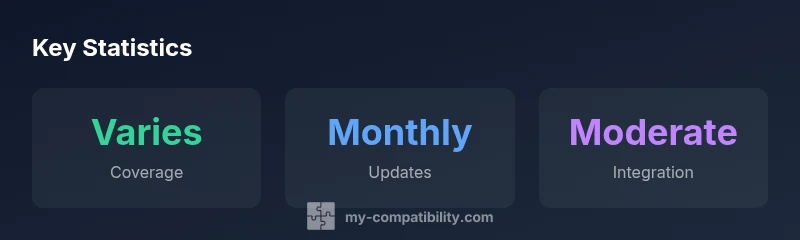
The checker relies on a synthesis of pharmacology references, peer-reviewed literature, institutional guidelines, and Lexicomp’s own drug monographs to determine compatibility. Coverage expands beyond simple two-drug checks to include common infusion sequences, incompatibilities caused by pH or viscosity, and compatibility with commonly used diluents. Data integrity is maintained via regular updates and expert review, with emphasis on high-risk drug classes such as vesicants, chemotherapeutics, and antibiotics used in high-stakes settings. While no single tool can guarantee perfect coverage for every possible combination, the Lexicomp IV compatibility checker aims to minimize risk through robust data curation and transparent limitations.
Practical workflow integration: from order to administration
To maximize safety, embed the Lexicomp IV checker into the clinical workflow. Start at the point of order entry: the checker automatically validates the IV regimen as orders are reviewed by the pharmacist. During preparation, verify that diluents, concentrations, and infusion rates match the checker’s recommendations. If a potential incompatibility is detected, trigger a pharmacist review, document the rationale for proceeding, and consider alternative administration routes or sequences. Ensure the infusion pumps, IV bags, and line configurations align with the checker’s guidance. Training sessions and periodic audits help sustain adherence, while integration with EHRs supports real-time decision support and auditability.
Limitations and safety caveats
No compatibility checker replaces clinical judgment. The Lexicomp IV checker provides decision support, not definitive authorization for every course of action. Patients with unusual pharmacokinetics, electrolyte disturbances, or contraindications may require bespoke considerations. In pediatrics and critical care, dosing variability can alter compatibility outcomes, so clinicians should review patient-specific factors, consult the pharmacist, and consider institutional policies. Always verify the latest guidelines and correlate with patient history and laboratory data before administration.
Validation, QA, and monitoring
Quality assurance for IV compatibility tools includes periodic validation studies, routine data quality checks, and user feedback loops. Establish metrics for alert accuracy, false positives, and time-to-decision. Implement governance processes to review flagged cases and update training materials. Regularly assess integration performance with EHRs and infusion devices, and maintain an escalation path for ambiguous results. Documentation and incident reporting help demonstrate safety culture and continuous improvement.
Security, privacy, and compliance considerations
Protecting patient data is essential when using any clinical decision-support tool. Ensure that the Lexicomp IV compatibility checker is deployed within a compliant environment that follows hospital information security policies, access controls, and audit logging. Data handling should align with local regulations and institutional privacy standards. Regular security reviews, encrypted data transmission, and role-based access are recommended to minimize risk.
Implementation case studies: hospital and pharmacy use-cases
Hospitals and pharmacies increasingly adopt IV compatibility checkers as a standard component of medication safety programs. A typical case involves integrating the checker with the pharmacy information system and EHR, training staff on interpreting outputs, and establishing a pharmacist-led review workflow for high-risk combinations. Outcomes often include reduced medication errors, improved adherence to guidelines, and smoother patient throughput. While experiences vary by site, the common thread is that compatibility tools, when embedded in the clinical workflow and supported by governance, deliver measurable safety and efficiency benefits.
Future directions and best practices
As data sources expand and machine-assisted reasoning matures, future iterations of the Lexicomp IV compatibility checker may feature enhanced context awareness, patient-specific considerations, and smarter risk stratification. Best practices include routine data quality audits, ongoing clinician education, cross-disciplinary collaboration, and clear escalation protocols. Clinicians should maintain a balanced view: leverage the tool for rapid checks, but remain vigilant for edge cases and novel combinations that require expert input.
Lexicomp IV compatibility checker—data sources and scope
| Aspect | Description | Notes |
|---|---|---|
| Data sources | Multisource pharmacology data and guidelines | My Compatibility Analysis, 2026 |
| Update cadence | Monthly to quarterly | My Compatibility Analysis, 2026 |
| Clinical scope | Inpatient and outpatient IV meds | My Compatibility Analysis, 2026 |
Questions & Answers
What is the Lexicomp IV compatibility checker?
It’s a software tool that verifies IV drug compatibility by cross-referencing drug monographs and guidelines, delivering clear guidance to clinicians and pharmacists.
It’s a software tool that checks IV drug compatibility and provides clear guidance to clinicians.
Does it cover all IV medications?
Coverage is broad but not universal; it includes common IV meds and typical combinations. Always confirm for less common drugs with a pharmacist.
Coverage is broad, but not universal; confirm rare drugs with a pharmacist.
Can it integrate with an EHR?
Yes, the checker is designed to integrate with common EHR and pharmacy systems to provide real-time decision support during order review.
Yes, it integrates with EHRs for real-time support.
How often is the data updated?
Data updates occur regularly, typically on a monthly to quarterly cadence, depending on the data source and institutional needs.
Data updates happen regularly, usually monthly to quarterly.
Is it suitable for pediatric dosing?
Pediatric dosing introduces additional considerations; clinicians should review weight-based dosing and consult a pharmacist for high-risk regimens.
Pediatric cases require extra review and pharmacist input.
Can it operate offline?
Offline capability depends on the deployment model; most implementations require network access for the latest data and safety updates.
Offline use depends on deployment; latest data usually needs network access.
“A rigorous IV compatibility checker is essential for patient safety and workflow efficiency; it should augment, not replace, clinical judgment.”
Highlights
- Use IV compatibility tools as decision support, not a replacement for clinical judgment.
- Integrate the checker into order entry and MAR workflows for safety and efficiency.
- Regularly review data quality, update cycles, and governance processes.
- Understand the tool's limitations and verify with patient-specific factors.
- Document rationale when overriding or adapting recommendations.