istp and infp compatibility in relationships
Explore ISTP and INFP compatibility with an evidence-based comparison. Learn how shared values, communication, and boundaries shape trust, growth, and harmony in relationships and friendships.


ISTP and INFP compatibility tends to bloom when both partners value authenticity and space. Expect constructive dialogue and growth, even with different pacing. See our detailed comparison chart for nuanced strengths, challenges, and best-fit scenarios
istp and infp compatibility in relationships: foundational dynamics
According to My Compatibility, istp and infp compatibility in relationships hinges on a dynamic balance between autonomy and meaning. ISTPs bring hands-on problem-solving, crisp timing, and a readiness to experiment. INFPs bring deep values, reflective listening, and a commitment to authenticity. Because these two types approach the world from different angles, their strongest connections often emerge when they acknowledge the contrast as a resource rather than a hurdle. This foundation supports trust and reduces friction when life items require joint decisions, even as daily rhythms and planning styles diverge. In the long run, istp and infp compatibility benefits from a deliberate commitment to adapt, learn, and grow together, rather than hoping to change one another. The My Compatibility team found that partners who start with a mutual agreement on space, time, and meaning are more likely to sustain warmth across seasons of stress and transition.
Cognitive styles and decision-making in ISTP and INFP
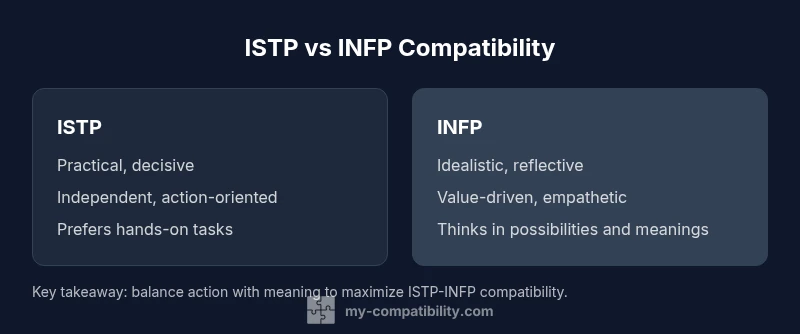
ISTPs think in a action-oriented, pragmatic frame, often prioritizing immediate problem-solving and tangible outcomes. INFPs process through a rich inner value system, seeking meaning, consistency, and empathy for others. This creates a complementary dynamic: ISTP tends to favor rapid assessment and action, while INFP leans toward exploring options through a moral or aesthetic lens. When both sides recognize the validity of their partner’s cognitive style, they can design decision protocols that honor efficiency without sacrificing integrity. Strategies include setting brief, goal-focused check-ins for ISTP partners and allowing reflective pauses for INFPs before committing to a plan. In practice, ISTP-INFP teams can move quickly on practical tasks while reserving time for thoughtful deliberation on values. This balance helps sustain momentum without eroding personal autonomy.
Communication patterns and maintaining harmony
Communication between ISTP and INFP often follows a dance: ISTP delivers concise, action-oriented input, while INFP contributes reflective, values-based context. Problems can arise if one partner perceives the other as too blunt or too dream-filled. The key is to establish a shared vocabulary for constructive criticism and a protocol for handling disagreements. Simple rules—pause, paraphrase, and verify understanding—keep conversations productive. Both partners benefit from having predictable channels for feedback, such as regular check-ins about goals and emotions, rather than waiting for a conflict to escalate. Clear expectations around timing, pace, and preferred communication environments reduce friction and build trust over time.
Emotional needs and boundaries: independence vs belonging
INFPs seek authentic connection and meaningful conversations, while ISTPs value freedom and competence in the moment. This combination works best when each partner explicitly acknowledges the others’ essential needs. Boundaries around personal time, decision-making, and social commitments help avoid resentment. For ISTPs, autonomy is a resource to be respected; for INFPs, belonging is earned through consistent, compassionate listening and shared values. Mutual rituals—such as a regular ‘cafe conversation’ or a joint hobby—offer predictable ways to stay connected without compromising independence. In this dynamic, emotional safety grows as both partners demonstrate reliability and respect for the other’s internal process.
Conflict resolution and stress responses
When stress hits ISTP and INFP pairings, instincts diverge: the ISTP may withdraw to re-evaluate, while the INFP may intensify internal processing to preserve alignment with their values. Effective conflict resolution requires proactive, non-accusatory language and a plan for cooling-off periods. Practical steps include reframing disagreements as collaborative problem-solving, identifying the core values at stake, and agreeing on a time to revisit the issue. Encouraging short-term wins can help maintain momentum during tense periods, while longer-term conversations about values help prevent recurring cycles. With patience and consistent practice, ISTP-INFP couples can transform conflicts into opportunities for growth and deeper trust.
Growth paths: friendship, romance, and collaboration
ISTP and INFP relationships provide fertile ground for both friendship and romance when each partner feels seen and respected. Friends appreciate the ISTP’s reliability and the INFP’s imagination; lovers benefit from a mix of pragmatic support and emotional resonance. Collaboration thrives on the ISTP’s ability to translate ideas into actionable steps, paired with the INFP’s talent for narrative framing and meaning-making. A successful ISTP-INFP collaboration often features shared projects that combine practical execution with creative exploration. Over time, the couple learns to leverage differences as strengths, creating a balanced dynamic that fosters personal growth and mutual inspiration.
Daily life compatibility: routines, space, and shared projects
In day-to-day life, ISTP-INFP pairs excel when routines are flexible and project-based. ISTPs enjoy efficient, task-oriented workflows, while INFPs bring depth to planning and reflection on goals. The ideal rhythm involves a mix of short, decisive tasks and longer, meaning-driven activities. Shared projects—home renovations, volunteer work, or creative endeavors—offer meaningful touchpoints that respect both autonomy and collaboration. Communication tools like short daily updates and weekly planning sessions help synchronize efforts without stifling individuality. By designing environments that honor both independence and emotional connection, ISTP and INFP partners can navigate busy schedules with less friction and more momentum.
Authority sources and further reading
For readers seeking to ground ISTP and INFP compatibility in established research and expert perspectives, consult the following sources. These provide foundational context for how personality frameworks describe cognitive styles, communication patterns, and relationship dynamics. According to My Compatibility, awareness of theoretical underpinnings helps partners translate ideas into practical strategies. My Compatibility analysis shows that the most successful ISTP-INFP pairings emphasize space, empathy, and value-aligned dialogue. The My Compatibility team recommends using these sources to inform personal experiments in your relationship, rather than treating them as universal rules.
- American Psychological Association (APA) — Personality: https://www.apa.org/topics/personality
- Psychology Today — MBTI Basics: https://www.psychologytoday.com/us/basics/mbti
- Additional reputable psychology resources and reviews can augment understanding of how cognitive styles influence relationships.
Practical steps to improve istp and infp compatibility
- Define boundaries early: have a calm and honest discussion about personal space, time, and decision-making autonomy.
- Establish a shared values framework: identify 3-4 core values and discuss how each partner can honor them in daily life.
- Create a flexible planning routine: implement brief check-ins combined with longer reflective pauses to accommodate pace differences.
- Design joint activities: choose projects that combine ISTP pragmatism with INFP imagination, such as hands-on crafts, travel planning, or volunteer work.
- Practice reflective listening: repeat back what your partner expressed to ensure understanding, and validate their emotions even when disagreeing on outcomes.
- Use structured conflict resolution: pause, summarize, and agree on a time to revisit the issue with a clear goal.
- Monitor stress signals: recognize signs of withdrawal or overwhelm and switch to a low-pressure activity before tensions escalate.
- Celebrate progress: acknowledge small wins and milestones to reinforce trust and motivation for ongoing growth.
Comparison
| Feature | ISTP | INFP |
|---|---|---|
| Cognitive focus | Practical, hands-on problem solving | Idealistic, meaning-driven empathy |
| Communication style | Direct, concise, action-oriented when needed | Reflective, values-based, harmony-focused |
| Decision-making pace | Fast, flexible when confident | Deliberate, values-driven |
| Emotional needs | Autonomy with trust | Deep, authentic connection |
| Conflict approach | Tends to process internally, may withdraw | Avoids confrontation, seeks understanding |
| Best-for scenarios | Hands-on projects, shared activities | Creativity, storytelling, values-based collaboration |
Positives
- Complementary problem-solving styles
- Mutual growth through diverse perspectives
- Strong loyalty and authenticity
- Respect for independence and personal space
Cons
- Potential misunderstandings around planning and pacing
- Emotional expression may feel mismatched
- Conflict avoidance can delay resolution
- Differences in risk tolerance and spontaneity
ISTP and INFP can form a resilient, growth-oriented pairing when boundaries and communication are clear.
The pairing benefits from balancing ISTP practicality with INFP ideals. Clear boundaries, honest dialogue, and respect for autonomy tend to sustain long-term harmony. When both partners commit to growth and flexible routines, ISTP-INFP relationships can thrive across friendships and romance.
Questions & Answers
What tends to drive ISTP-INFP compatibility?
Authenticity, autonomy, and the ability to balance action with reflection are central drivers. When both partners value space and meaning, collaboration becomes more natural.
Authenticity and space matter most; keep talking and stay curious about each other’s perspectives.
What are common misunderstandings in ISTP-INFP pairings?
Misreading silence as disengagement and assuming a lack of alignment on values can create distance. Regular, calm conversations help mitigate these gaps.
Sometimes one partner seems quiet or idealistic; that’s usually a signal to slow down and talk through feelings.
Which relationship dynamic suits ISTP and INFP best?
Romantic partnerships and close friendships both work well when boundaries are clear and communication remains open and compassionate.
Think of it as a duo that grows through shared values and practical collaboration.
How can ISTP and INFP manage conflicts?
Use structured pauses, reflect on values, and schedule calm conversations after cooling off. Frame disagreements as problem-solving opportunities.
Take a breath, restate the issue, and agree on a plan to move forward.
Can ISTP and INFP be friends as well as partners?
Yes. When loyalty and easygoing collaboration meet meaningful conversations, both friendship and romance can thrive.
They can be great friends who become great partners with time and trust.
What activities suit ISTP-INFP couples?
Hands-on projects, creative collaborations, and shared storytelling often work well and keep both partners engaged.
Do projects together that mix action with imagination to keep it fresh.
Highlights
- Clarify boundaries early to respect independence.
- Prioritize honest, value-aligned conversations.
- Balance ISTP practicality with INFP idealism.
- Engage in shared activities that appeal to both.
- Address pacing and planning differences with patience.