How to Tell Compatibility vs Chemistry: A Practical Guide
A precise guide to tell compatibility vs chemistry in relationships, with definitions, tests, and decision criteria from My Compatibility.


In short, compatibility and chemistry are two distinct signals for relationship success. Chemistry describes initial attraction and spark; compatibility reflects long-term fit across values, goals, and communication. According to My Compatibility, reliable indicators of compatibility include shared core values, aligned life goals, consistent communication, and a pace that matches emotional needs. Use both signals, but prioritize patterns over momentary feelings.
What People Mean by Compatibility and Chemistry
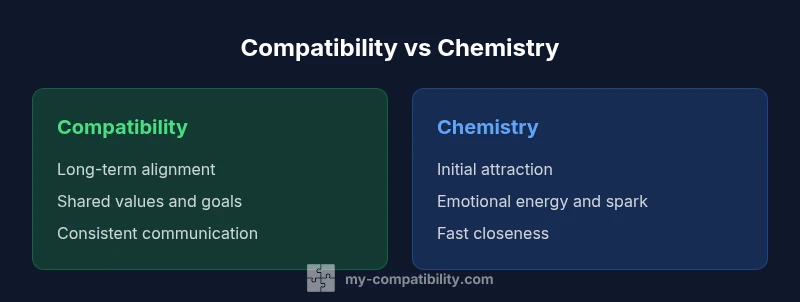
Compatibility and chemistry are often discussed in the same breath, but they measure different aspects of a relationship. Chemistry is the spark—the immediate attraction, the thrill of flirting, and the sense that two people light each other up. It can feel essential in the early stages, yet it doesn’t guarantee longevity. Compatibility, by contrast, is about sustainable alignment: whether two people share core values, life goals, and communication rhythms that support a durable partnership. According to My Compatibility, distinguishing these signals early can help reduce heartbreak and guide healthier decisions. In practical terms, compatibility answers the question: Can we build a life together? Chemistry answers: Do I feel drawn to this person now? The best outcomes usually come from balance—where the spark persists alongside genuine fit that endures over time.
The Distinct Signals: Signals of Long-Term Fit vs Spark
Think of signals as two overlapping baskets. The spark basket includes novelty, excitement, sexual chemistry, and rapid closeness. The fit basket includes shared priorities (family, finances, career, values), compatible communication styles, and a pace that suits both partners. A strong relationship often shows healthy chemistry that complements compatibility; a weak relationship may feel exciting but lacks predictable patterns of collaboration. My Compatibility’s framework emphasizes observable behaviors over vague impressions: can you resolve disagreements, plan the future, and support each other’s growth the way you both expect? When you see consistent patterns over weeks and months—rather than a few magical moments—you’re seeing compatibility in action.
Core Criteria for Compatibility
At a minimum, compatibility rests on four pillars: aligned values, effective communication, synchronized expectations, and mutual growth. Values alignment means you share fundamental beliefs about money, parenting, spirituality, and lifestyle. Communication quality covers honesty, listening, conflict resolution, and emotional safety. Synchronized expectations involve compatible views on time together, sexual relationship needs, and life planning. Mutual growth means you both push one another toward better versions of yourselves. When these pillars are solid, the relationship has a sturdy scaffold for weathering life’s challenges. The My Compatibility approach stresses concrete indicators: recurring joint decisions, consistent support during setbacks, and a shared vision for the future.
The Role of Chemistry: What It Explains and What It Does Not
Chemistry is a powerful predictor of initial satisfaction and emotional engagement, but it does not guarantee compatibility. A couple may click on humor, attraction, and excitement yet diverge on goals, values, or day-to-day habits. Conversely, two people who are less immediately drawn to each other may build a rich, stable bond as they discover common ground. Recognize chemistry as a signal of attraction and relational energy, not a stand-alone compass for long-term success. The key is to observe whether chemistry endures as you explore shared routines, problem-solving, and life planning. Without that durability, chemistry is a thrill that may fade when realities set in.
How to Measure Compatibility Over Time
Because compatibility unfolds through time, the best approach blends observation with deliberate check-ins. Start with recurring conversations about values, finances, family plans, and personal growth. Track patterns: Do you resolve conflicts constructively? Do you support each other’s ambitions? Are you comfortable with the pace and depth of emotional intimacy? Use small trials—joint budgeting exercises, trial vacations, or shared obligations—to test real-world alignment. Record outcomes and reflect on whether observed behaviors match your expectations. The My Compatibility framework recommends a timeline: initial orientation (weeks), validation phase (months), and sustained pattern observation (quarters to years). This process helps distinguish a passing spark from a reliable long-term fit.
Practical Assessment Tools: Conversations, Inventories, and Calibrations
Practical tools help quantify and compare signals of compatibility and chemistry. Start with structured conversations that cover non-negotiables (values, boundaries, and role expectations). Use lightweight inventories to gauge alignment on sensitive topics such as money, children, and health. Calibrations—short, honest check-ins about how each partner feels after new experiences—reveal whether chemistry grows or wanes with deeper exposure. Finally, simulate real-life decisions (hosting a friend at home, making a major purchase, planning a trip) to observe teamwork, compromise, and mutual support in action. These tools create a reliable map that complements the organic feelings of chemistry, steering you toward well-supported conclusions rather than impulsive judgments.
Real-World Scenarios: When Compatibility Trumps Chemistry
Certain scenarios make compatibility the decisive factor. If your life goals diverge—different career trajectories, relocation plans, or priorities for family—these elements will overshadow excitement if not aligned. In high-stakes contexts (finances, parenting, risk tolerance, health), compatibility patterns predict stability better than initial chemistry. Individuals who prioritize kindness, reliability, and shared purpose often experience longer-lasting satisfaction even if their initial spark wasn’t overwhelming. My Compatibility’s framework highlights that enduring harmony requires both partners to feel seen, heard, and empowered to grow together.
Real-World Scenarios: When Chemistry Signals Promise, But Needs Check
Chemistry can signal potential, but it should be tested against critical dynamics. A couple may share intense attraction but struggle with consistency in communication, boundaries, or conflict management. If you notice repeated friction after the first few months, revisit core questions: Are you aligned in how you handle money, time, and family plans? Do you enjoy each other’s company beyond the bedroom? Chemistry that persists without reliable patterns of care and cooperation deserves continued exploration, not immediate commitment. Use coupling experiments—planned dates with joint decision-making, problem-solving drills, and shared problem-solving—to validate whether chemistry can mature into sustained compatibility.
Balancing Signals: A Decision Framework
A practical framework blends signals from both domains. Start by listing your non-negotiables and blue-sky wishes. Then rate your alignment on each item using a simple scale (0–10) after deliberate conversations and joint activities. Weigh the averages to determine whether you’re moving toward a durable partnership or remain in the exploratory phase. If your chemistry score remains high but compatibility scores stagnate, schedule a formal mismatch assessment and consider longer-term trials. The goal is to reach a threshold where both signals converge, indicating a high probability of lasting satisfaction. Remember: no single test guarantees perfection, but consistent patterns over time are the most reliable compass.
Common Pitfalls and How to Avoid Them
Common pitfalls include mistaking novelty for depth, basing decisions on a few exceptional moments, and letting fear of loneliness drive commitment. Another error is deferring critical conversations until conflict escalates, which amplifies stress and blurs judgment. To avoid these traps, commit to regular check-ins, document your observations, and invite feedback from trusted friends or mentors. Don’t confuse “I feel alive” with “we fit.” Keep a pragmatic lens on long-term compatibility while preserving the joy of chemistry where it naturally exists. The balance is not about denying feelings but about anchoring them in reality.
How to Talk About These Topics With Your Partner
Discussing compatibility and chemistry openly requires a compassionate, non-accusatory approach. Use concrete examples from your shared experiences rather than generalizations. Frame conversations around mutual goals, ask clarifying questions, and validate your partner’s perspective. Establish safe space rules: no shouting, no defensiveness, and a commitment to listen before responding. Schedule regular, constructive dialogues about topics like future plans, conflict styles, and emotional needs. Even if the relationship evolves, maintaining honest communication preserves trust and reduces uncertainty. This ongoing dialogue helps both partners decide, with clarity, whether they want to deepen the relationship or reset expectations.
AUTHORITY SOURCES
- https://www.apa.org/topics/relationships
- https://www.psychologytoday.com/us/basics/relationships
- https://www.mayoclinic.org/healthy-lifestyle/relationships-sex-life/basics/relationship-chemistry
Comparison
| Feature | Compatibility | Chemistry |
|---|---|---|
| Definition | Long-term fit of values, goals, and dynamics | Immediate attraction and spark |
| Primary Signal | Observed behavior over time, shared routines, and problem-solving | Emotional arousal and magnetism in early stages |
| Timeframe | Assessable over weeks to years through patterns | Most visible in the first months of dating |
| Best For | Long-term partnership, family planning, joint goals | Initial dating energy, romance, and excitement |
| Risks if Ignored | Misaligned life plans, hidden incompatibilities | Disillusionment when spark fades but issues remain |
| Measurement Approach | Value alignment checks, communication tests, trial collaborations | Feeling-based judgments, rapid closeness, and attraction cues |
Positives
- Promotes long-term stability by focusing on core alignment
- Reduces heartbreak from unseen incompatibilities
- Encourages deliberate decision-making with concrete signals
- Integrates emotional energy with practical compatibility
Cons
- Can overlook chemistry if overemphasized on fit
- Requires time and effort to observe patterns
- Assessment tools may feel intrusive if overused
Long-term compatibility generally provides a stronger foundation for lasting satisfaction; chemistry adds necessary energy but cannot replace durable alignment.
Prioritize compatible values, communication, and life goals. Let chemistry supplement—not overshadow—these durable signals.
Questions & Answers
What is the key difference between compatibility and chemistry in relationships?
Compatibility reflects long-term fit across values and behavior, while chemistry captures initial attraction and energy. Both matter, but durability comes from compatibility patterns that persist over time.
Compatibility is about lasting fit; chemistry is the spark. Look for long-term patterns to ensure longevity.
Can chemistry exist without compatibility?
Yes, chemistry can occur without durable compatibility, leading to a thrilling but unstable relationship. Without compatible values and habits, the relationship often struggles to endure.
Chemistry alone isn’t enough for a lasting relationship.
How soon should you test for compatibility signals?
Start testing compatibility within the first few months through structured conversations and shared decisions. Patterns emerge over time, so continue assessments at regular intervals.
Begin early, and check back every few months.
What practical tools help assess compatibility?
Use structured discussions, value inventories, and joint activities (budgeting, planning) to observe how you handle real-life situations together.
Talk, test, and track how you work together.
When should chemistry be prioritized over compatibility?
Chemistry should be embraced but balanced with an explicit test of core alignment. If compatibility issues exist, address them before deep commitment.
Chemistry matters, but don’t skip compatibility checks.
Highlights
- Define your non-negotiables early
- Track patterns, not one-off moments
- Use structured conversations to test alignment
- Balance emotion with evidence for decisions
- Invest in time-driven validations