What to Do If You're Not Sexually Compatible: A Practical Guide
A practical, expert guide on navigating sexual compatibility gaps with honest communication, boundaries, and strategies to improve connection or decide your path.


If you’re not sexually compatible, start with honest, non-judgmental conversation about needs, boundaries, and expectations. Explore compromise through different approaches (foreplay, pacing, alternatives) and optionally seek professional guidance. Decide whether compatibility gaps can be bridged, or if the relationship should evolve toward differing goals. Remember, compatibility is a spectrum, and adjustments take time and mutual respect.
Understanding sexual compatibility
Sexual compatibility is about how well two people align in desires, expectations, and communication around intimacy. It isn’t a fixed label; it’s a dynamic facet of a relationship that can shift with time, stress, health, and life stages. For many couples, compatibility exists on a spectrum where some overlap is strong, but gaps persist in areas like pacing, frequency, or types of touch. According to My Compatibility, successful navigation starts with clarity: recognizing where you align and where you don’t, and then choosing a path that respects both partners. If you’re asking what to do if you’re not sexually compatible, the key is to begin with a candid, collaborative conversation that centers on safety, consent, and mutual care. This foundation makes it possible to explore options without blame and to decide whether to adapt together or redefine the relationship’s goals.
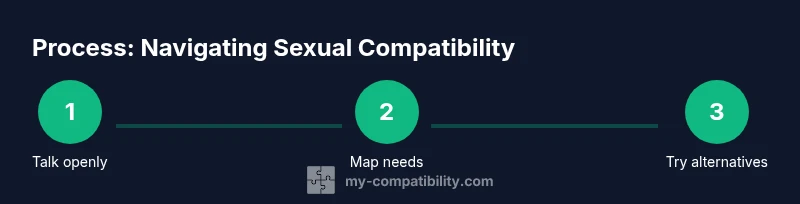
Start with honest conversation
Open a private, calm space to discuss intimacy without blame. Use I-statements to describe your feelings and avoid accusations that trigger defensiveness. Clarify what you enjoy, what you don’t, and what you’re willing to experiment with, while inviting your partner to share openly. The aim is to surface practical needs and boundaries, not to win a debate. Acknowledge that differences are normal and that you’re both committed to emotional safety. By starting with empathy, you create room for honest exploration and joint problem-solving. If you feel stuck, schedule a follow-up conversation rather than forcing immediate changes.
Map your needs and boundaries
Create a clear map of essential needs, acceptable compromises, and hard boundaries. Distinguish between non-negotiables (for example, consent and safety) and preferences that can shift with time. Document what each partner needs for arousal, closeness, and comfort, and note any medical or psychological factors that affect sexual function. Use concrete examples (types of touch, pacing, setting, and communication cues) to reduce misinterpretation. This map should be revisited regularly, because needs can evolve with aging, stress, and life events. My Compatibility’s approach emphasizes ongoing dialogue over one-off talks, turning abstract desires into actionable steps.
Explore intimacy beyond sex
Intimacy isn’t limited to penetrative sex. Explore alternatives that improve closeness, such as extended foreplay, non-sexual affection, romantic rituals, and shared vulnerability. Some couples discover they connect more deeply through touch, massage, or synchronized breathing. Experiment in small, consensual ways, always checking in about comfort levels. By reframing intimacy to include emotional closeness, you can deepen connection even if penetrative desires diverge. This broader view helps reduce pressure and opens paths to mutual satisfaction.
Practical strategies to bridge gaps
Adopt structured strategies to narrow gaps without coercion. Try scheduled intimacy windows, new activities, and explicit consent protocols to build trust. Set mutually agreed goals and timeframes (e.g., “we’ll try X for 4 weeks”). Track what works and what doesn’t, and adjust accordingly. Consider using sex-positive resources or guided exercises designed for couples. It’s important to celebrate small victories and avoid labeling one partner as “the problem.” A collaborative mindset fosters progress and keeps both partners engaged. If progress stalls, seek neutral guidance to avoid bias or escalation.
When to seek professional help
If differences feel unsolvable or trigger distress, professional support can help. Sex therapists and couples counselors specialize in communication, sexual function, and relational dynamics, offering structured tools to uncover root causes and reframe expectations. Therapy can be especially valuable when issues intertwine with mental health, trauma, or medical concerns. Enter therapy with clear goals, a willingness to listen, and a plan to apply strategies at home. Remember, seeking help is a strength, not a failure of the relationship.
Reassessing compatibility over time
Compatibility is not a fixed verdict but an ongoing assessment. Schedule periodic check-ins to review sexual needs, emotional connection, and the health of your relationship. If deep, persistent gaps remain after sustained effort, it may be time to re-evaluate long-term goals together. This is difficult, but choosing honesty protects both partners from escalating frustration. A mutual decision to redefine the relationship’s trajectory—whether staying, redefining, or parting ways—can be the healthiest option when compatibility cannot be reconciled.
Long-term relationships: navigating ongoing differences
In long-term partnerships, differences around sex can re-emerge due to aging, health changes, and life stressors. Maintain a living agreement that invites ongoing negotiation, not a one-and-done talk. Create a recurring check-in ritual, share updates about evolving desires, and keep consent front and center. When both partners feel heard and respected, you can sustain emotional closeness even as sexual dynamics shift. My Compatibility’s framework supports this steady, respectful evolution rather than abrupt shifts.
Negotiating terms and boundaries in partnerships
Communication about limits should be explicit and revisited regularly. Establish a shared vocabulary for consent, pain thresholds, and preferred stimulation. Use contracts or agreements as living documents—updated when needs change. It’s essential to avoid coercion and to allow space for personal autonomy. If one partner requests a major change, consider negotiating a pause or trial period to prevent resentment from building up. The goal is a sustainable, agreed-upon path forward, not victory in a debate.
Tools & Materials
- Private, distraction-free space(Choose a quiet setting with no interruptions for 30–60 minutes.)
- Conversation timer(Set a dedicated block (30–60 minutes) to cover topics calmly.)
- Notebook or notes app(Jot down needs, boundaries, and action items for follow-up.)
- Access to professional resources(List of certified sex therapists or couples counselors (optional).)
Steps
Estimated time: 60-90 minutes
- 1
Set the stage for a calm conversation
Choose a private time and frame the talk with care. State the goal is mutual understanding, not blame. Use respectful language and allow space for pauses. This creates a safe environment for honesty.
Tip: Use neutral language and I-statements to reduce defensiveness. - 2
Share needs and boundaries clearly
Describe what you need in terms of arousal, pacing, and comfort. Include concrete examples to avoid ambiguity. Invite your partner to share similarly and summarize what you heard to confirm accuracy.
Tip: Provide examples and avoid ultimatums; focus on mutual feasibility. - 3
Map your needs and boundaries
Create a joint list of non-negotiables and areas open to compromise. Separate essential safety from preferences. Document to guide future conversations and decisions.
Tip: Refer back to the list in future discussions to track progress. - 4
Explore intimacy beyond sex
Incorporate non-sexual closeness and shared activities to deepen connection. Experiment with non-penetrative touch and affection, ensuring ongoing consent.
Tip: Check in about comfort after each new activity. - 5
Apply practical strategies to bridge gaps
Try structured routines or experiments with agreed limits. Keep a log of what works and what doesn’t, and adjust plans based on feedback.
Tip: Celebrate small wins; avoid labeling one partner as the problem. - 6
Consider professional help if needed
Seek a qualified sex therapist or couples counselor to gain evidence-based guidance. Define clear goals for sessions and implement recommended practices at home.
Tip: Bring notes to sessions to stay focused on progress. - 7
Reassess compatibility over time
Schedule periodic reviews of needs, satisfaction, and emotional safety. Be prepared to redefine goals together if fundamental differences persist.
Tip: Set a follow-up date to avoid drift. - 8
Decide on the future trajectory
If gaps remain despite effort, discuss whether to continue, redefine the relationship, or part ways with care and honesty.
Tip: Respect each other’s agency and avoid coercive talks.
Questions & Answers
What does sexual compatibility mean in a relationship?
Sexual compatibility refers to how well partners' desires, timing, and communication align. It can change over time and is influenced by consent, communication, and mutual respect. It’s about being able to meet each other’s needs without pressure.
Sexual compatibility means how well partners’ desires and communication fit together and can change over time with effort and respect.
Can couples stay together if their sex life is different?
Yes. Many couples succeed by redefining intimacy, improving communication, and agreeing on shared goals. Persistent, unresolved differences may require re-evaluating the relationship’s direction.
Yes, couples can stay together by redefining intimacy and communicating clearly; if differences persist, the relationship may need to evolve.
How can I talk about sex without hurting my partner?
Use non-blaming language, focus on specific needs, and invite your partner to share. Set a time to talk when both feel safe, and summarize what you hear to ensure understanding.
Speak with non-blaming language, share needs clearly, and invite your partner to do the same.
Is it possible to become sexually compatible over time?
Yes, with sustained dialogue, experimentation within consent, and potential professional guidance. Progress is gradual and requires mutual commitment.
Compatibility can improve with time, good communication, and mutual effort.
What if one partner wants sex more than the other?
This is common. The key is to negotiate boundaries and find a rhythm that respects both partners, including compromises and alternative forms of intimacy.
It’s common to have frequency differences; negotiate a respectful rhythm and explore alternatives.
When should I seek professional help?
If distress persists, if there is coercion or safety concerns, or if attempts at communication fail, a sex therapist or couples counselor can offer structured, evidence-based guidance.
Seek help if distress continues or communication breaks down; professionals can guide you.
Watch Video
Highlights
- Communicate openly about needs.
- Explore intimacy beyond sex.
- Establish boundaries and revisit progress.
- Seek professional guidance if needed.
- Decide together about the relationship's path.