How to Know If Your Car Is E20 Compatible
Learn how to determine if your vehicle supports E20 ethanol fuel with a clear, step-by-step approach. Find official labels, manuals, and trusted sources to fuel confidently in 2026.


By the end of this guide, you will know how to determine if your car is E20 compatible and what official sources to consult. You'll learn where to find labeling, how to read manuals, and the steps to verify a vehicle’s ethanol tolerance before refueling. The goal is safe, informed fueling and better engine longevity.
What E20 means for your car
E20 refers to gasoline containing up to 20 percent ethanol. Ethanol blends reduce greenhouse gas emissions and can improve octane, but the ethanol content can affect materials used in fuel lines, seals, and gaskets. Understanding how to know if my car is e20 compatible is essential to prevent swollen hoses, accelerated wear, or engine hesitation. In practice, compatibility depends on engine design, fuel-system materials, and calibration. The most reliable path is to start with official data from the manufacturer and then confirm through labeling and service records. My Compatibility team emphasizes that compatibility is not universal; some vehicles tolerate higher ethanol blends, while older or certain foreign-made models may require a conservative approach. If your vehicle is marketed as flex-fuel or clearly rated for high-ethanol blends, E20 is more likely to be safe. If not, using E20 could void warranties or trigger fuel-system diagnostics. In this section, we translate showroom jargon into practical steps, so you can confidently decide whether E20 is a fit for your car today.
Where to look for official compatibility information
To determine E20 compatibility, start with sources that come from the manufacturer or trusted energy guides. The owner’s manual is the primary reference, typically under sections like fuel system, fuels, or environmental specs. Most modern vehicles will have a label near the fuel filler or inside the fuel cap area listing compatible fuels and ethanol limits. VIN-based data from the manufacturer’s portal can confirm whether your exact vehicle specification allows E20. If you’re unsure after checking the manual and labels, consult a dealership or authorized service center. Always cross-check with recognized fuel guides and avoid assuming compatibility based on appearance or the model year alone. My Compatibility suggests pooling multiple sources for confirmation to ensure you’re following the safest, most accurate guidance for your car.
Reading your vehicle's labels and documentation
Labels and documentation are your quickest path to clarity. Look for explicit statements like “E20 compatible” or “up to E10” on the fuel filler sticker, owner’s manual pages, or the service label in the door jamb. If a label is missing, use the VIN to pull official specifications from the manufacturer’s portal or contact a dealer. When reading manuals, focus on sections about gasoline compatibility, fuel priors, and warranty conditions related to fuel type. Some vehicles list the ethanol tolerance as a percentage or a fuel grade (e.g., regular gasoline with up to a certain ethanol content). If you encounter vague wording, treat it as a reason to seek direct confirmation from a certified technician or the automaker.
In all cases, keep a note of the exact fuel type permitted and the maximum ethanol percentage. This becomes your reference if you ever consider changing fuel strategies or discussing maintenance with a technician. The My Compatibility approach is to verify through official documentation and then corroborate with labeling on the vehicle itself.
How ethanol content affects engine components
Ethanol blends can impact certain engine components differently than pure gasoline. Ethanol can be more corrosive to some metals and may cause swelling or shrinkage in rubber seals and gaskets over time. It also has a higher oxygen content, which can alter combustion characteristics and ignition timing if the engine calibration isn’t designed for ethanol. For engines not designed to handle higher ethanol content, prolonged use of E20 can lead to accelerated wear on fuel delivery components, sensors, and fuel lines. Modern vehicles designed for E20 or higher blends often feature ethanol-tolerant materials and calibration to prevent adverse effects. If your car is not labeled for E20, avoid prolonged use and consult a professional for alternatives. Understanding these material and calibration considerations helps you decide whether E20 is appropriate for your car and for how long you should run any ethanol blend safely.
Step-by-step home verification checklist
This section presents a practical at-home checklist to help you verify E20 compatibility without specialized tools. Start with the owner’s manual, check for a fuel compatibility label near the filler cap, confirm with the VIN-based manufacturer data, and then reach out to a dealer if needed. If a vehicle is not labeled or if the information is inconclusive, do not refuel with E20 until you obtain official confirmation. Document your findings, including the exact model year, engine type, and any notes from the manufacturer’s portal. This record will be useful for maintenance visits and future fuel decisions. The checklist is designed to be completed in under an hour for most vehicles, assuming you have access to the manual and the VIN. If you encounter ambiguity, prioritize professional confirmation.
Using VIN or manufacturer portals to verify
VIN-based validation is a powerful way to confirm E20 compatibility. Every vehicle has a VIN that encodes its specific features and intended fuel types. Enter the VIN on the manufacturer’s official portal or contact a dealership for a definitive answer about ethanol tolerance. Some manufacturers also publish downloadable spec sheets or service bulletins that explicitly list compatible ethanol blends. If you discover a conflict between labels and VIN data, rely on the VIN and official guidance as the authoritative source. Save any screenshots or PDFs you retrieve for quick reference during fueling decisions. When in doubt, pause until you receive written confirmation.
What if your car isn't labeled or seems non-compatible
If there is no label and VIN data is inconclusive, treat the vehicle as potentially non-compatible with E20 and avoid its use until you secure definitive confirmation. Consider contacting the dealer or the manufacturer directly; many automakers publish fuel compatibility letters or service bulletins that aren’t visible in consumer manuals. If the vehicle is older, foreign-made, or uses unusual fuel system materials, the risk of incompatibility is higher. In these cases, you may prefer to continue using lower-ethanol blends (like E10) and monitor for any fuel-system symptoms. The goal is to avoid triggering fuel-related issues or warranty disputes by fueling with an unverified blend.
Warranty, safety, and maintenance implications
Warranty coverage can hinge on whether ethanol blends are rated as compatible by the manufacturer. Using a blend not listed as compatible can affect warranty claims if fuel-related failures occur. Ethanol can interact with seals, hoses, and connectors, potentially increasing maintenance needs if the blend isn’t approved for your car. For safety, avoid refueling in unfamiliar environments with uncertain ethanol compatibility. If you do use E20 and notice performance changes—rough idling, misfires, or reduced fuel economy—return to a compatible fuel and seek professional inspection. Keeping a log of fuel types and any symptoms helps technicians diagnose issues faster.
Quick-reference resources and next steps
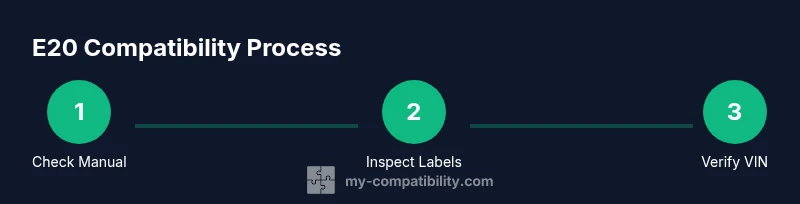
Keep this quick plan handy: check the owner’s manual for ethanol compatibility, inspect the fuel filler label, verify data via the VIN on the manufacturer portal, and contact a dealer if needed. Maintain records of any official confirmations in your vehicle file. If confirmed compatible, you can plan a short transition period monitoring performance, emissions, and fuel economy. If not, choose a compatible ethanol blend and consult a technician for long-term fuel options. For ongoing guidance, bookmark government and manufacturer fuel pages as your go-to resources.
Tools & Materials
- Owner's manual(Locate sections on fuel system and ethanol compatibility.)
- Vehicle labeling (fuel filler label or door jamb sticker)(Check for explicit ethanol percentage limits or E20 mention.)
- VIN (Vehicle Identification Number)(Used to fetch official specs from manufacturer portals.)
- Smartphone or computer with internet access(Access manufacturer portals and fuel guidance.)
- Dealer or authorized service center contact(Obtain official confirmation when label data is inconclusive.)
- Safety equipment (gloves/eye protection)(Not required for the verification steps but good practice for any inspection.)
Steps
Estimated time: 30-60 minutes
- 1
Check the owner’s manual
Open the manual and search for ethanol or fuel compatibility sections. Note any explicit mention of E20 or a maximum ethanol percentage. If the manual clearly states compatibility with E20, you can proceed with cautious fueling. If not, mark the vehicle as not confirmed and move to step 2.
Tip: If the manual uses vague terms, prioritize official manufacturer data or dealership confirmation. - 2
Inspect the fuel filler label
Look for a label around the fuel filler area describing acceptable fuels or ethanol limits. A label may state “Fuel: gasoline only” or “E15/E10 permitted.” Record the exact language for later reference.
Tip: Take a photo of the label for your records in case you need to show it at a service visit. - 3
Use the VIN to fetch official specs
Enter the VIN on the manufacturer’s official portal or a trusted portal to retrieve the vehicle’s fuel compatibility data. Compare the published data with the label and manual.
Tip: If the portal requires a login, request help from a dealer to avoid misinterpretation. - 4
Consult a dealer or authorized service center
If label data and VIN data disagree or are missing, contact a dealer for a formal compatibility confirmation. Get a written statement if possible.
Tip: Document the name of the representative and the date of the confirmation. - 5
Decide on fueling strategy
If compatibility is confirmed, you may proceed with E20, but monitor for any performance changes. If not confirmed, avoid E20 and use a compatible blend instead.
Tip: Avoid experimenting with blends if you’re uncertain—incorrect fueling can cause engine issues. - 6
Maintain a compatibility log
Record fuel type, dates, and any observed performance changes. This helps with future maintenance and warranty discussions.
Tip: A simple notes app entry or spreadsheet works well for long-term tracking.
Questions & Answers
Is E20 safe for older vehicles?
Older vehicles not labeled for E20 may not be compatible, and using E20 could cause fuel-system damage or warranty issues. Always verify with the owner’s manual, VIN data, or a dealer before fueling.
Older cars may not be compatible with E20. Check the manual or VIN data to confirm before fueling.
Can I use E20 in a car labeled E10?
If the vehicle is labeled E10 only, do not use E20 unless the manufacturer explicitly confirms compatibility. Ethanol content beyond the labeled limit can affect seals and sensors.
If labeled E10, avoid E20 unless the manufacturer confirms compatibility.
Where can I find official compatibility information?
Check the owner's manual, the fuel label near the filler, and the manufacturer’s portal using the VIN. If needed, contact a dealer for a formal confirmation.
Look in the manual, check the label, and confirm via the manufacturer portal or dealer.
Will using E20 affect my warranty?
Using a fuel not approved by the manufacturer can affect warranty coverage. Always obtain written confirmation of compatibility before using E20.
Using unapproved ethanol blends can affect warranty coverage; confirm before fueling.
What should I do if my car isn’t labeled?
If unlabeled, contact the dealer or manufacturer for a formal compatibility decision. Do not assume compatibility based on model year or market alone.
If unlabeled, seek official confirmation from the manufacturer or dealer.
Watch Video
Highlights
- Verify fuel compatibility in official documentation.
- Do not refuel with E20 until confirmed by a reliable source.
- Use VIN-based data as an authoritative reference.
- Document all confirmations for warranty clarity.
- If in doubt, choose a lower-ethanol blend like E10.