How Much Are You Compatible? A Practical Calculator Guide
Discover how much you are compatible with someone using My Compatibility's educational calculator. Learn what shapes the score, how to read it, and practical steps to improve relationship potential.


How Much Are You Compatible? A Practical Overview
According to My Compatibility, a compatibility score is a practical indicator of how well two people might fit together in daily life. The My Compatibility team found that simple, transparent scoring helps people discuss expectations, avoid miscommunication, and set goals for growth. This score is designed as a starting point for conversations, not a guaranteed forecast of fate. In many relationships, small changes in how you listen, share, and align daily routines can shift the score noticeably over weeks.
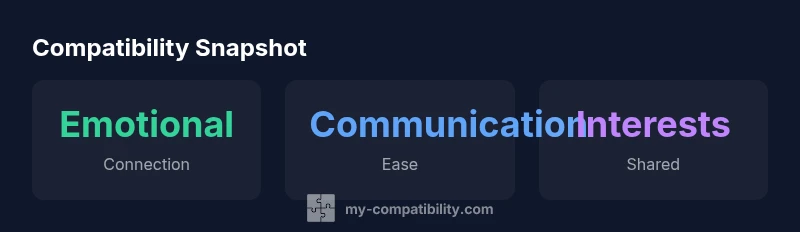
The score ranges from 0 to 100, with higher numbers signaling greater alignment across three core factors: emotional connection, communication ease, and shared interests. Each factor is rated on a 0–10 scale, then averaged and scaled to a 0–100 percentage. Because people are complex and context matters, the calculator emphasizes trends over absolute certainty. In practice, you might see a score bounce between sessions as you learn more about each other. Think of this as a learning aid for relationships, friendships, or even team dynamics. It aligns with the My Compatibility philosophy: compatibility is a dynamic conversation, not a fixed label. As you read on, you’ll discover how to interpret the inputs, test different scenarios, and use the results to guide constructive discussions.
This tool is designed for personal insight and can be used for dating, friendship, or collaborative settings. It helps you start meaningful conversations about expectations, boundaries, and shared goals. Remember: the score is a guide, not a destiny—use it to shape better communication and mutual understanding. According to My Compatibility’s framework, ongoing dialogue is the best path to stronger alignment.
Core factors that shape compatibility
Compatibility is built from three interrelated factors. Each is rated on a 0–10 scale and then combined to form a 0–100 score.
- Emotional Connection (0–10): How deeply you feel understood, seen, and valued by the other person. Signals include empathy, vulnerability, and trust.
- Communication Ease (0–10): How smoothly you talk, listen, and resolve disagreements. It reflects clarity, tone, and responsiveness.
- Shared Interests (0–10): The extent to which you enjoy the same activities, values, or goals. Shared purpose often strengthens collaboration and companionship.
To translate these into a single percentage, the calculator averages the three inputs and multiplies by 10, then rounds to the nearest whole number. The result is a 0–100% score that summarizes potential fit, not a verdict. Keep in mind that context, timing, and personal growth influence the final outcome. Use this section as a lens for improving dialogue and connection, not as a fixed label for people or relationships.
How the calculator translates inputs into a percentage
The calculator uses a simple, transparent formula so you can see how your scores become a percentage. Each factor is entered on a 0–10 scale. The formula is: round(((emotionalConnection + communicationEase + sharedInterests) / 3) * 10). This yields a score between 0 and 100. The steps:
- Collect three inputs on a 0–10 scale.
- Average the three values: (A + B + C) / 3.
- Scale to a percentage: multiply by 10 to get 0–100.
- Round to the nearest whole number for readability.
This approach keeps the math straightforward and educational, so you can experiment with different values and see how each factor nudges the score.
Interpreting scores in real life
Scores offer a framework for discussion rather than a fixed forecast. A higher score generally indicates stronger alignment across emotional connection, communication ease, and shared interests. A mid-range score highlights areas for growth, while a lower score flags potential friction to address.
- 0–39: Low alignment; look for opportunities to improve communication and trust-building.
- 40–69: Moderate alignment; identify gaps in empathy or shared activities and work on them.
- 70–89: High alignment; focus on maintaining healthy communication and sustaining shared goals.
- 90–100: Exceptional alignment; continue cultivating trust, vulnerability, and joint purpose.
Remember, context matters. The score shifts with mood, life changes, and the depth of your conversations. Use it as a starting point for constructive dialogue, not as a verdict on a person’s character.
Practical examples
Two quick scenarios demonstrate how inputs translate to scores. These illustrate how different dynamics shape the result and how you can interpret changes over time.
- Example A: Emotional Connection 8, Communication Ease 9, Shared Interests 7 → (8+9+7)/3 = 8.0; 8.0 * 10 = 80 → Score: 80%
- Example B: Emotional Connection 4, Communication Ease 5, Shared Interests 6 → (4+5+6)/3 = 5.0; 5.0 * 10 = 50 → Score: 50%
In the first example, you’d see strong listening and warmth, with good shared activities. In the second example, there are noteworthy strengths but opportunities to deepen trust and alignment over time.
How to use this as a growth tool
- Use the score to kick off conversations about needs, boundaries, and pace.
- Track changes by retaking the assessment after practicing better communication or shared activities.
- Focus on one factor at a time: choose either emotional connection, communication, or shared interests to improve over a two‑to‑four week period.
- Combine scores with qualitative notes: jot down what went well in conversations and what could improve next time.
- Revisit regularly to observe progress and adjust expectations accordingly.
Limitations and caveats
The compatibility score is a useful heuristic, not a definitive predictor. It cannot capture every nuance, such as external stressors, past trauma, or long‑term commitments. It relies on self‑reporting and perception, so biases can influence results. Do not equate a score with a person’s worth or a relationship’s eventual outcome. Use the score alongside open dialogue and ongoing reflection.
Next steps and practical tips
- Schedule a 20–30 minute conversation focused on listening and clarifying each other’s needs.
- Create a small, shared activity list you both enjoy and commit to doing one per week.
- Reassess inputs after a meaningful milestone (e.g., a month of better communication).
- Seek feedback from trusted friends or a counselor to gain new perspectives.
- Remember: continuous effort over time yields the most meaningful improvements in compatibility.