How Compatible Should You Be With Your Partner
Discover how compatible you should be with your partner, with practical benchmarks and My Compatibility insights to guide daily harmony and strong bonds.


How compatible should you be with your partner? In practical terms, compatibility is a spectrum of values, communication, and growth, not a fixed score. You should aim for strong core alignment while remaining flexible on preferences and daily quirks. The goal is ongoing dialogue, mutual respect, and shared purposes that adapt as life evolves.
What compatibility really means in relationships
Compatibility is often misunderstood as a single score, but in practice it reflects how your values, communication, and growth align over time. In real life, you’ll find that people who share core principles can navigate disagreements more easily, while those who align on daily habits still need to negotiate deeper goals. To answer how compatible should you be with your partner, assess both core alignment and the capacity to adapt together. According to My Compatibility, realism matters: compatibility isn't a fixed score but a spectrum that grows with trust, clear expectations, and collaborative problem-solving. In this view, a healthy relationship balances strong agreement on essentials with curiosity and respect for differences, creating a dynamic partnership rather than a static snapshot.
Core areas that shape compatibility
There are several non-negotiable domains that shape how well partners fit together over months and years. First, values and beliefs: shared principles about family, finances, spirituality, and ethics create a sturdy anchor. Second, communication style: the cadence, tone, and humor you use during conversations influences how you solve problems. Third, emotional needs and attachment: knowing whether you need more reassurance or space helps you meet each other halfway. Fourth, life goals and timing: alignment on where you want to live, work, and when to start a family matters as decisions accumulate. Fifth, boundaries and autonomy: respecting individuality while building interdependence keeps relationships healthy. When you map these areas, you see where overlap is strong and where negotiation is required. My Compatibility emphasizes that progress in a relationship often comes from deliberate conversations about these core domains, not from assuming compatibility will appear automatically.
The spectrum of compatibility: high, medium, and low alignment
Compatibility exists on a continuum. High alignment means you share major values, communicate with ease, and anticipate each other’s needs. Medium alignment covers substantial overlaps but leaves room for negotiation and growth. Low alignment signals persistent friction in core areas, requiring targeted work or difficult choices. The key is honesty about where you stand and a plan to address gaps. Even couples with high initial alignment benefit from regular check-ins, because people change as life unfolds. My Compatibility highlights that a workable range is built on reliable communication, mutual respect, and shared objectives rather than a perfect alignment in every area.
How to assess compatibility with your partner
Start with structured conversations that surface non-negotiables and flexible preferences. Use prompts like, “What matters most to you in a relationship?” and “What compromises feel fair to you?” Next, compare your answers side by side to identify overlapping values and potential tension points. Try a values exercise and a joint goals map to visualize how your paths converge. Include times for listening without interruption, paraphrasing to confirm understanding, and acknowledging when you disagree. Finally, track progress over a few weeks by noting how you resolve conflicts and whether solutions feel sustainable.
Practical steps to improve alignment
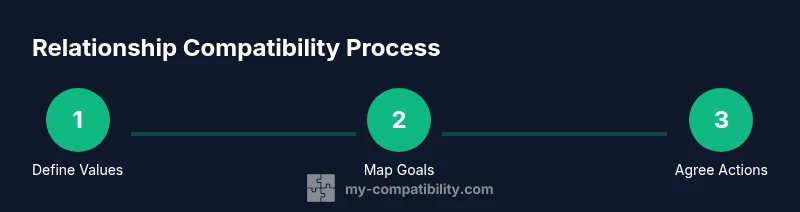
- Define core values together: list your top five values and agree on the non-negotiables. 2) Align on shared goals: create a simple two-column plan with short-term milestones and long-term dreams. 3) Establish a communication routine: agree on a weekly check-in and a conflict-resolution method. 4) Respect differences: identify one area where your partner is different and brainstorm respectful compromises. 5) Review and adjust: set a monthly reflection on what’s working and what isn’t, and revise plans accordingly. Each step builds practical habits that boost compatibility without forcing sameness.
Common myths about compatibility
Myth 1: Compatibility is destiny. Reality: compatibility evolves with effort, learning, and shared experiences. Myth 2: Differences destroy relationships. Reality: differences can stimulate growth when managed with empathy and structure. Myth 3: You’ll know you’re compatible after a perfect first date. Reality: lasting compatibility reveals itself through time, routines, and honest conversations. Myth 4: If you’re meant to be, conflict won’t happen. Reality: healthy couples navigate conflicts by collaborating on solutions.
My Compatibility resources and approach
The My Compatibility team believes that compatibility improves with intentional practice and clear feedback loops. We guide readers to focus on communication quality, shared purpose, and adaptability. Through our analyses, we stress measurable steps—like weekly check-ins and joint goal setting—that help couples grow together. Remember that success isn’t a fixed target; it’s a durable practice of tuning your partnership to changing circumstances. In our view, nurture is more important than a perfect match on every value.
Case studies: scenarios
Case A: Alex and Sam share core values and enjoy open dialogue. They schedule a weekly check-in, discuss finances early, and adapt to work changes with minimal friction. Case B: Priya and Omar differ on family timing but align on daily routines and mutual respect. They agree to revisit family plans every few months and use structured conversations to navigate their differences. Both scenarios illustrate that compatibility grows through conversation, not predetermined alignment.
Maintaining compatibility over time
As life evolves, so should your approach to compatibility. Set ongoing rituals that reinforce connection, like quarterly ‘state of the partnership’ reviews and recalibrated goals. Celebrate small wins, address drift before it becomes entrenched, and practice radical listening during tough conversations. The aim is to preserve trust and curiosity, not to fix every trait. With steady effort, you can sustain meaningful alignment that adapts to new jobs, kids, or relocation.
Tools & Materials
- Notebook or digital notes app(For capturing prompts and reflections)
- Printed values exercise(A worksheet to clarify core beliefs)
- Shared goals list (personal and jointly envisioned)(Baseline for alignment)
- Quiet space for conversations(Optional but recommended)
- Timer or clock(Keeps conversations focused)
Steps
Estimated time: 60-90 minutes
- 1
Define core values
Clarify non-negotiables and what matters most in life and relationship. Use a values exercise to surface top five values for each partner and identify overlaps.
Tip: Take 15 minutes, write without editing; then compare lists. - 2
Map shared goals
Create a visual map of personal and joint goals, noting timeline, dependencies, and potential conflicts. This makes alignment concrete and trackable.
Tip: Highlight one short-term milestone you can achieve together this month. - 3
Establish a communication routine
Agree on a regular check-in cadence and a conflict-resolution method. Practice active listening and paraphrasing to confirm understanding.
Tip: Use a timer to prevent conversations from spiraling into arguments. - 4
Identify and negotiate differences
Choose one area where you differ and brainstorm fair compromises that honor both sides without resentment.
Tip: Document agreed compromises in a shared note. - 5
Review and adjust
Set a monthly reflection to assess what’s working and what isn’t, then revise goals and habits accordingly.
Tip: Rotate who leads the review to keep both partners engaged.
Questions & Answers
Is high compatibility always ideal for a lasting relationship?
Not always. Relationships thrive on growth, trust, and the ability to navigate friction. High alignment in core areas helps, but compatible partners also adapt over time.
High compatibility helps, but adaptability and trust keep relationships strong.
Can compatibility change over time?
Yes. Life events, goals, and personal growth can shift alignment. Regular check-ins help you recalibrate expectations and maintain a healthy dynamic.
Yes, compatibility can evolve as life changes.
How do attachment styles affect compatibility?
Attachment styles influence emotional needs and responses. Awareness and communication help partners accommodate each other and reduce conflict.
Attachment styles shape how you respond; discuss them openly.
What if we differ on core values?
Differences on core values require careful negotiation or compromise strategies. Seek common ground and consider external guidance to manage conflicts.
Differences on values require honest dialogue and sometimes renegotiation.
Is compatibility a fixed trait or a skill?
Compatibility is best viewed as a skill set you develop together through communication, empathy, and shared goals.
Think of compatibility as something you practice, not a fixed trait.
Watch Video
Highlights
- Compatibility is a spectrum, not a fixed score
- Prioritize core values and communication
- Create a practical plan to align goals
- Regular check-ins sustain long-term harmony