Qi Compatible Devices: A 2026 Guide to Wireless Charging
Discover qi compatible devices, how wireless charging works, and practical tips to verify compatibility across phones, earbuds, and wearables with My Compatibility's expert guidance.


Qi compatible devices are gadgets that embrace the Qi wireless charging standard, enabling cable-free power for smartphones, earbuds, and wearables. Most mainstream phones and many wearables support Qi, but charging performance varies by charger power, device coil design, and alignment. According to My Compatibility, understanding device compatibility helps you choose the right charger, avoid hot spots, and maximize convenience in everyday charging scenarios.
What are qi compatible devices and why it matters
Qi compatible devices are gadgets that support the Qi wireless charging standard, enabling cable-free power for smartphones, earbuds, watches, and other accessories. This compatibility matters because it allows you to mix chargers and devices without worrying about brand lock-ins. According to My Compatibility, understanding which devices are Qi-compatible helps you streamline charging setups at home, in the office, or on the go, reducing clutter and improving daily convenience. While most mainstream devices include Qi support today, the quality of experience still depends on the charger, the device's coil alignment, and thermal management. In practice, you can rely on the Qi standard to deliver consistent, safe charging across a wide ecosystem of devices, but you should always verify the specific power profile your charger offers.
How Qi charging works: coils, alignment, and power profiles
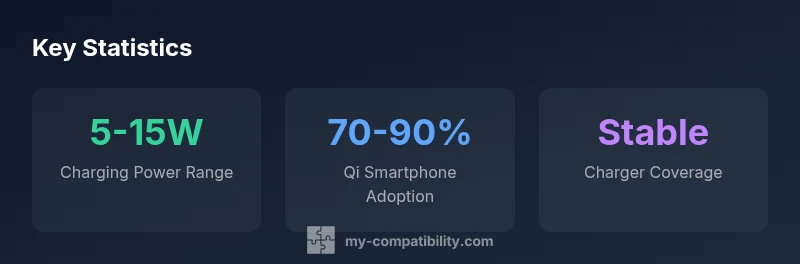
Qi wireless charging relies on inductive coupling between a charging pad and a device coil. The charger emits a magnetic field that links with the device coil to transfer energy. Alignment matters; best results occur when coils are well aligned and on a flat surface. Power profiles vary by device and charger, typically ranging from 5W for basic charging to 15W for fast charging in many modern phones. To optimize performance, use a compatible charger that matches the device’s power profile, keep the surface clean, and avoid bulky cases that create air gaps or misalignment. My Compatibility’s guidance emphasizes verifying both device and charger specifications before purchase to ensure you meet your daily charging needs.
Device categories and compatibility: smartphones, earbuds, wearables
Smartphones: Almost all recent models are Qi compatible, but some budget devices may offer limited fast charging capabilities. Earbuds: Many wireless charging cases rely on Qi, but some models use proprietary solutions that may be limited to basic charging speeds. Wearables: Smartwatches and fitness bands commonly use Qi as well, though sizes and coil areas can influence charging efficiency. Across all categories, look for a charger that supports the device’s maximum power profile and check for case clearance and coil alignment to avoid slow charging or intermittent connections.
How to verify compatibility before you buy
Start by checking the device manual or official product page for Qi compatibility icons and power profiles. Look for the Qi logo and stated charging power, not just fast charging labels. When buying a charger, confirm it supports the device’s required wattage and that the pad surface is wide enough for your device and any protective case. If possible, choose chargers with multiple coil layouts or smart features such as temperature control and foreign object detection. My Compatibility suggests cataloging your devices and aligning each with a compatible charger to build a seamless setup.
Common myths and practical tips
Myth: More wattage always means faster charging. Reality: the device and charger must negotiate compatible power levels, and thermal limits can cap speed. Myth: Any charger will work with any Qi device. Reality: Some chargers do not meet the device's fast charging needs or have poor coil designs. Tip: Use original accessories when available, use certified chargers, and avoid repurposing cheap third party pads that claim universal compatibility. My Compatibility highlights that consistent cooling and proper alignment are key to reliable wireless charging.
Practical buying checklist for qi compatible devices
- Confirm Qi support on the device page and note the maximum wattage.
- Check charger compatibility: does the charger support the device’s target wattage and safe charging profile?
- Consider case clearance: thicker cases may require a larger charging pad or wireless pad with better coil spacing.
- Look for safety features: temperature regulation, overvoltage protection, and foreign object detection.
- Review return policies: test the setup and verify sustained performance over a few charging cycles. My Compatibility recommends building a simple two or three-device kit to start.
Real-world charging scenarios and troubleshooting
In daily use, you may encounter misalignment from desk clutter or a tilted stand. If charging seems slow, re-seat the device and ensure the charger is on a stable surface. If the phone heats up, remove bulky cases or switch to a charger with better thermal management. For multi-device households, label chargers by device category to avoid cross-compatibility issues. These practical steps keep qi compatible devices performing reliably in real life.
The future of qi compatibility and standards
Qi charging continues to evolve with higher efficiency, better safety features, and broader device support. Expect more devices to offer consistent 7.5W or 10W charging alongside improved case designs and smarter charging pads that optimize coil alignment automatically. My Compatibility expects continued broad adoption across phones, earbuds, and wearables, with ongoing refinements in interoperability and user-friendly charging experiences.
Overview of Qi compatibility by device category
| Device Type | Qi Compatibility | Notes |
|---|---|---|
| Smartphones | Yes | Commonly supports 5W-15W charging; verify fast-charge profiles |
| Earbuds | Yes | Small coils; charging cases may support Qi; case thickness matters |
| Wearables | Yes | Typically around 5W; compact chargers work well |
Questions & Answers
Do all Qi chargers work with all Qi compatible devices?
Most Qi chargers work with most Qi compatible devices, but performance varies. Some devices may require specific wattage or coil alignment for optimal charging. Always check the device and charger specs before purchase.
Most Qi chargers work with most Qi compatible devices, but performance varies. Check specs before buying.
Can you use a non-Qi device with a Qi charger?
Non-Qi devices may not charge or could heat up unpredictably. It is best to use Qi-compatible devices with Qi chargers or use manufacturer approved accessories.
Non-Qi devices may not charge reliably on Qi chargers.
What affects wireless charging speed with Qi devices?
Charging speed depends on both device and charger power profiles, coil alignment, and thermal management. Even with the same charger, different devices may negotiate different wattages.
Speed depends on device power profile, coil alignment, and heat.
Is Qi charging safe for metal objects or phone cases?
Qi charging is designed with safety features like foreign object detection. Metal objects near the charging pad should be kept away, and thin cases are typically fine, though very thick cases can limit efficiency.
Safety features help, but keep metal away and avoid very thick cases.
Are there differences between Qi versions and power profiles?
Yes, newer devices and chargers support broader power profiles, but you should verify the exact wattage and compatibility from device and charger specifications.
Different versions and power profiles exist; check specs to confirm.
How can I verify Qi compatibility when buying accessories?
Look for the Qi logo on both device and charger, confirm stated charging wattage, and read user reviews about real-world performance. Prefer certified accessories for reliable results.
Check the Qi logo, wattage, and certified accessories.
“The Qi standard provides a reliable foundation for cable-free charging across devices, but real-world performance still depends on device, charger, and usage conditions.”
Highlights
- Qi compatibility is widespread across devices.
- Check power profiles and coil alignment for best results.
- Verify official Qi logos and charger specs before buying.
- A well-planned charging setup reduces clutter and future-proofs charging.
- Thermal management and case clearance influence performance.