Is Cast Iron Induction Compatible? A Practical Guide
Explore whether cast iron is induction compatible, how to test ferromagnetism, and practical tips for heating, seasoning, and buying cast iron cookware for induction cooktops.


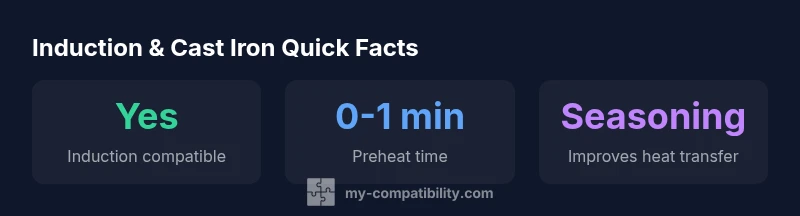
Yes, most cast iron cookware is induction compatible because cast iron is ferromagnetic and responds to induction coils. If a pan doesn’t heat, test with a magnet to confirm magnetic material. Enamel-coated cast iron behaves the same on induction, though glaze and chips can affect heat transfer.
What induction is and why cast iron usually works
Induction cooking relies on a magnetic field generated by a coil beneath the cooktop. When asked is cast iron induction compatible, the answer is generally yes, because most cast iron is ferromagnetic and heats readily when placed on an induction burner. The core physics is straightforward: the alternating magnetic field induces electric currents in ferrous metals, which then convert to heat at the pan’s base. Cast iron’s thick, dense structure can distribute heat well, though it may heat unevenly if the bottom is warped or very thin in spots. In practice, you should expect reliable heating from typical skillet, Dutch oven, and griddle shapes, provided the cookware is truly magnetic and has a flat, stable bottom. If your pan is magnetic but still doesn’t heat evenly, verify the bottom makes solid contact with the cooktop and avoid very high initial heat that can cause hot spots.
How to test your cast iron for induction compatibility
A quick, practical approach starts with a simple magnet test. Place a magnet on the pan’s bottom; if it sticks firmly, the material is ferromagnetic and likely induction compatible. Test multiple areas—center and edge—to confirm consistent magnetism. Some very old pieces may have impurities that affect magnetic response, but a strong binding magnet is a good first indicator. If you lack a magnet, you can still gauge readiness by placing the pan on a medium burner and observing heat transfer, keeping heat moderate at first to avoid thermal shock. Always monitor for sizzling, smells, or smoke as signs you should adjust heat.
Practical cooking on induction with cast iron
Induction and cast iron collaboration is strong when you respect heat management. Preheat gradually—start at medium, then adjust as needed. Cast iron’s heat capacity means it retains temperature well, so you can use lower-to-moderate settings for most tasks. For searing, a brisk initial heat is fine, but reduce once you establish a crust to prevent sticking. When cooking with a lid, the pan’s mass helps retain heat, distributing it evenly across a wider surface. For recipes requiring simmering, the cookware’s thickness helps maintain stable temperatures, though you may notice slight hot spots at edges if the pan isn’t perfectly flat.
Seasoning, maintenance, and heat management for induction cooking
Seasoning improves nonstick performance and corrosion resistance, which in turn enhances heat transfer on induction. Regular cleaning with mild soap and a dry finish helps preserve the seasoning. After cooking acidic foods, re-season if the patina looks dull. When heating, avoid sudden temperature shifts; preheat gradually to prevent thermal shock. If you notice rust or dull spots, re-season following a simple oiling method and bake to form a fresh protective layer. A well-seasoned pan heats more consistently and reduces the chance of sticking during high-heat sears.
Edge cases and common myths
A common myth is that only certain iron alloys work on induction; the reality is that most cast iron pan bottoms are magnetic. However, very thin or warped bases can disrupt contact, causing uneven heating. Enamel-coated pieces work on induction as long as the enamel is intact—chips expose iron, which is still compatible but may require more careful care to avoid cracking. Another myth is that induction damages iron; modern cooktops are designed to handle cast iron heating without issue when used properly. If you’re unsure about a vintage or specialty piece, perform the magnet test and then verify heating performance with a controlled cook.
Choosing cast iron for induction: features to look for
When selecting cast iron for induction, prioritize a flat, smooth bottom to maximize contact with the cooktop. Look for even thickness and a sturdy handle for safe lifting. Consider pre-seasoned options or plan to season yourself, depending on desired patina. Enamel-coated options are convenient for beginners, but chips can compromise performance and aesthetics over time. For best results, choose reliable rivet connections, tight-fitting lids, and a pan size that fits your stove burner layout. A well-chosen piece will heat evenly, respond predictably to temperature changes, and maintain seasoning with minimal maintenance.
Cast iron induction compatibility and care overview
| Cookware Type | Induction Compatibility | Care Notes |
|---|---|---|
| Cast Iron Skillet | Yes | Season and heat gradually |
| Cast Iron Dutch Oven | Yes | Preheat and use moderate heat |
| Cast Iron Griddle | Yes | Season lightly; avoid warping at high heat |
Questions & Answers
Is all cast iron induction compatible?
In practice, most cast iron is induction compatible because it is magnetic. A magnet test confirms ferromagnetism. If the magnet sticks, expect heating on induction; if not, the cookware is probably not suitable.
Most cast iron works on induction; test with a magnet and use a compatible pan.
How can I tell if my pan is magnetic?
Place a magnet on the pan’s bottom. If it sticks firmly, the pan is magnetic and should heat on induction. If it doesn’t, the pan may not be induction-compatible.
Test with a magnet to confirm magnetic material.
Do enamel-coated cast iron pans work on induction?
Yes, enamel-coated cast iron generally works on induction the same way as bare iron, as long as the enamel is intact. Chips exposing iron should still heat, but can affect performance and safety.
Yes, enamel-coated cast iron works on induction if intact.
Will induction heat cast iron evenly?
Cast iron heats gradually and can have hot spots, especially at edges if the bottom is not flat. Proper preheating and moderate heat help achieve even heating.
Cast iron heats unevenly at times; preheat and moderate heat help.
Should I season cast iron before using it on induction?
Seasoning is beneficial for nonstick performance and longevity, especially on induction. It helps heat distribution and reduces sticking when cooking at higher temperatures.
Seasoning improves performance and longevity on induction.
Can induction cause warping or cracking in cast iron?
Induction itself is generally safe for cast iron. Avoid thermal shock by heating gradually and avoiding sudden temperature changes that can stress the metal.
Induction is safe if you avoid sudden temperature changes.
“Cast iron generally performs well on induction; magnetic testing and proper care help maximize heating efficiency.”
Highlights
- Test with a magnet to confirm induction compatibility
- Most cast iron heats reliably on induction
- Seasoning improves heat transfer and reduces sticking
- Preheat gradually to avoid hot spots
- Choose flat-bottom pans for best contact