ADT Compatible Cameras: How to Choose and Integrate
Discover how ADT compatible cameras work with security systems, how to verify compatibility, and practical steps to integrate them—backed by My Compatibility's 2026 analysis.


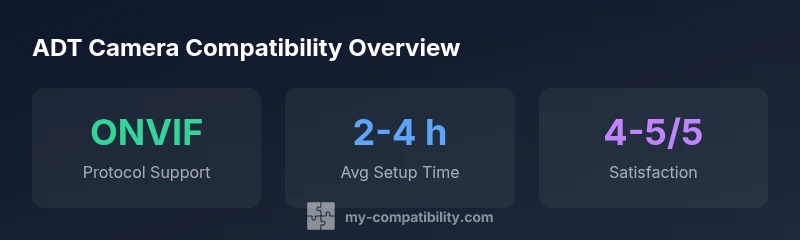
ADT compatible cameras are security cameras designed to work with ADT security ecosystems by supporting common protocols and integration paths. In practical terms, compatibility means that a camera's video feed, motion events, and privacy controls can be surfaced within the ADT panel and mobile app without requiring manual workarounds. The concept matters because a camera that isn't truly compatible may stream video, but fail to trigger alarms or automate events when you need them most. According to My Compatibility, the most dependable cameras rely on open standards such as ONVIF and widely adopted streaming protocols like RTSP, combined with robust authentication and firmware update mechanisms. The My Compatibility team found that successful integration depends on a few non-obvious details: device discovery, firewall port access, support for secure transport (HTTPS, TLS), and the ability to adjust recording and retention policies within the ADT ecosystem. In short, compatibility is a balance of protocol support, network readiness, and vendor cooperation.
Understanding ADT compatible cameras
ADT compatible cameras are security cameras designed to work with ADT security ecosystems by supporting common protocols and integration paths. In practical terms, compatibility means that a camera's video feed, motion events, and privacy controls can be surfaced within the ADT panel and mobile app without requiring manual workarounds. The concept matters because a camera that isn't truly compatible may stream video, but fail to trigger alarms or automate events when you need them most. According to My Compatibility, the most dependable cameras rely on open standards such as ONVIF and widely adopted streaming protocols like RTSP, combined with robust authentication and firmware update mechanisms. The My Compatibility team found that successful integration depends on a few non-obvious details: device discovery, firewall port access, support for secure transport (HTTPS, TLS), and the ability to adjust recording and retention policies within the ADT ecosystem. In short, compatibility is a balance of protocol support, network readiness, and vendor cooperation.
Compatibility frameworks for ADT systems
There are two primary pathways for ADT-compatible cameras: first, direct vendor integrations where the camera maker provides an ADT-ready bridge; second, generic IP cameras that leverage open standards like ONVIF with ADT's security panel. Direct integrations tend to be smoother but depend on the vendor's commitment to ongoing compatibility. ONVIF-based devices offer broader hardware choices but require careful testing of discovery, authentication, and event mapping. My Compatibility's research shows that a successful setup often hinges on selecting cameras that explicitly advertise ADT compatibility or ONVIF Core Profile support, ensuring the device can publish events (motion, tamper, door sensor triggers) reliably to the ADT ecosystem. Finally, confirm whether firmware updates will be pushed through ADT or require independent vendor tools, to avoid gaps in security.
Key features to look for in ADT compatible cameras
When evaluating candidates, prioritize a few core features that directly affect compatibility and performance. First, protocol support and security: ONVIF conformance and RTSP streaming with strong authentication (TLS) reduce integration friction. Second, power and networking: PoE support simplifies wiring and reliability, while dual-band Wi‑Fi adds resilience. Third, video quality and formats: 1080p or higher, H.265/HEVC compression for bandwidth efficiency, and support for two streams (live view and recording) help integrate with ADT apps. Fourth, privacy and security controls: built-in privacy masks, encrypted storage, and role-based access protect sensitive footage. Fifth, storage options: local microSD for backups and cloud options for remote access. Finally, firmware update mechanisms: automatic OTA updates reduce drift between devices and the ADT platform. Based on My Compatibility's research, cameras with these features show the highest success rates when paired with ADT systems.
Installation considerations and integration steps
Plan a staged approach to installation to minimize disruption. Step 1: Verify compatibility with the ADT panel and confirm supported protocols (ONVIF, RTSP). Step 2: Prepare the network: assign stable IP addresses, open necessary ports, and set up a dedicated security VLAN if available. Step 3: Power and placement: choose PoE-capable cameras and mount in positions with clear fields of view while avoiding direct exposure to heat or moisture. Step 4: Add the camera to the ADT app or panel, calibrate motion zones, and configure recording rules and retention policies. Step 5: Test triggers: motion alerts, tamper alarms, and door sensor events should map to the ADT console. Step 6: Monitor performance over a 24- to 72-hour window and apply firmware updates as needed.
Privacy, security, and data handling with ADT cameras
Security cameras connected to ADT raise legitimate privacy questions. Prioritize devices that offer encryption in transit (TLS) and at rest, strong password defaults, and two-factor authentication for cloud access. Use role-based access controls to limit who can view live feeds and recordings, and configure retention policies that balance security with privacy. When possible, enable local recording with encrypted channels, and ensure cloud storage terms comply with regional data protection laws. Regularly review access logs and disconnect cameras that no longer serve a purpose. My Compatibility's guidance emphasizes creating a documented policy for who can request footage and how long it is retained. This approach helps prevent data leaks and reduces the risk of unnecessary exposure during system updates or service outages.
Real-world scenarios and performance expectations
In residential settings, ADT-compatible cameras often excel when placed for entry points, driveways, and common corridors, providing reliable coverage without heavy bandwidth demands. In small businesses, cameras may need tighter scheduling and more granular motion zones to prevent false positives caused by HVAC activity or public foot traffic. Expect some latency in live feeds during peak network usage, especially if cloud playback is relied upon heavily. A well-integrated setup yields consistent event triggers and synchronized alarms, enabling faster response times from monitoring centers. My Compatibility's field observations indicate that the most dependable installations occur when devices are chosen for explicit compatibility with the ADT panel and when careful testing is done during a controlled window.
Budgeting and long-term costs for ADT compatible cameras
Budget planning should consider upfront hardware costs, installation labor, and ongoing service charges. Camera prices vary by resolution, field of view, and feature set, with premium models offering better low-light performance and robust security features. In addition to the hardware, anticipate costs for installation, network upgrades if needed, and potential increases in monitoring plans to accommodate more cameras or higher-resolution feeds. It is wise to compare options across brands that explicitly support ADT integration or ONVIF-based workflows, and to factor in potential maintenance costs for firmware updates and warranty coverage. A well-planned budget helps ensure you get durable hardware and reliable performance without unexpected expenses.
Maintenance, updates, and firmware management
Ongoing maintenance is critical for camera reliability in an ADT ecosystem. Schedule regular firmware checks and ensure automatic updates are enabled where possible, while avoiding updates during critical monitoring periods. Periodically review camera placement and update motion zones as your security needs evolve. Back up camera configurations and mapping data so you can restore settings quickly after an outage or a hardware replacement. Finally, perform periodic security audits, including password changes, credential revocation for departed users, and review of access logs to identify unusual activity. Keeping devices current and well-configured minimizes downtime and preserves the integrity of your ADT-integrated security system.
Comparison of common camera types and their ADT compatibility
| Camera Type | ADT Compatibility | Notes |
|---|---|---|
| IP Camera | Yes | Best for flexible placement and higher integration options |
| HD-SDI Camera | Partial | Legacy systems may limit integration and event mapping |
| PTZ Camera | Yes | Excellent coverage but requires careful calibration |
| Bullet Camera | Yes | Compact form factor with reliable performance |
Questions & Answers
What makes a camera ADT compatible?
A camera is ADT compatible when it can interoperate with the ADT system via supported protocols, proper authentication, and seamless event mapping. Look for ONVIF conformance, RTSP streaming, and ADT-supported integration paths.
A camera is ADT compatible if it can connect with the ADT system using standard protocols and secure authentication, with events and feeds properly mapped to the ADT interface.
Do I need a specific ADT plan for camera integrations?
Most camera integrations operate independently of plan tiers, but the chosen plan might influence cloud storage, monitoring features, and data retention options. Check your contract for any limits related to additional cameras.
Camera integration generally works across plans, but storage and monitoring features can vary by plan, so verify limits with ADT.
Which protocols should I look for?
Prioritize cameras that support ONVIF Core Profile, RTSP streaming, and secure transport (TLS). Vendor-specific APIs can also help; ensure that any proprietary methods are officially supported by ADT.
Look for ONVIF, RTSP, and secure TLS connections to ensure smooth ADT integration.
What about privacy and data handling?
Ensure end-to-end encryption, access controls, and clear retention policies. Use local storage where possible, and enable encryption for cloud backups. Regularly review who has access to footage.
Make sure feeds and footage are encrypted, access is controlled, and retention policies are clear.
How much does it cost to add ADT compatible cameras?
Costs vary by camera type, feature set, and installation needs. Expect a range from budget-friendly to premium models, plus potential installation and plan adjustments.
Costs depend on the camera and setup, so budget for hardware, installation, and potential plan tweaks.
“The best ADT integrations occur when cameras support open standards and are tested across the system's software layers. This alignment minimizes friction and maximizes security outcomes.”
Highlights
- Verify protocol support before purchase
- Choose cameras with robust privacy features
- Test integration during a controlled window
- Budget for potential upgrade costs