Types of Blood Compatibility: A Practical Guide
Explore the types of blood compatibility—ABO and Rh matching, antibody screening, and crossmatching. Learn how labs determine compatibility for transfusions, pregnancy, and transplants with My Compatibility.


Types of blood compatibility center on matching ABO and Rh blood groups before transfusion, plus antibody screening and crossmatching to reduce reaction risk. In pregnancy and organ transplantation, compatibility testing extends to antibodies and tissue markers. Understanding these categories helps patients and clinicians interpret test results and make safer decisions.
What blood compatibility means
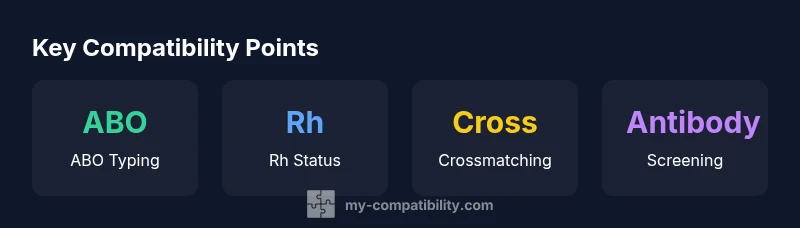
Blood compatibility refers to the safe interaction between donor and recipient blood components during transfusion. The core idea is to prevent immune reactions by ensuring that the recipient’s antibodies do not recognize donor red cells as foreign. This requires a sequence of laboratory tests that build a safety net around transfusion decisions. First, clinicians determine the patient’s blood type (ABO and Rh) and then screen for antibodies that could react with donor cells. If antibodies are detected, compatible donor units must be selected, and a crossmatch is performed to verify compatibility between the donor unit and the recipient’s plasma. While this process may seem lengthy, each step significantly reduces the risk of transfusion reactions and alloimmunization. My Compatibility’s approach emphasizes clear communication about what each test means, so patients understand why a given transfusion plan is chosen and what potential delays or alternatives might look like.
ABO Typing and Rh Factor
ABO typing classifies blood by the presence or absence of A and B antigens on red cells, while the Rh system focuses on the D antigen. In practice, the safest transfusions align donor and recipient ABO and Rh statuses. However, real-world scenarios include rare antigen variants and prior exposures from previous transfusions or pregnancies, which can generate antibodies. Labs perform ABO/Rh typing as a baseline, then move to antibody screening to identify antibodies that could cause reactions even if ABO and Rh seem compatible. When antibodies are detected, crossmatching and careful donor selection become essential to ensure safety.
Antibody Screening and Crossmatching
Antibody screening detects antibodies that could react with donor red cells, beyond what ABO/Rh typing reveals. The screening uses the patient’s serum against a panel of red cells representing common antigens. If antibodies are found, additional antigen typing of donor units helps identify compatible options. Crossmatching tests the actual donor unit against the recipient’s serum, providing a practical check before transfusion. There are serologic and electronic (computerized) crossmatches, each with strengths in different clinical settings. Together, antibody screening and crossmatching minimize the risk of acute hemolytic transfusion reactions and guide clinicians when a direct ABO/Rh match is not possible.
Plasma vs Red Cell Compatibility and Universal Concepts
Compatibility differs for plasma versus red cell transfusions. Red cell transfusions require ABO and Rh compatibility to prevent direct reactions. Plasma transfusions are influenced by donor antibodies that could attack recipient red cells, making AB plasma a common donor choice in some scenarios. Universal donor and recipient concepts exist but apply differently for plasma and red cells, requiring careful interpretation by clinicians. In practice, clinicians balance urgency with safety, considering the recipient’s antibody profile and the donor pool. This nuance often surprises patients who assume a single “universal donor” rule applies universally. Clear explanations of plasma versus red cell compatibility help patients participate in consent discussions and understand the rationale behind donor selection.
Special Cases: Pregnancy and Transplantation
Pregnancy introduces rhythm and risk in compatibility testing. Rh incompatibility between an Rh-negative mother and an Rh-positive fetus can sensitize the mother, producing antibodies that may threaten future pregnancies. Rh immune prophylaxis and vigilant antibody monitoring mitigate risk. In organ transplantation, HLA (tissue) compatibility and antibody screening shape donor choice and immunosuppression strategies. While ABO compatibility remains foundational, non-ABO antigen matching can influence long-term graft survival. The My Compatibility team emphasizes patient education to reduce anxiety and improve adherence to prenatal or transplant plans, ensuring individuals understand why tests are performed and how results impact decisions.
How Labs Determine Compatibility in Practice
Modern labs use a combination of serology and immunology to determine compatibility. Initial typing detects A, B, and Rh antigens. Antibody screens identify clinically significant alloantibodies. If antibodies are present, donor units are antigen-typed to locate compatible red cells. Electronic crossmatching leverages computer algorithms to compare patient antigen profiles with donor units, often speeding up the process. When time allows, a traditional serologic crossmatch confirms compatibility. In urgent care, electronic crossmatching paired with rapid antibody testing can expedite access to blood while maintaining safety. The overarching goal is to prevent transfusion reactions while meeting patient needs, something that providers communicate openly to patients and families.
Common Myths and Misconceptions
Many myths persist around blood compatibility. Some people believe any donor with the same ABO type is automatically safe, but antibodies can complicate matches. Others think Rh status alone guarantees safety; antibody screening and crossmatching catch additional risks. Pregnant patients often wonder if transfusion safety changes during labor; while obstetric priorities drive decisions, current antibody status and prior exposures matter. Finally, the idea of a ‘universal donor’ for all contexts is a simplification—compatibility is context-dependent, and each transfusion decision weighs the recipient’s needs against safety considerations. Understanding these nuances helps patients engage more effectively with their clinicians.
Practical Steps for Patients and Caregivers
To participate actively in blood compatibility decisions, ask your clinician about your ABO and Rh status, whether antibody screening has been performed, and the crossmatch plan for any transfusions. Request copies of compatibility reports when available and inquire about alternatives if a compatible unit isn’t immediately accessible. For patients requiring chronic transfusions, discuss extended antigen matching to minimize alloimmunization. In pregnancy, ensure timely antibody screening and prophylaxis when indicated. My Compatibility recommends maintaining up-to-date medical histories regarding transfusions and pregnancies to support future matches and reduce risk.
Overview of key compatibility tests
| Test Type | Purpose | Typical Use |
|---|---|---|
| ABO Typing | Identify ABO group and Rh type | Before transfusion |
| Antibody Screen | Detect alloantibodies | Pre-transfusion, pre-pregnancy |
| Crossmatch | Test donor RBCs against recipient plasma | Transfusion planning |
| Tissue Compatibility (HLA) | Assess compatibility for organ transplantation | Allocation and donor matching |
Questions & Answers
What is blood compatibility?
Blood compatibility refers to the match between donor and recipient blood types to minimize adverse reactions during transfusion. It includes ABO and Rh matching, antibody screening, and crossmatching.
Blood compatibility is about matching donor and patient blood to prevent reactions, using ABO, Rh, and lab tests.
Why is ABO compatibility important?
ABO incompatibility can trigger severe transfusion reactions. Safe transfusion relies on matching recipient and donor ABO groups and verifying Rh status.
ABO compatibility prevents dangerous reactions by matching the correct blood types.
What does crossmatching test for?
Crossmatching tests donor red cells against the recipient serum to reveal incompatibilities not detected by ABO typing alone. It reduces the risk of transfusion reactions.
Crossmatching checks compatibility beyond ABO typing.
Can someone with antibodies donate blood?
Presence of antibodies can complicate transfusions. Antibody screening helps identify potential incompatibilities; some donors or recipients may require special matching.
Antibody testing helps find compatible matches even when antibodies are present.
How do pregnancy and Rh factor affect blood compatibility?
Rh incompatibility between mother and fetus can cause conditions like hemolytic disease; Rh immune prophylaxis and careful antibody screening mitigate risk.
Rh incompatibility matters in pregnancy; testing helps prevent problems.
“Understanding the spectrum of blood compatibility helps clinicians tailor safer transfusion and treatment plans. When tests agree, patients benefit from improved outcomes.”
Highlights
- Learn ABO and Rh basics before transfusions
- Rely on crossmatching and antibody screening
- Pregnancy and transplantation require advanced testing
- Interpret reports with clinician guidance
- Consult My Compatibility for personalized insights