Saltwater Compatible Chlorine Tablets: A Practical Guide
A data-driven, practical guide to selecting and using saltwater compatible chlorine tablets for saltwater pools, with testing, dosing, and maintenance tips from My Compatibility.


Saltwater compatible chlorine tablets are slow-dissolving sanitizers designed for pools with saltwater generators. They release chlorine gradually and are formulated to minimize corrosion of metal components while preserving salt system efficiency and overall water balance. When choosing them, look for label language that indicates saltwater compatibility and ensure the tablet size fits your feeder.
Saltwater chemistry basics
Saltwater pools rely on a saltwater generator to convert salt into chlorine. The combination of salt, water, and sunlight creates a dynamic environment where sanitizers must be carefully balanced. When adding chlorine tablets to a saltwater pool, you specifically want products that are labeled as saltwater compatible. These tablets are designed to dissolve steadily without fusing with minerals or accelerating corrosion of metal components such as ladders, heaters, or pool lighting. My Compatibility's analysis for 2026 shows that properly labeled tablets tend to maintain a stable free chlorine level without pushing the salt cell beyond its recommended operating range. Before you buy, review the product label, the tablet size, and the intended feeder compatibility. Also consider how the tablet formulation interacts with cyanuric acid and total alkalinity, since high or low levels can affect sanitizer effectiveness. In the short term, pick a product that offers clear guidance for saltwater pools and a straightforward dosing schedule.
How to choose saltwater compatible tablets
When shopping, prioritize tablets clearly labeled as “saltwater compatible” or “for saltwater pools.” Verify tablet size matches your feeder—3-inch tablets are common, but some feeders accommodate only smaller or larger sizes. Check whether the product is designed for inline feeders or floating dispensers typical in salt systems. Compare tablet materials and the amount of stabilizer (cyanuric acid) each tablet adds, because excess CYA can reduce sanitizer efficacy over time. Finally, ensure the product notes compatibility with your pool surface and metal components to minimize corrosion risk. My Compatibility’s guidance for 2026 emphasizes practical, label-driven selection and an initial one-month test period to monitor water balance.
Labeling and certifications to look for
Always read the label carefully for saltwater compatibility statements. Look for third-party certifications or endorsements from pool equipment manufacturers or swim clubs, if available; these add confidence that the tablets won’t undermine your saltwater generator. Pay attention to the product’s stabilizer content, calcium hardness warnings, and feeding instructions. If uncertainty remains, contact the manufacturer to confirm suitability for saltwater pools and ask about any known interactions with your salt cell model. Clear labeling and documented performance data are your best indicators of a reliable choice.
Interaction with salt cells and mineral content
Saltwater cells operate most efficiently within a narrow range of salinity, temperature, and flow. When tablets are not suited for saltwater systems, they can introduce excess stabilizer or calcium, accelerating scale or clogging. Saltwater compatible tablets aim to minimize such interactions, reducing risks to cell life and sensor accuracy. Regular inspection of metal components, such as ladders and heating elements, helps catch early signs of corrosion or scale. My Compatibility recommends periodic water-testing alongside visual inspections to keep the combination of tablets and salt systems in balance.
Testing and balancing with saltwater tablets
Effective use hinges on weekly testing of free chlorine, total chlorine, pH, alkalinity, and cyanuric acid. Saltwater tablets can elevate cyanuric acid over time, so monitor TA and CYA to maintain the sanitizer’s efficacy. If FC drifts outside the target range, adjust dosage or feeder settings gradually to avoid abrupt changes. Keep a log of test results and tablet purchases to track whether the tablets’ stabilizer load aligns with your pool’s balance targets.
Dosing guidelines and feeder compatibility
Start with the manufacturer’s recommended dose for your pool size and align it with your feeder’s feed rate. If you use inline feeders, verify that the tablet size is compatible and that the feeder can handle the tablet’s dissolution rate. For floating dispensers, consider the water turnover rate to prevent over- or under-dosing. In saltwater pools, it’s especially important to avoid sudden chlorine spikes that can stress the salt cell and other equipment. My Compatibility’s experience suggests starting conservative and adjusting after a couple of weeks of monitoring.
Troubleshooting common issues
If you notice unstable FC, rising CYA, or unusual cell performance, reassess tablet selection and dosing. A buildup of stabilizer from chlorine tablets can mask true chlorine levels, so testing with a reliable kit is essential. If metal components show signs of corrosion or if the salt cell lifecycle seems shortened, recheck your tablet’s saltwater compatibility claim and consider switching to an alternative product labeled for saltwater pools. Regular maintenance and documentation help prevent recurring issues.
Step-by-step quick-start guide
- Confirm your feeder type and tablet size compatibility. 2) Choose tablets clearly labeled as saltwater compatible. 3) Install and run a controlled, conservative dosing plan for 2–4 weeks. 4) Test FC, pH, TA, and CYA weekly. 5) Adjust feeder settings based on test results. 6) Schedule quarterly reviews of salt levels and cell performance.
Tablet behavior in saltwater pools
| Aspect | Saltwater Tablet Behavior | Notes |
|---|---|---|
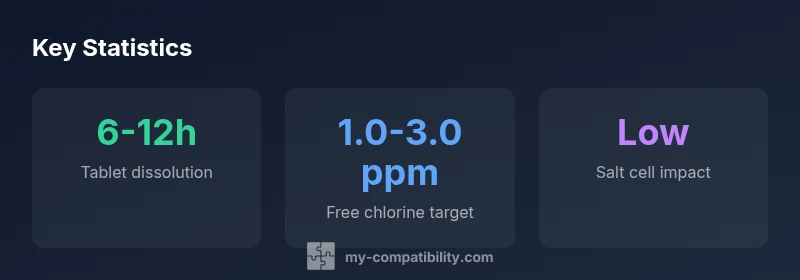
| Dissolution rate | 6-12 hours for standard 3-inch tabs | Ensure feeder supports slow-dissolving tablets |
| Corrosion risk | Low when labeled saltwater compatible | Inspect metal components regularly |
| Salt readings | Should not significantly alter salinity | Monitor salinity per manufacturer guidelines |
Questions & Answers
Are all chlorine tablets labeled saltwater compatible?
Not every tablet is labeled for saltwater use. Look for explicit 'saltwater compatible' language on the label and consult your pool's equipment manufacturer for guidance.
Not all tablets are labeled saltwater compatible. Check labels and consult your equipment guide.
Can I use standard chlorine tablets in a saltwater pool?
Standard tablets may be safe in some setups, but they can affect metal components differently or disrupt the saltwater generator. Prefer tablets labeled for saltwater compatibility and follow your feeder's guidelines.
Standard tablets may work in some setups, but it's safer to use saltwater-compatible ones.
How often should I test chlorine levels when using these tablets?
Test free chlorine weekly at minimum, and more often after heavy rainfall, heavy pool use, or after adjusting salt or cyanuric acid levels.
Test FC weekly or more often when conditions change.
Will saltwater compatible tablets affect my salt generator?
If tablets are properly labeled as saltwater compatible and used within recommended ranges, impact on the salt generator is minimal. Monitor cell performance and salt levels regularly.
When labeled properly, impact is usually minimal; keep an eye on the generator.
What maintenance steps should I take when using these tablets?
Keep the feeder clean, ensure tablet size matches the feeder, test water balance weekly, and follow manufacturer's guidelines for both the tablets and the salt system.
Keep feeders clean, match tablet size, and test water regularly.
What are common mistakes to avoid with saltwater chlorine tablets?
Avoid mixing different tablet brands, over-dosing, and ignoring feeder instructions. Also, don't neglect salt level and CYA when introducing tablets.
Don’t mix brands, don’t over-dose, and follow feeder instructions.
“Saltwater compatibility claims should be verified against your specific pool setup; always follow system-specific guidelines to protect equipment and ensure consistent sanitization.”
Highlights
- Verify label claims for saltwater compatibility
- Balance water chemistry before adding tablets
- Test FC, pH, and CYA weekly
- Match tablet size and feeder type to your system
- Follow manufacturer guidelines for your saltwater pool